
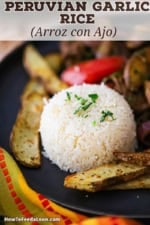
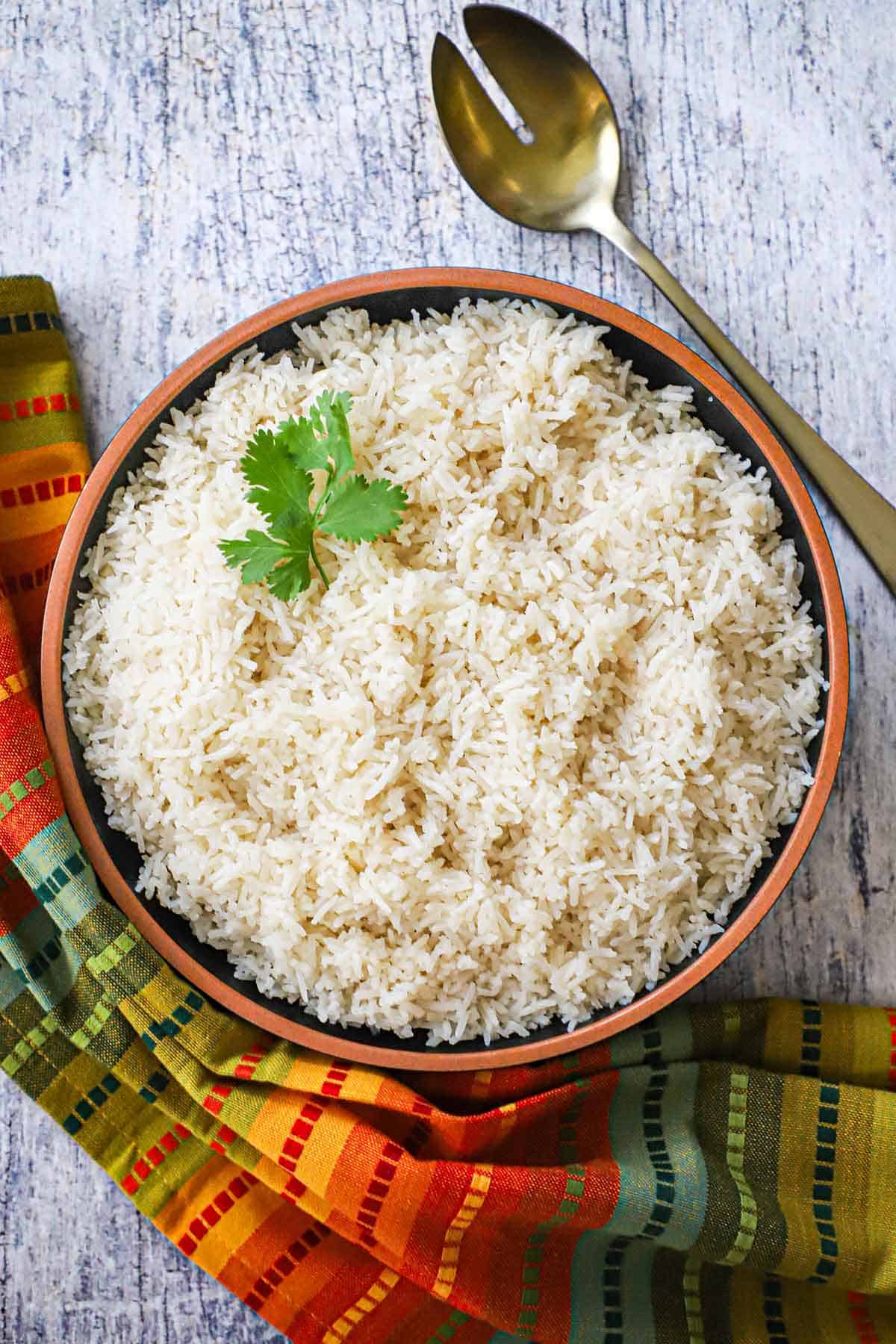
If you’ve ever wondered why restaurant rice tastes so much better than the standard stovetop version at home, the secret is this authentic Peruvian Garlic Rice (Arroz con Ajo). By toasting the grains with fragrant, golden garlic before simmering, we’ve created a side dish so fluffy and savory that it’s the absolute must-have companion for soaking up every drop of that delicious Lomo Saltado (Peruvian Beef Stir-Fry) sauce.
Jump to:
🍚 The Ingredients
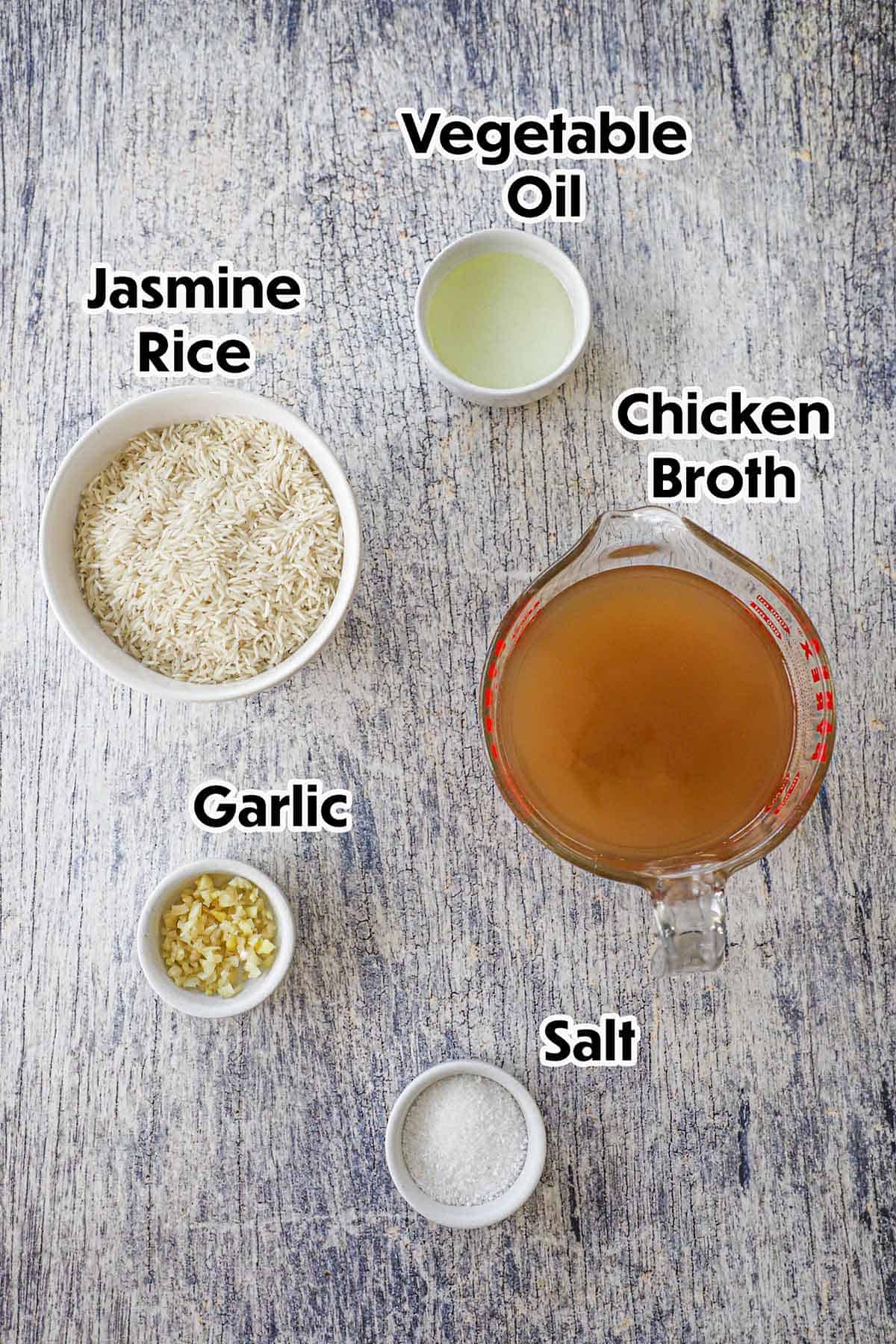
By combining fragrant Jasmine rice with plenty of sautéed garlic and a rich, savory broth, you transform simple pantry staples into a fluffy, restaurant-quality masterpiece. Find ingredient notes (including substitutions and variations) below.
📝 Ingredient Notes and Substitutions
- Jasmine Rice: We love using Jasmine rice for its beautiful floral aroma and slightly buttery flavor, but any high-quality long-grain white rice will work perfectly. Just be sure to rinse it thoroughly until the water runs clear to ensure those grains stay fluffy and separate!
- Fresh Garlic: For the most authentic flavor, fresh is a must. While jarred minced garlic is a time-saver, freshly minced cloves provide that pungent, savory “bite” that defines this dish.
- Chicken or Vegetable Broth: While traditional Arroz con Ajo is often made with water, using a high-quality chicken or vegetable broth is a “Loon-level” secret that adds a deep, savory richness. If you prefer a cleaner, more traditional taste, water works beautifully as well.
- Neutral Oil: Use an oil with a high smoke point, like vegetable, canola, or grapeseed oil. This allows you to “toast” the rice and sauté the garlic without the oil burning or adding an overpowering flavor.
- Salt: Don’t be shy with the salt! It is essential for drawing out the sweetness of the toasted garlic and making the flavors of the rice pop. If you are using a salted broth, you may want to taste the liquid before adding the full amount of extra salt.
Refer to the recipe card (with video) below for a full list of ingredients and measurements.
🔥Tips and Tricks for Perfect Peruvian Garlic Rice
- Rinse for Success: Always rinse your rice in a fine-mesh sieve under cold water until the water runs completely clear. This removes the surface starch, which is the #1 secret to achieving perfectly separate, non-sticky grains.
- Watch the Garlic: Keep a close eye on your garlic while sautéing! You want it to be fragrant and a pale golden blonde. If it turns dark brown or black, it will become bitter and ruin the delicate flavor of the rice.
- The “Toast” is Key: Don’t skip the step of sautéing the dry rice in the garlic oil for a few minutes. This “toasting” phase coats every grain in fat, which helps them stay individual and adds a wonderful nutty depth to the final dish.
- Hands Off the Lid: It’s tempting to peek, but resist the urge! Lifting the lid lets out the precious steam needed to cook the rice evenly. Trust the timer and let the steam do its magic.
- The Power of the Rest: Once the timer goes off, let the rice sit covered and undisturbed for at least 5 to 10 minutes. This “resting” period allows the moisture to redistribute, making the rice much easier to fluff and preventing it from being gummy.
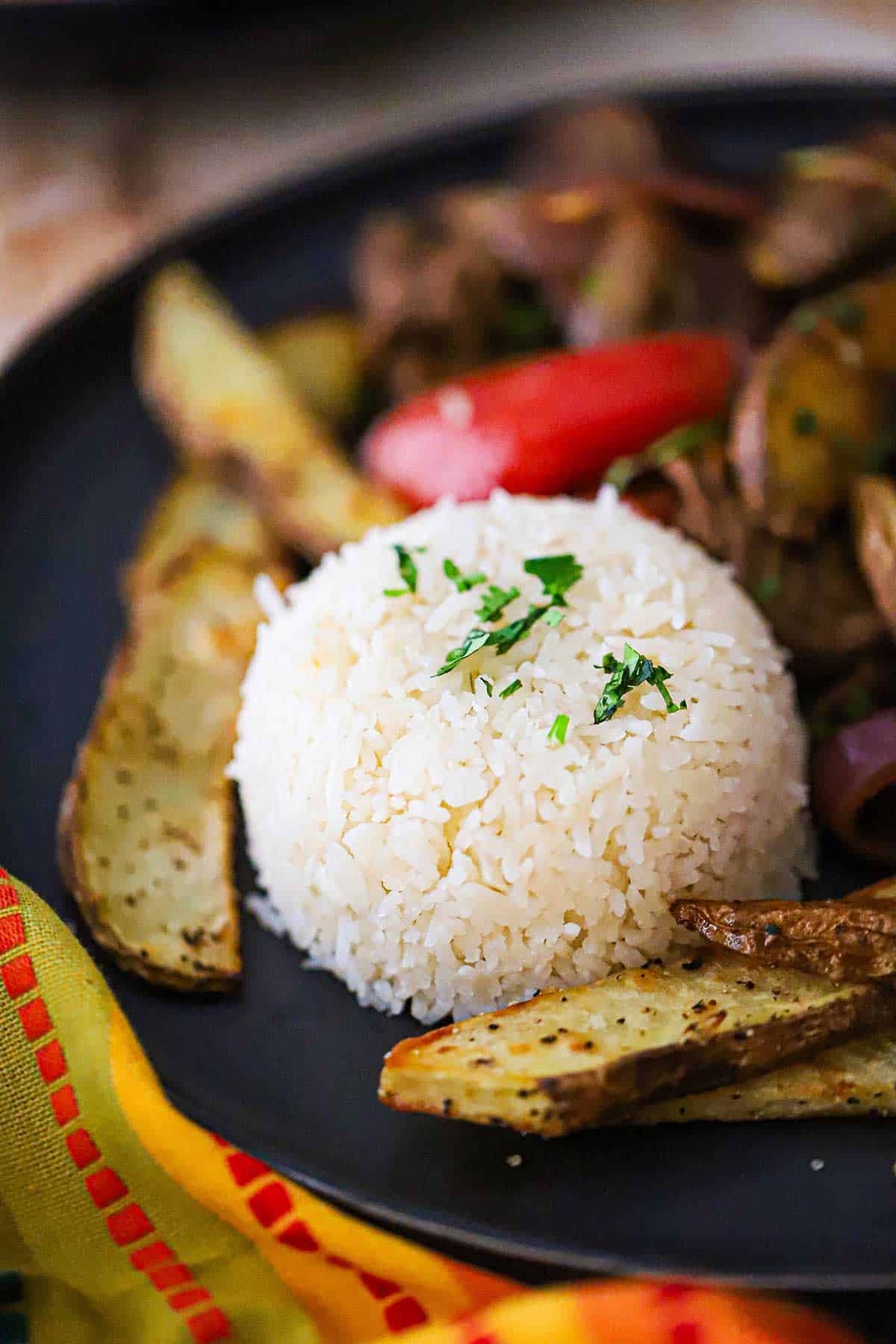
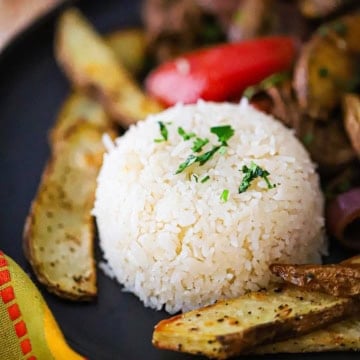
- The Restaurant Look: For that classic presentation, pack the finished rice into a small bowl or ramekin and invert it onto your plate. It creates a beautiful, clean dome that looks professional and provides the perfect “anchor” for your Lomo Saltado!
👩🏼🍳 How to Make Peruvian Garlic Rice
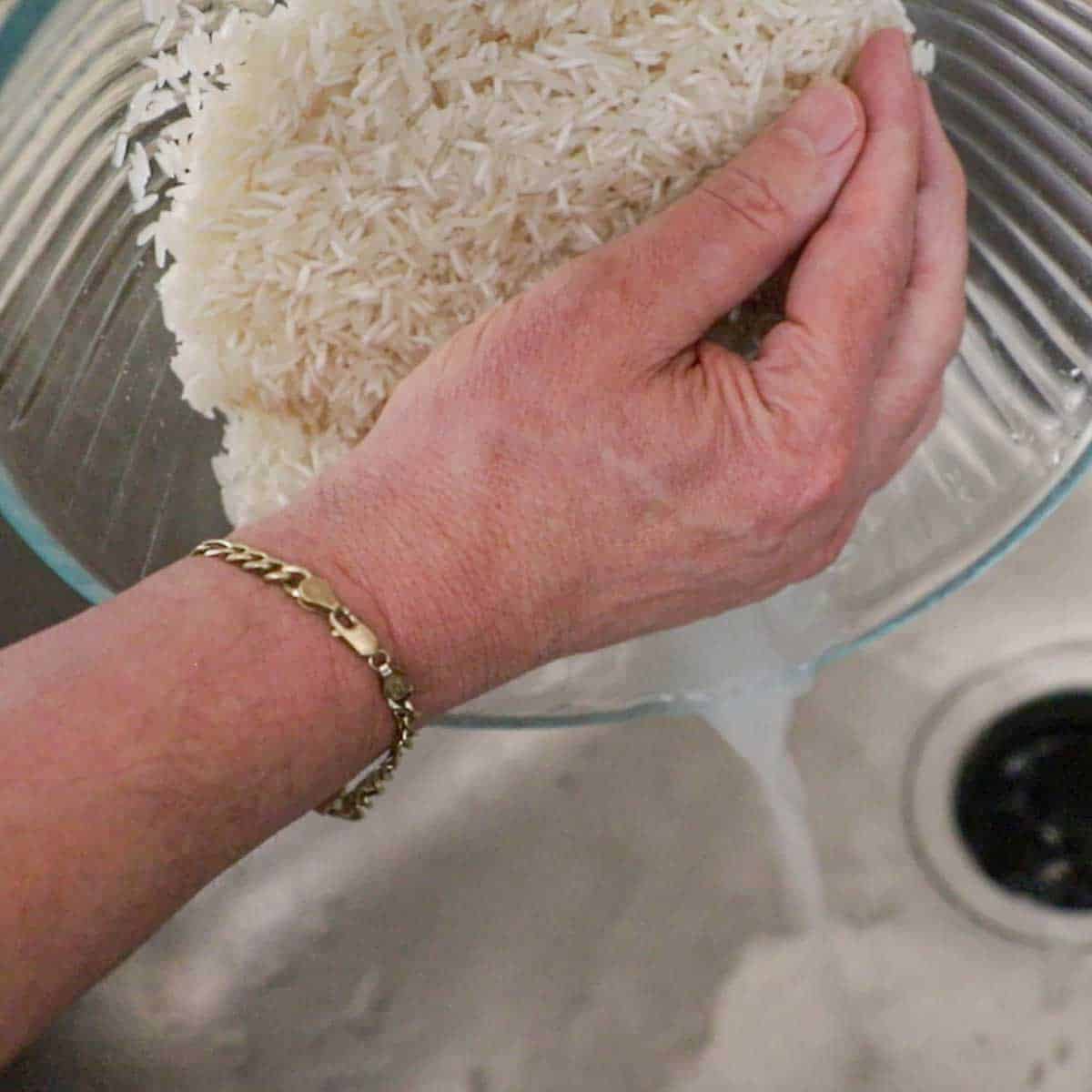
- Step 1: Place the rice in a bowl and cover with cool water. Swirl the rice and then drain it into the sink (with your hand). Repeat two more times. Drain into a colander.
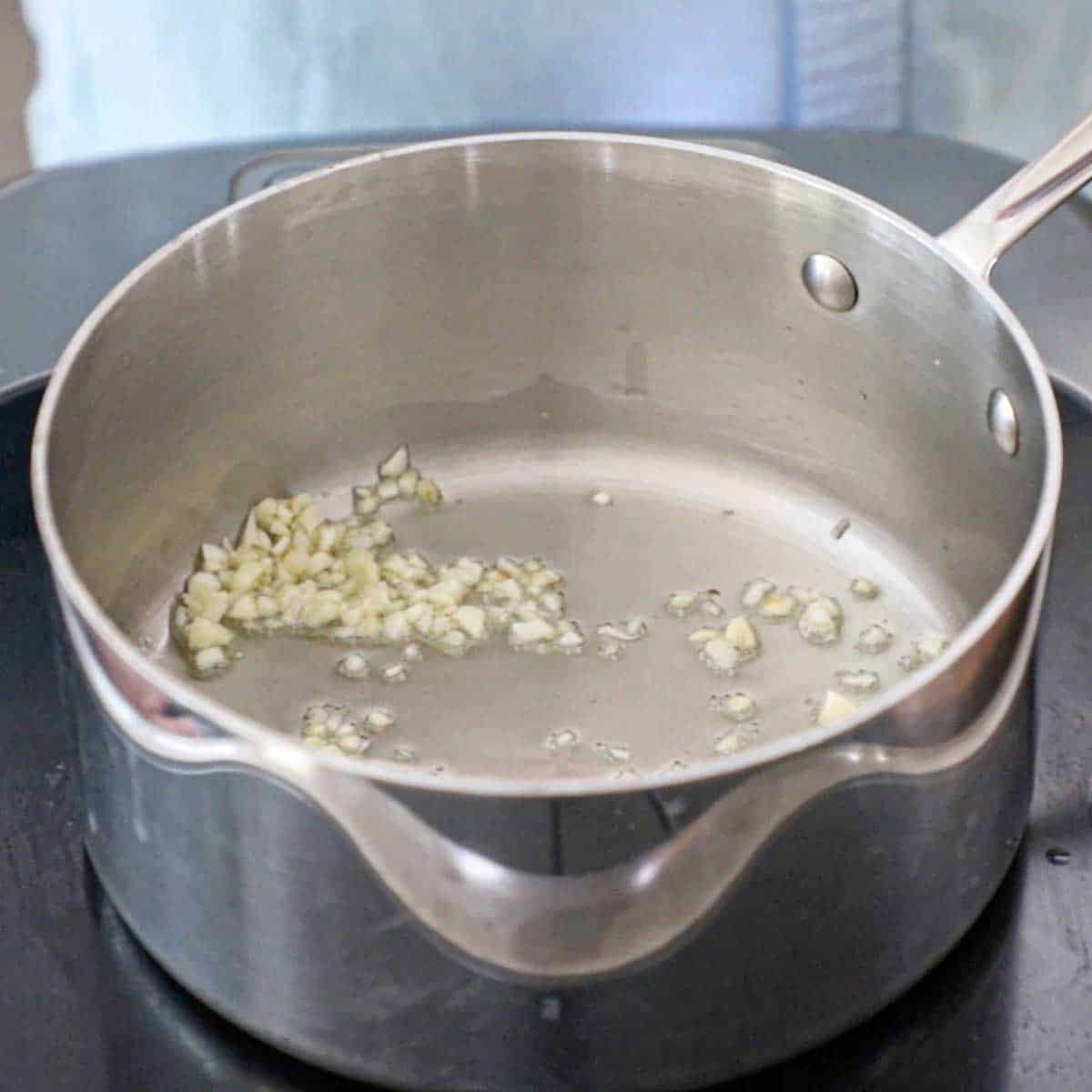
- Step 2: Heat the oil over medium heat in a medium saucepan. Sauté the garlic until aromatic and soft, about 2 minutes.
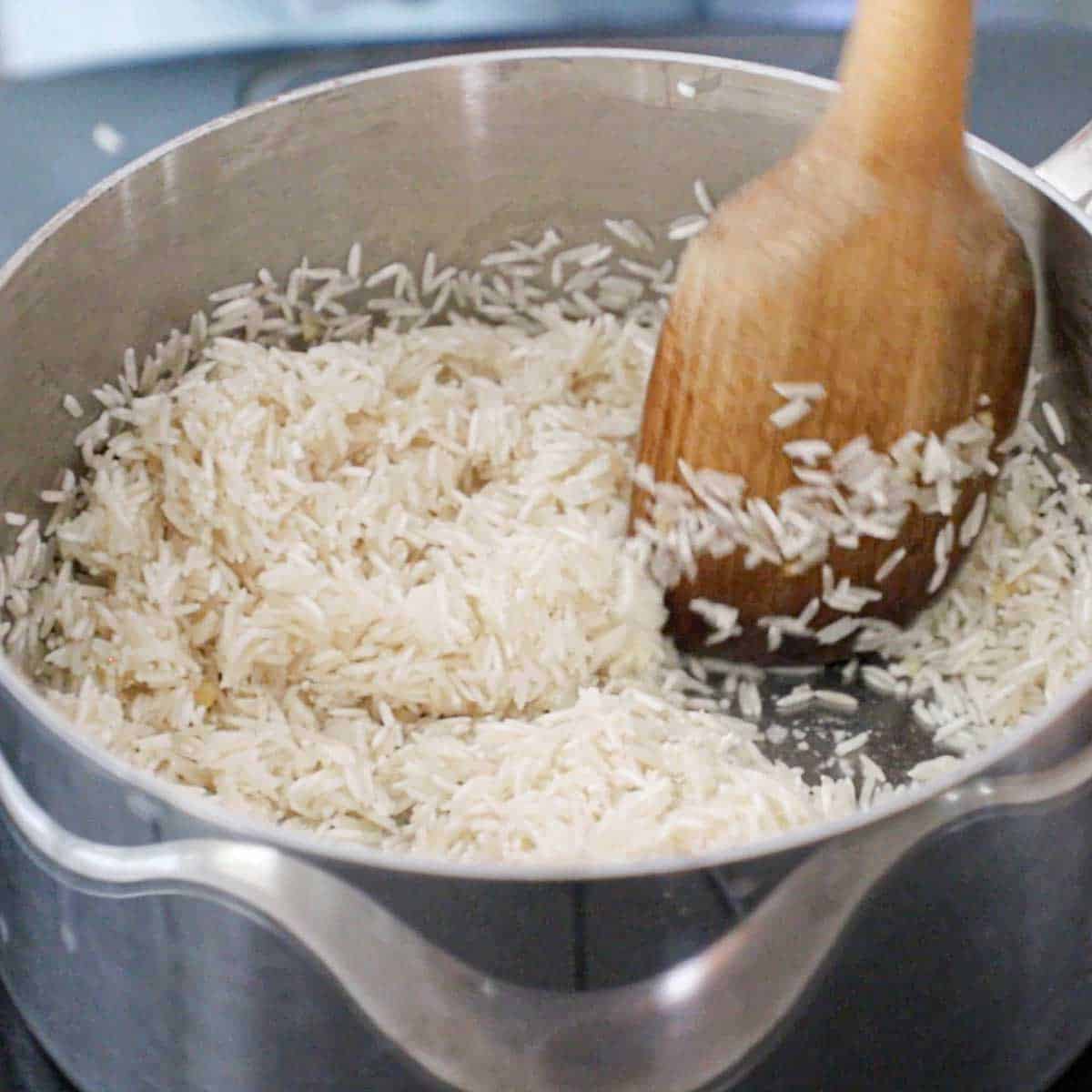
- Step 3: Stir in the rinsed rice and cook, stirring often, until toasty, about 5 minutes.
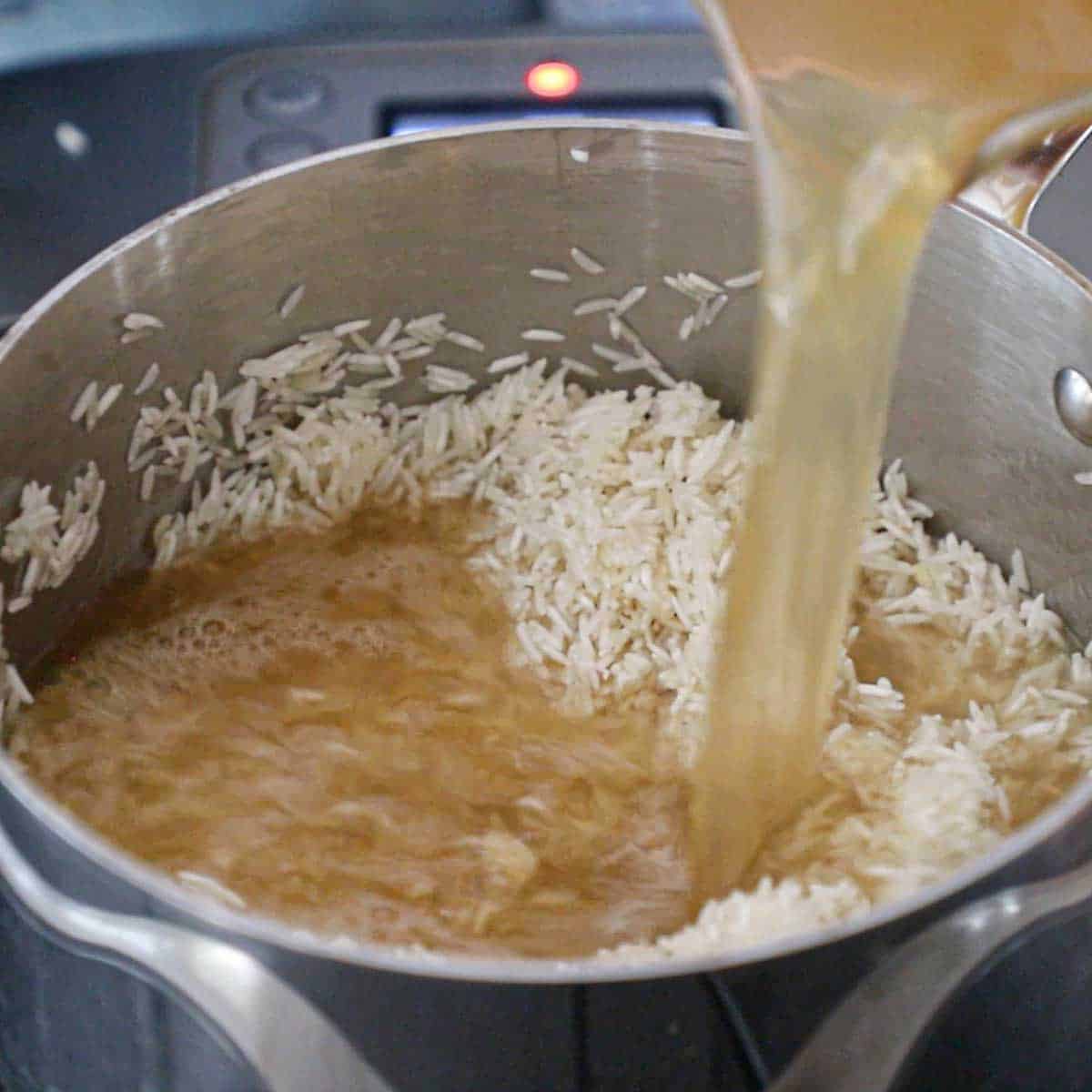
- Step 4: Stir in the broth and salt. Bring to a boil (scrape down rice from the sides of the pan).
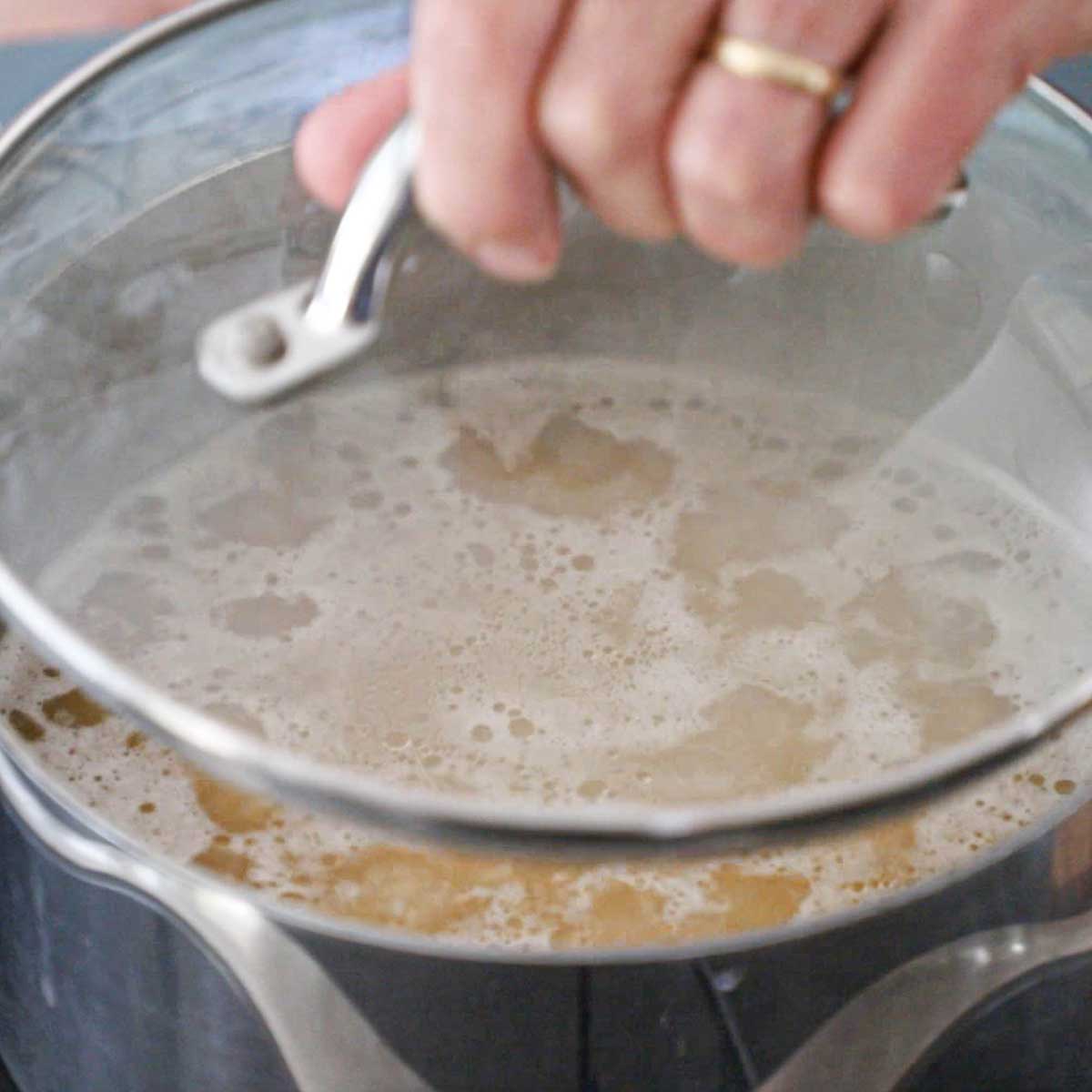
- Step 5: Cover, reduce the heat to LOW, and cook for 18 minutes. Leave the lid on for another 5 minutes.
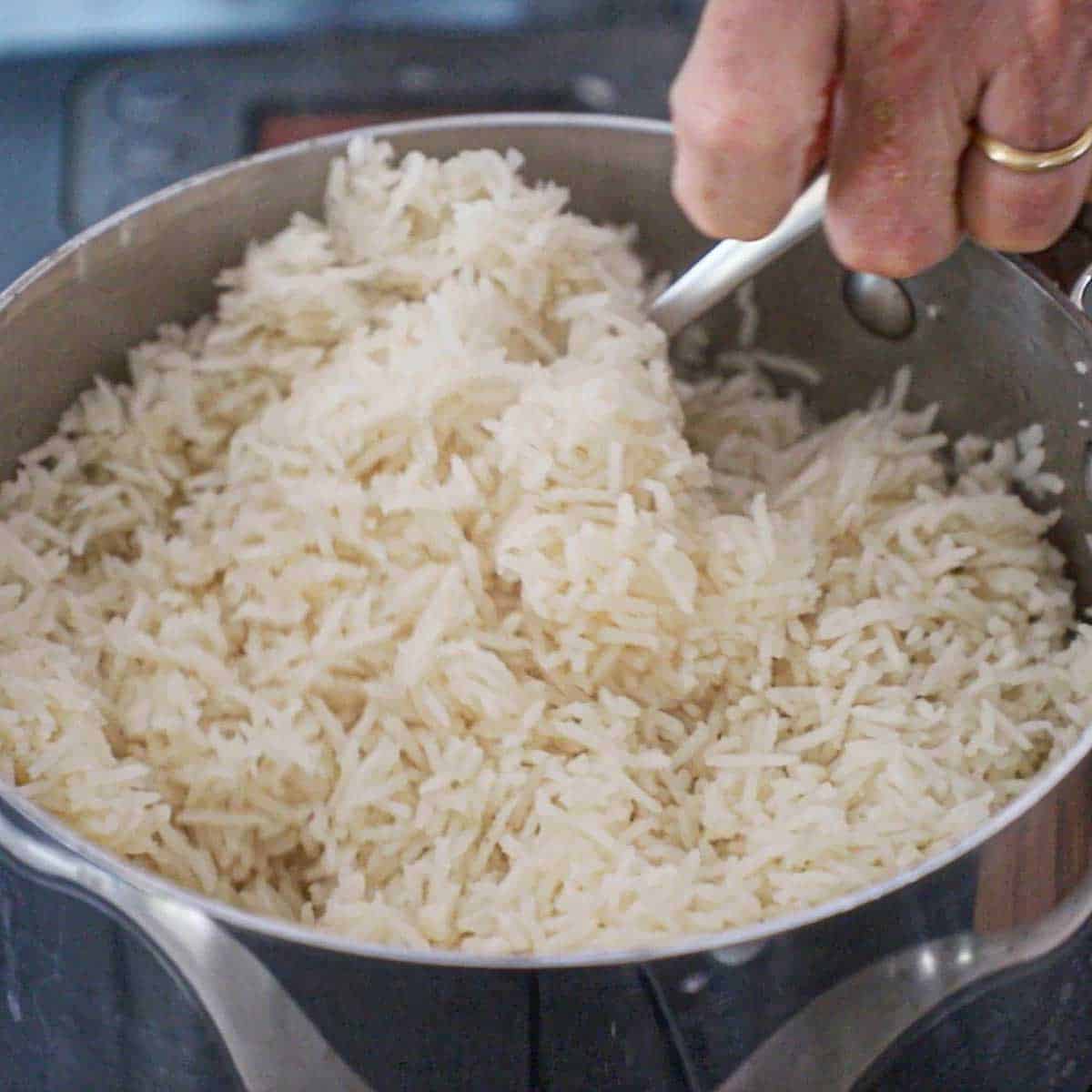
- Step 6: Fluff with a fork and serve at once.
🙋🏽♂️ Frequently Asked Questions
Yes, simply sauté the aromatics in a pan first, then transfer them along with the toasted grains and liquid into your machine to finish the cooking process as you normally would.
This usually happens if the grains weren’t rinsed thoroughly to remove excess starch or if the lid was lifted too often during the simmering stage, which disrupts the essential steaming process.
When stored in an airtight container, it will remain delicious for up to four or five days, making it an excellent option for meal prep throughout the week.
While you can certainly use whole grains, you will need to increase the amount of liquid and significantly extend the simmering time to ensure the texture is tender and fully cooked.
🍛 More Amazing Rice Recipes

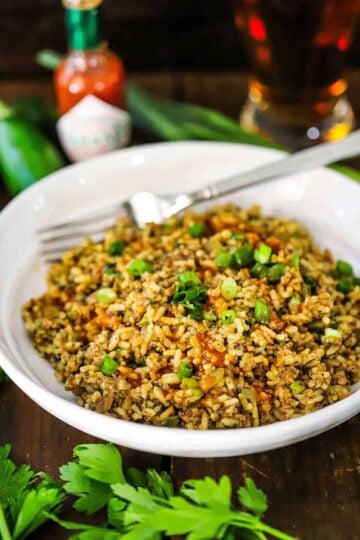

Ready to make the best rice this side of Peru? Go for it!
And when you do, be sure to take a photo of it, post it on Instagram, and tag @HowToFeedaLoon and hashtag #HowToFeedaLoon!
Peruvian Garlic Rice (Arroz con Ajo)
Video
Equipment
- 1 bowl and colander for rinsing the rice
- 1 medium saucepan with lid
Ingredients
- 2 cups Jasmine rice or long-grain white rice
- 2 tablespoon vegetable oil
- 4 cloves garlic finely minced
- 3 cups chicken broth or veggie broth, or water
- 1½ teaspoon Kosher salt
Instructions
- Place the rice in a medium bowl and cover it with cool tap water. Use your hands to swish the rice around in the water. The water will become cloudy as you do this (this is the starch being released). Cup your hand on the side of the bowl and let the water drain out, holding the rice in the bowl with your hand. Repeat this process two more times, or until the water no longer turns cloudy. Transfer the rice to a colander and give it one more rinse. Set aside.2 cups Jasmine rice
- Heat the oil in a medium saucepan over medium heat. Add the garlic and sauté until aromatic and soft, about 2 minutes. Add the drained rice to the pan and stir constantly for 3 to 5 minutes until the rice smells toasty, the grains have turned from translucent to a toasty white.2 tablespoon vegetable oil, 4 cloves garlic
- Stir in the broth (or water) and salt. Bring to a boil, and then lower the heat to LOW, cover, and let the rice cook for 17 to 18 minutes. Turn the heat off and let the rice stay in the pan (covered) for another 5 to 10 minutes.3 cups chicken broth, 1½ teaspoon Kosher salt
- Remove the lid and fluff the rice gently with a fork. Serve at once.
Notes
- Rinse Thoroughly: This is the most important step for fluffy rice! Rinse the grains in a fine-mesh sieve under cold water until the water runs completely clear to remove excess starch.
- Watch the Garlic: Sauté the garlic only until it is fragrant and a pale golden blonde. If it turns dark brown or burnt, it will become bitter and affect the flavor of the entire batch.
- The “No-Peeking” Rule: Do not lift the lid during the simmering or resting stages. The trapped steam is what finishes the cooking process and ensures the grains are tender and separate.
- The Rest Period: Letting the rice sit covered for 5–10 minutes after turning off the heat is the secret to perfect texture. It allows the moisture to redistribute so the rice fluffs easily without becoming gummy.
- Storage & Reheating: Store leftovers in an airtight container in the refrigerator for up to 5 days. To reheat, add a splash of water or broth and microwave or heat on the stovetop until steaming.
- The Classic Presentation: For a professional restaurant look, pack the warm rice into a small bowl or ramekin and invert it onto the plate to create a perfect, clean dome.


Annemarie says
I lived in Perú for 20 years. This is pretty spot on. The only thing I have an issue with is the rinsing. First, it’s hard to toast it when it’s damp. Secondly, it’s supposed to stick together a bit.
And if you get it just right, you end up with a pale brown crust on the bottom of the rice. It’s called cocolón, and it’s amazing .
Love your recipes!!
P.S. We just call this arroz! And jasmine rice is the best!
Annemarie says
P.P.S. the rice should be hot enough that the liquid sizzles when it’s added to the pot!
Kris Longwell says
Hi Annemarie!!! Thank you so much for the feedback!!! We try and let the rice dry out before we add it to the pan. We do love getting the pale brown crust on the bottom, sometimes its more prominent than other times. It kind of reminds us of what you get on the bottom of paella (socarrat) when done correctly. Anyway…as we always say: We’re just a couple of Americans who love cuisines from all over the world! We do tons of research and testing, but there is NOTHING than hearing from folks like you!!! Thanks again for your feedback! And we’ll be interested to hear what you think of our version of Lomo Saltado!!! So good!!!!