
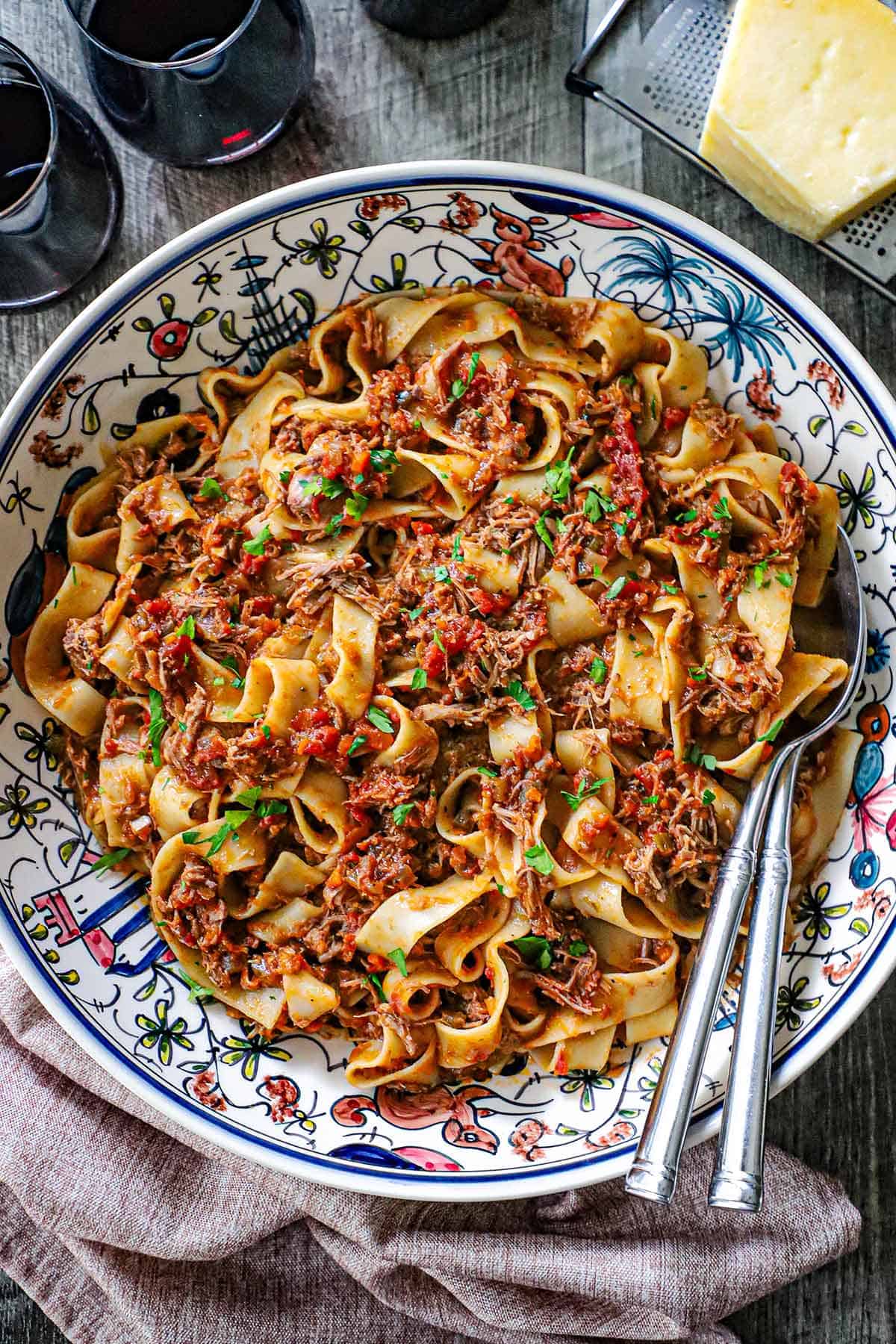
There is nothing quite as soul-satisfying as the aroma of pork shoulder slowly braising in a rich red wine and tomato sauce on a lazy Sunday afternoon. This Slow-Braised Pork Ragu with Pappardelle features melt-in-your-mouth tender meat and a velvety, restaurant-quality sauce (gravy) that makes it the ultimate gourmet comfort food.
Jump to:
🥫 The Ingredients
This recipe transforms a humble, well-marbled cut of meat and a handful of classic Italian pantry staples into a deeply layered, herb-infused sauce that clings beautifully to every silky ribbon of pasta. Find ingredient notes (including substitutions and variations) below.
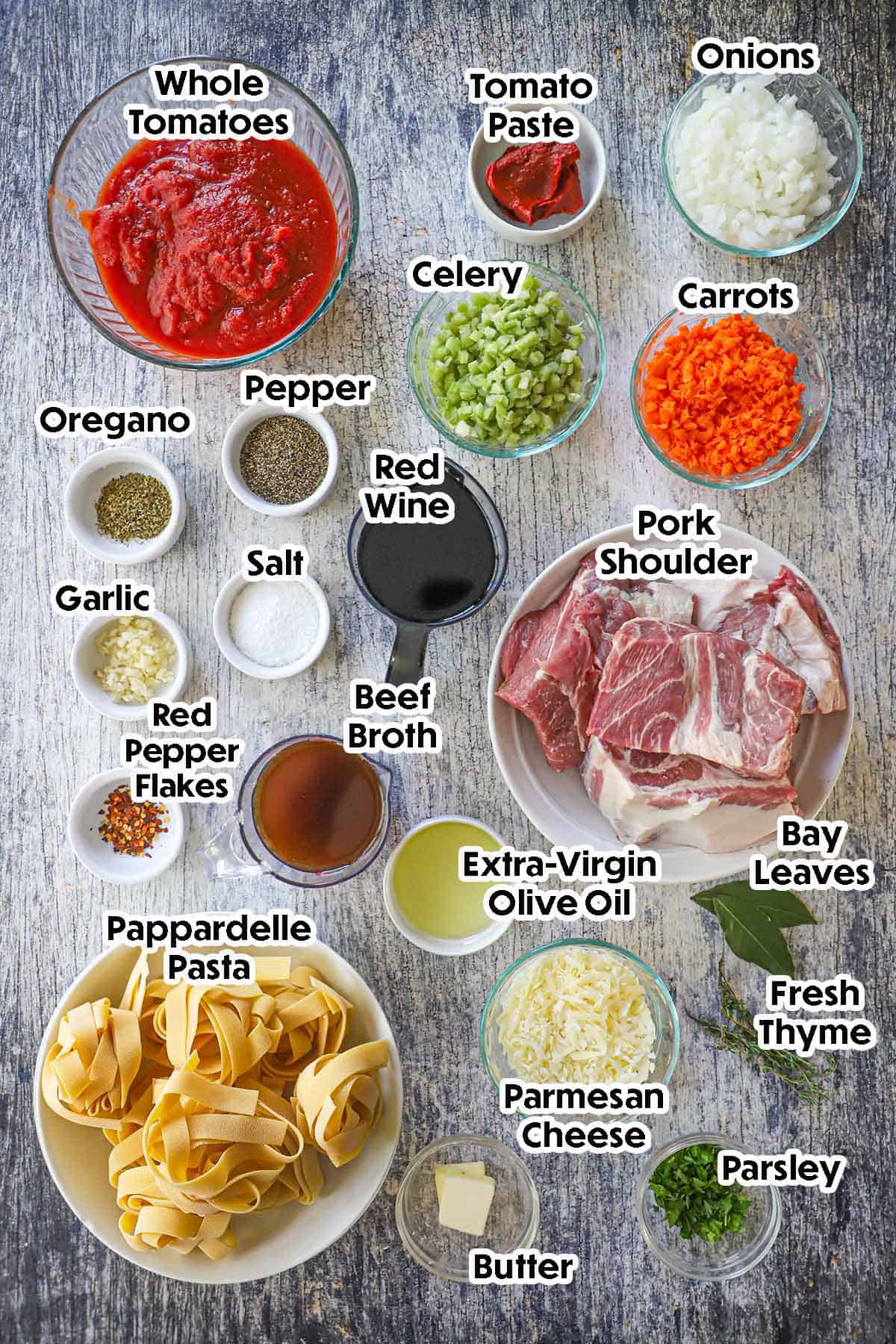
📝 Ingredient Notes and Substitutions
- Pork Shoulder: Often labeled as “Boston Butt,” this cut is essential for its fat content and connective tissue, which melts down to create that tender texture. If you prefer beef, a well-marbled beef chuck roast is the best substitute.
- San Marzano Tomatoes: These Italian plum tomatoes are prized for their sweetness and low acidity. If you can’t find them, use high-quality whole peeled tomatoes and add a small pinch of sugar to balance the sauce.
- Dry Red Wine: A Chianti, Sangiovese, or Cabernet Sauvignon adds incredible depth. If you prefer to cook without alcohol, simply replace the wine with an equal amount of beef stock and a tablespoon of red wine vinegar for acidity.
- Pappardelle: These wide, flat egg noodles are the traditional choice for heavy meat sauces. If they aren’t available, tagliatelle, fettuccine, or even a sturdy short pasta like rigatoni will work beautifully. You can also make homemade egg pasta.
- Beef Stock: Using a high-quality beef bone broth will provide a richer “mouthfeel” and deeper color, but chicken stock can be used in a pinch for a slightly lighter flavor profile.
- Fresh vs. Dried Herbs: While fresh thyme provides a bright, earthy aroma, you can substitute it with 1 teaspoon of dried thyme. Just be sure to keep the dried oregano as it provides that classic Italian “pizza parlor” nostalgia.
- The Cheese: Freshly grated Parmesan (Parmigiano-Reggiano) is the gold standard, but Pecorino Romano is a fantastic alternative if you enjoy a saltier, sharper kick.
📌 Tips and Tricks for Perfect Pork Ragu
- Don’t Rush the Sear: To get that deep, savory flavor, make sure your pork is bone-dry before it hits the oil. Sear the chunks in batches if necessary—crowding the pot will cause the meat to steam instead of brown. That dark crust is where the magic happens!
- Watch for the “Lazy Bubble”: When braising in the oven, check the pot after 20 minutes. You want a very gentle simmer; if it’s boiling aggressively, lower the oven temperature by 25 degrees. A gentle braise is the secret to meat that truly melts at the touch of a fork.
- Skim the Fat: Pork shoulder is naturally fatty, which makes it delicious, but an oil slick on top can be heavy. Use a large spoon to skim the clear yellow fat from the surface after the meat is shredded, or use the “paper towel hack” to dab away excess oil.
- Save the Liquid Gold: Never toss all your pasta water! That starchy, salty water is the “glue” that helps the sauce emulsify and cling to the wide ribbons of pappardelle. It’s the difference between a dry pasta and a silky one.
- The Skillet “Marriage”: Always finish the pasta in a skillet with a bit of sauce and pasta water as described in the recipe. This ensures every noodle is seasoned and coated from the inside out, rather than just sitting under a pile of sauce.
- Better the Next Day: Like most braised dishes, this ragu tastes even better after 24 hours in the fridge as the flavors continue to develop. If you’re hosting a dinner party, make the sauce a day early, remove the solidified fat from the top, and simply reheat and toss with fresh pasta right before serving.
👩🏼🍳 How to Make Slow-Braised Pork Ragu with Pappardelle
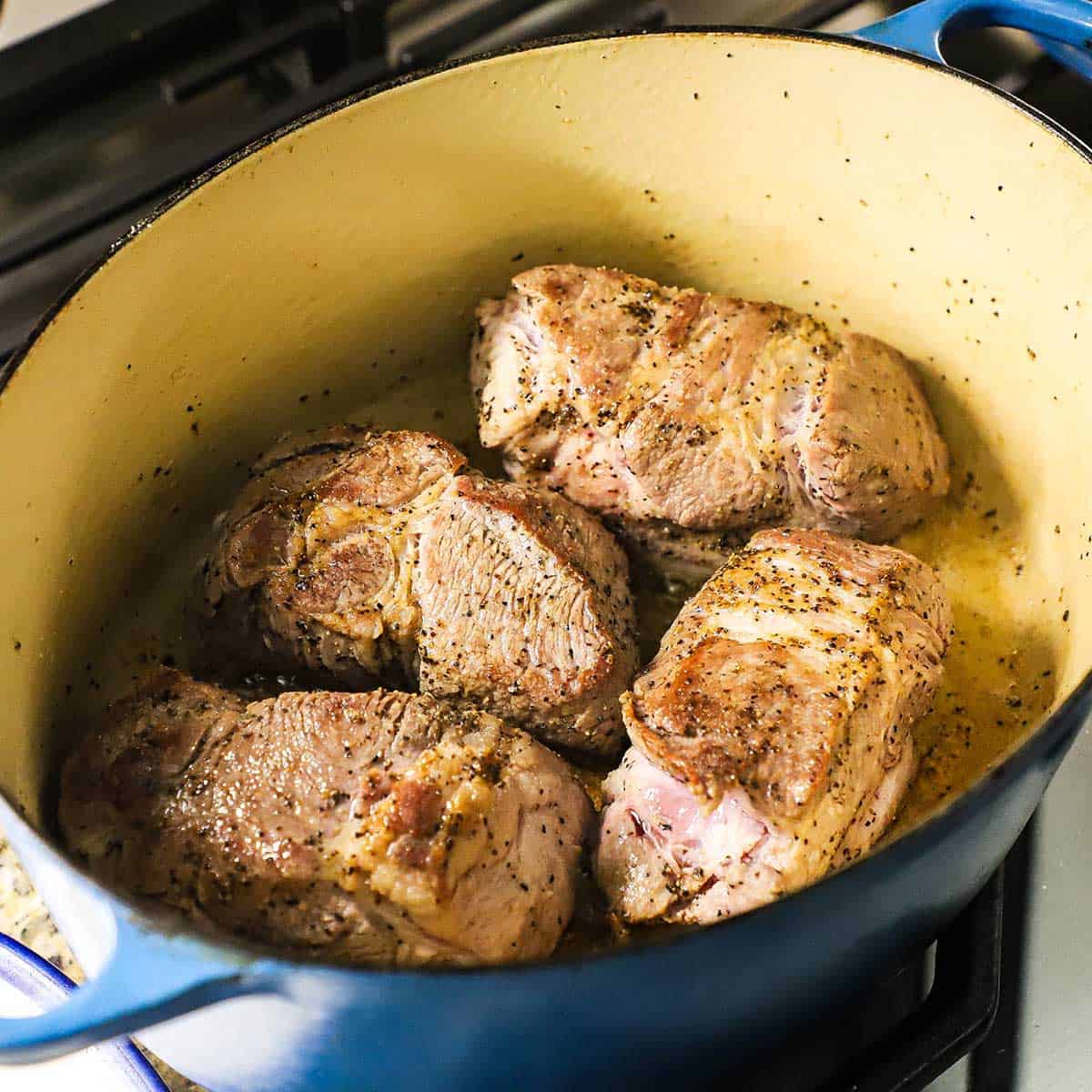
- Step 1: Quarter the pork shoulder, season with salt and pepper, and sear in the oil in a Dutch oven until browned all over. Remove from the pan.
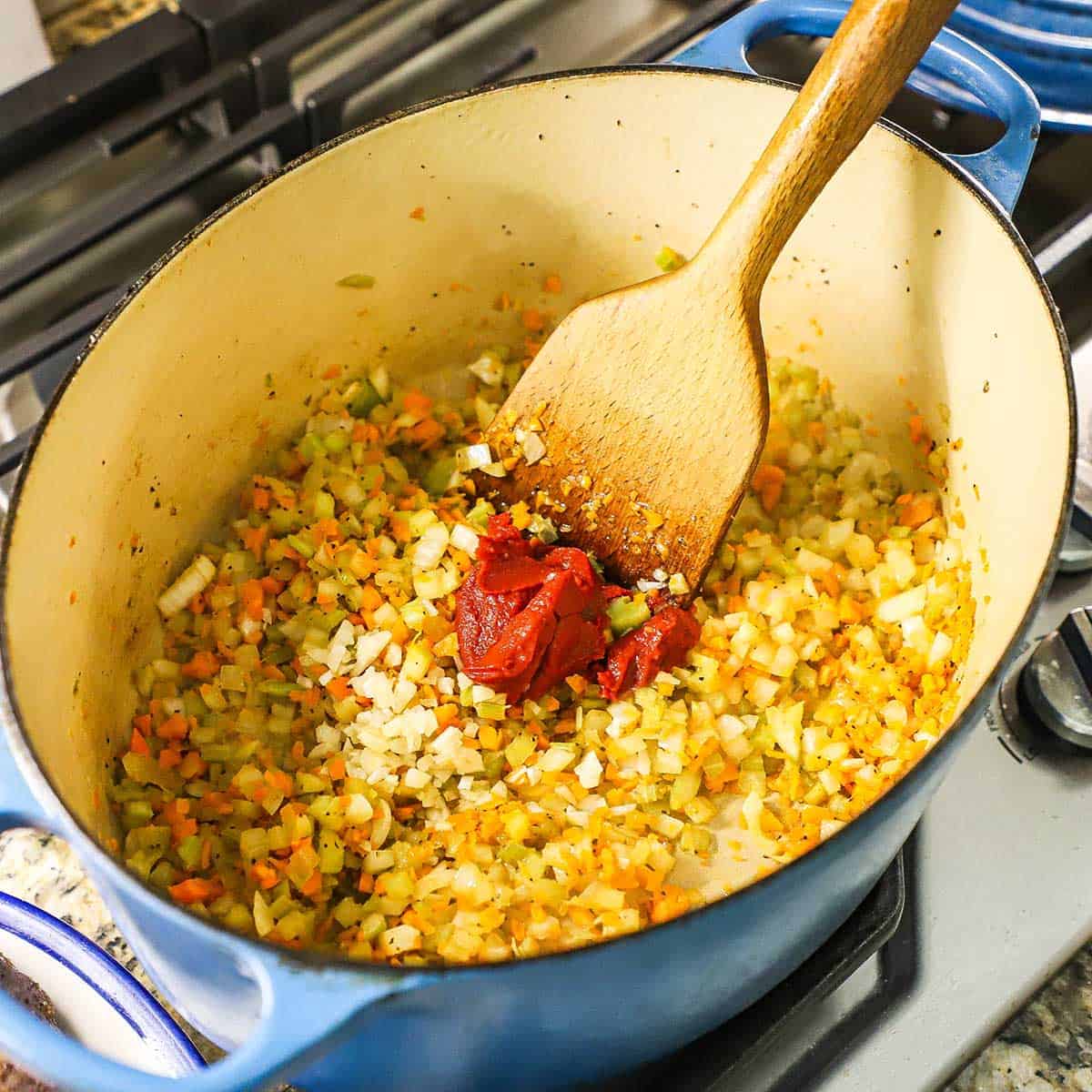
- Step 2: Sauté the onion, carrots, celery, and garlic until soft. Stir in the tomato paste and cook for 1 minute.
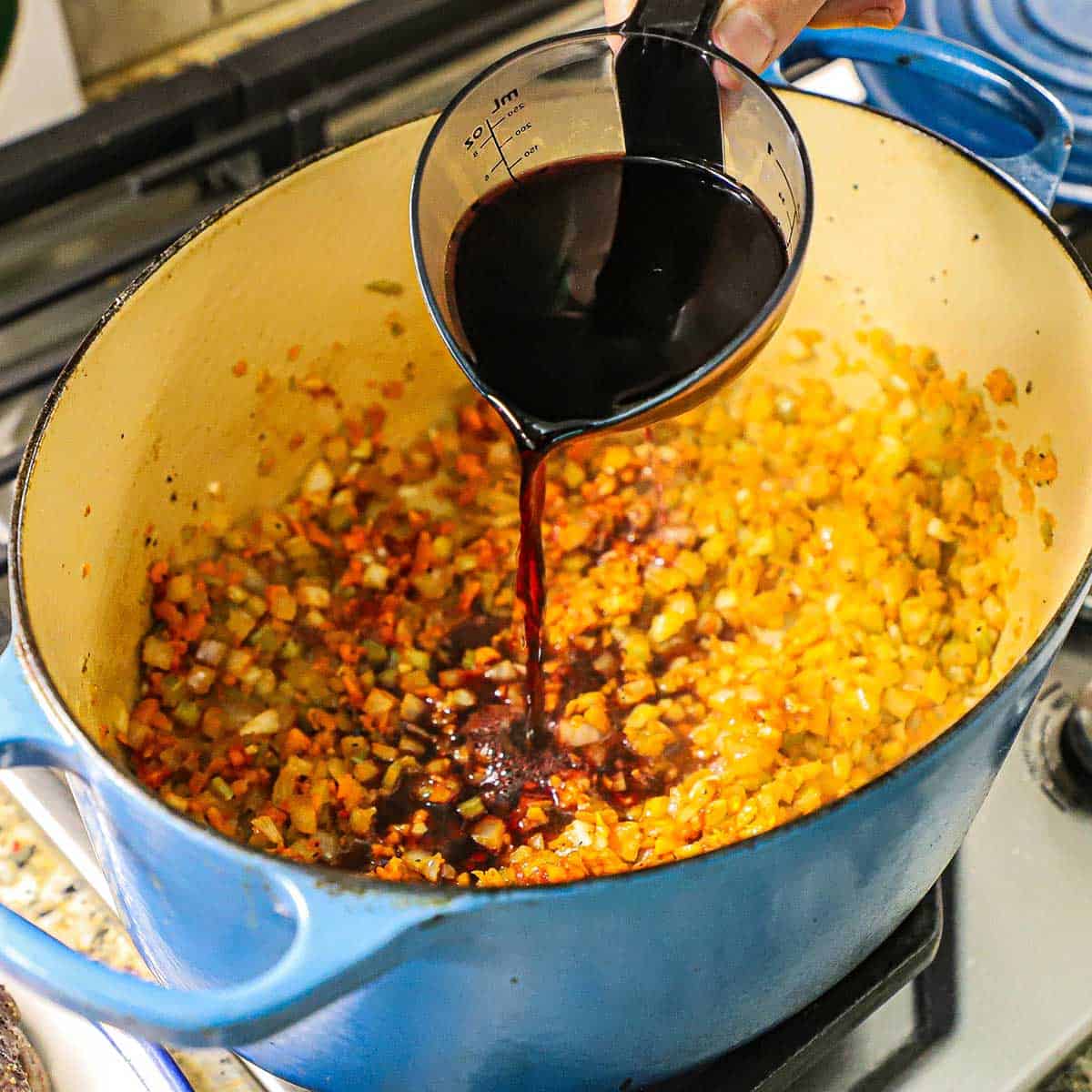
- Step 3: Add the red wine and cook until reduced by half.
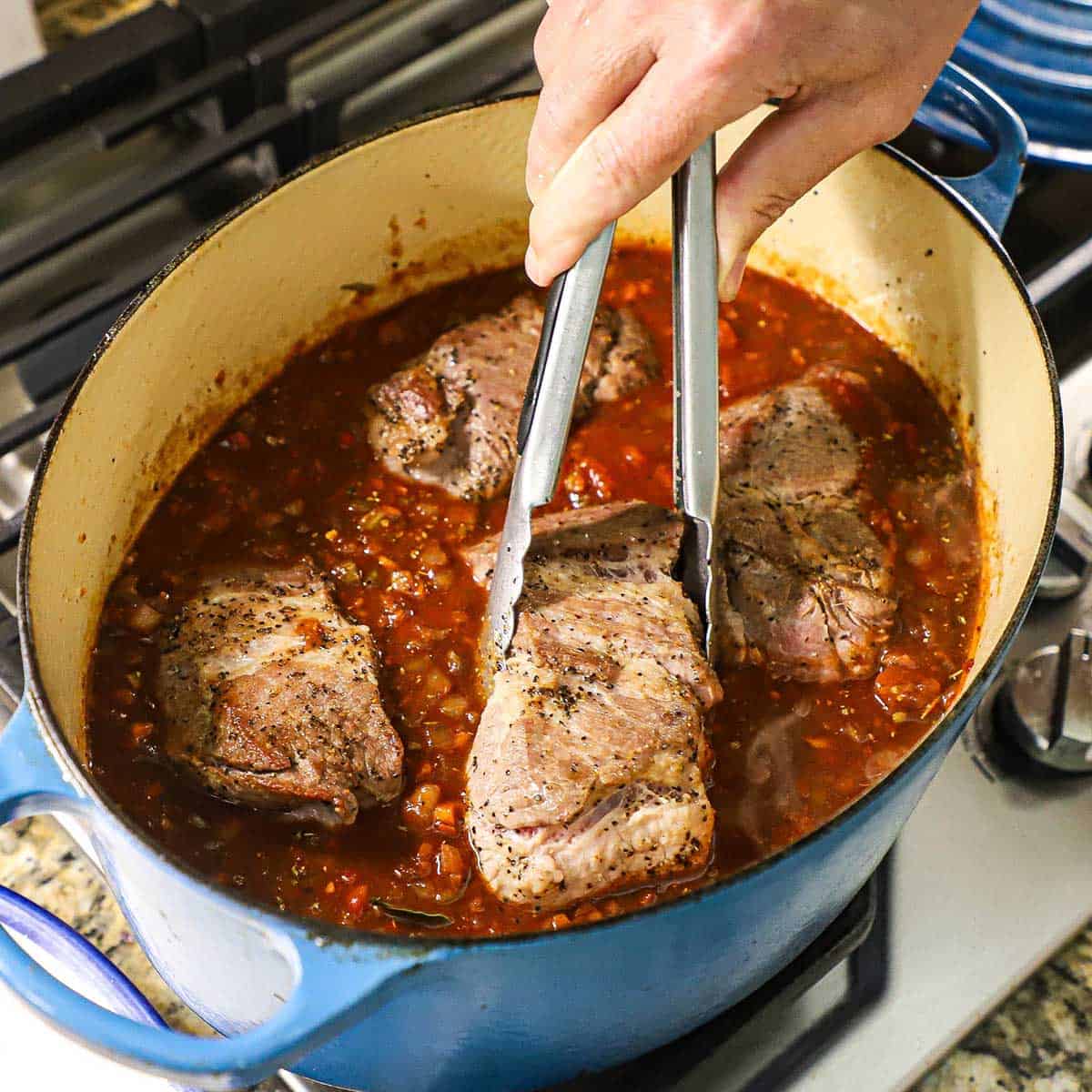
- Step 4: Stir in the hand-crushed tomatoes, stock, and herbs. Nestle the pork pieces into the liquid.
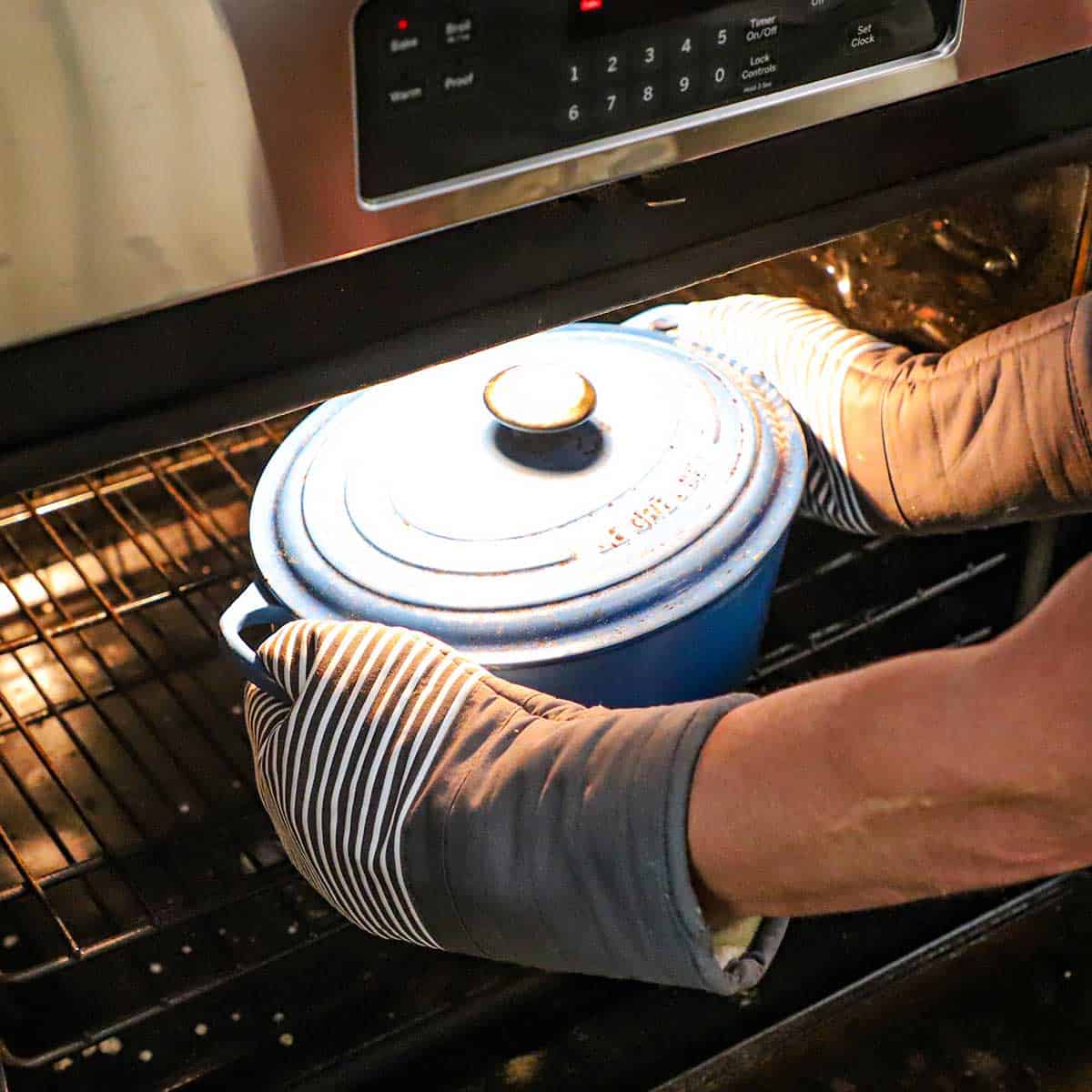
- Step 5: Cover and bake in a 300°F oven for 3 to 3½ hours.
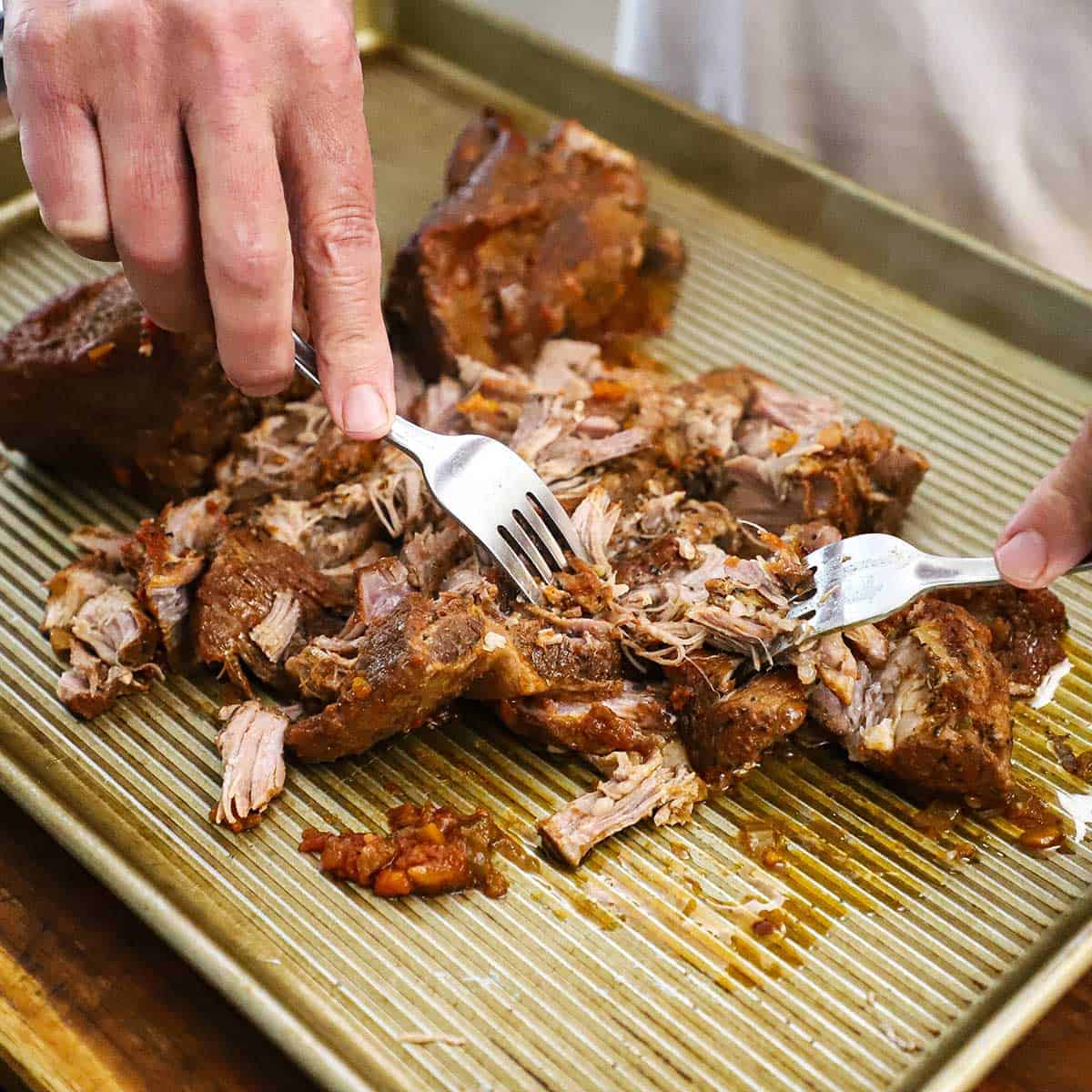
- Step 6: Remove the pork from the pot, place it on a baking sheet, and shred with two forks. Add the shredded pork back into the sauce (first remove the bay leaves and thyme). Meanwhile, cook the pasta and save 1 cup of the pasta water.
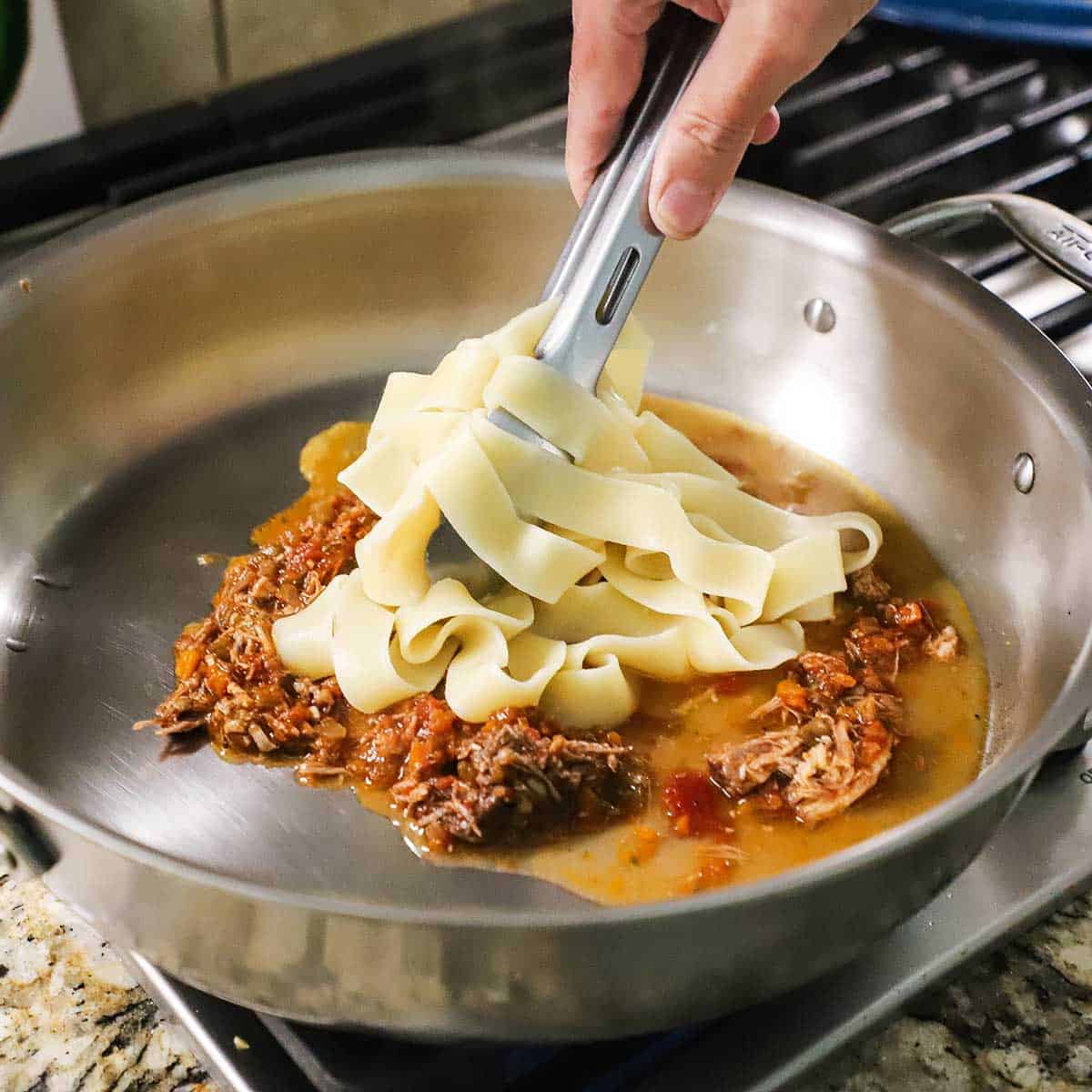
- Step 7: Heat about 1 cup of the sauce and a splash of pasta water in a large skillet. Add the cooked pasta and toss to fully coat.
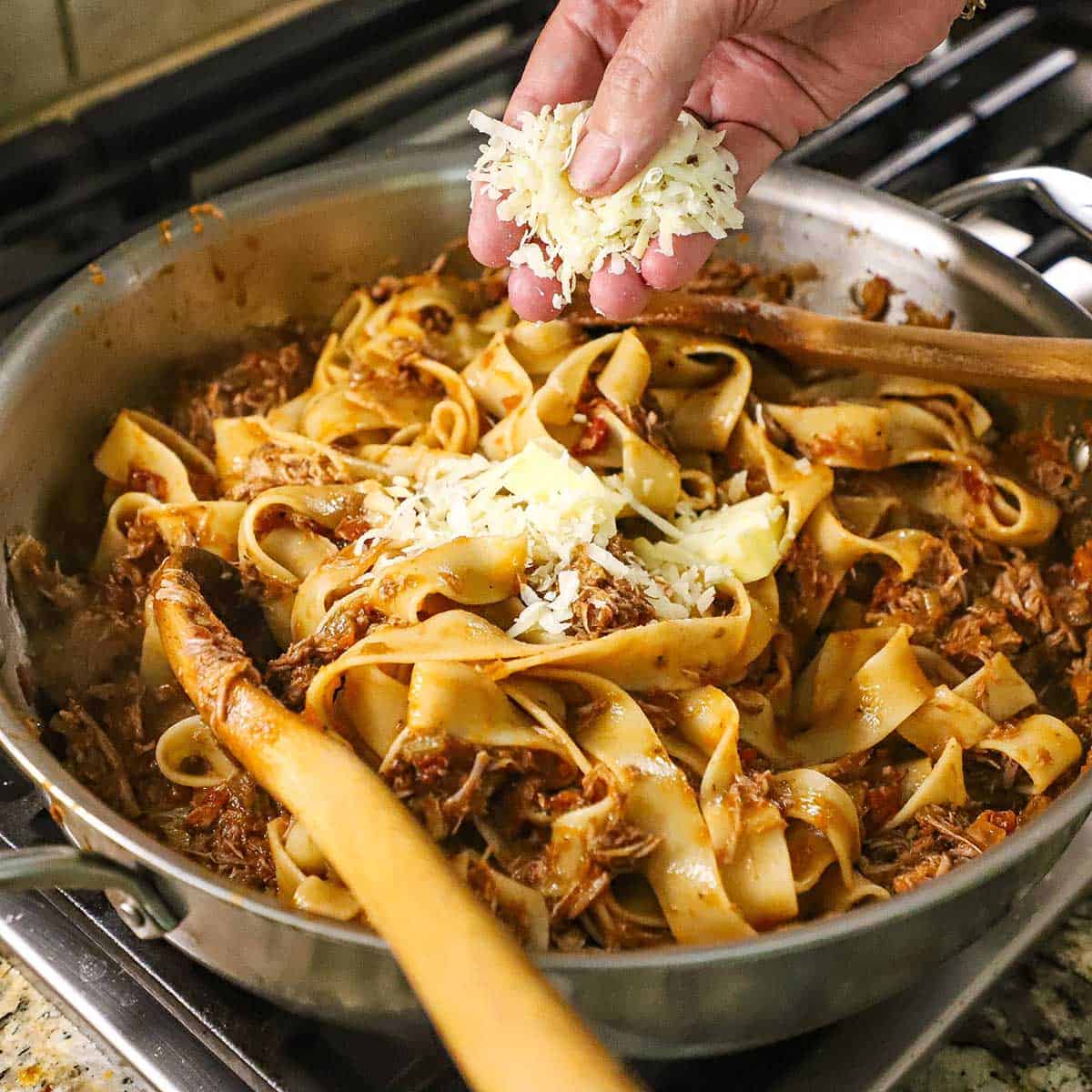
- Step 8: Add the rest of the sauce, butter, and ¼ cup of the grated Parmesan cheese. Serve at once.
Expert Tip: Ditch the Bag and Grate the Block
For the silkiest, most professional sauce possible, always grate your Parmesan cheese fresh from a block rather than buying the pre-shredded bags.
Pre-shredded cheeses are coated in anti-caking agents (like cellulose) that prevent the cheese from sticking together in the bag, but those same additives prevent the cheese from melting smoothly into your sauce, often resulting in a grainy or “clumpy” texture.
🙋🏽♂️ Frequently Asked Questions
Absolutely! In fact, the flavors deepen and meld even more after a night in the refrigerator. Simply store the sauce separately from the pasta, then reheat it gently on the stove before tossing it with freshly boiled noodles and a splash of starchy water.
A bone-in or boneless shoulder, often called a Boston Butt, is the ideal choice. Its high fat content and abundance of connective tissue break down during the long cooking process, resulting in incredibly tender, succulent shreds of meat.
Yes, you can. After searing the meat and sautéing the vegetables on the stovetop, transfer everything to your crockpot and cook on low for 8 hours.
When kept in an airtight container in the fridge, the sauce will remain delicious for up to 4 days. You can also freeze it for up to 3 months; just thaw it overnight in the refrigerator before reheating it.
🍝 More Classic Pasta Recipes


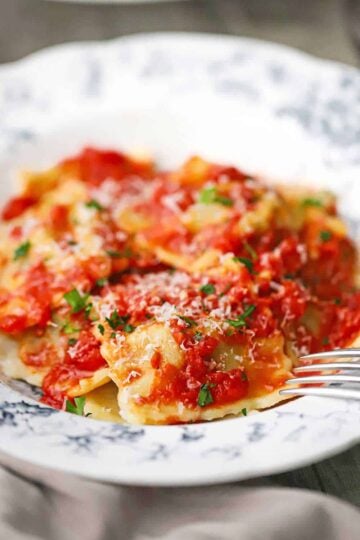

Ready to make the best pasta dish this side of Tuscany? Go for it!
And when you do, be sure to take a photo of it, post it on Instagram, and tag @HowToFeedaLoon and hashtag #HowToFeedaLoon!
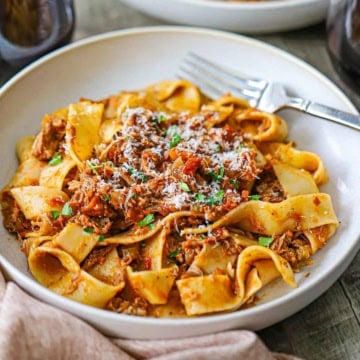
Slow-Braised Pork Ragu with Pappardelle
Video
Equipment
- 6-quart Dutch oven or oven-safe pot with lid
Ingredients
- 3 lb pork shoulder ie, Boston Butt
- salt and pepper
- 2 tablespoon extra-virgin olive oil
- 1 large onion chopped, about 1 cup
- 2 medium carrots chopped, about 1 cup
- 3 celery stalks chopped, about 1 cup
- 5 cloves garlic minced
- 2 tablespoon tomato paste
- 1 cup red wine dry, ie, Cabernet or Merlot
- 1 28 oz can whole tomatoes with juice, crushed by hand, preferably San Marzano
- 1½ cups beef stock or broth
- 2 bay leaves
- 3 sprigs thyme fresh, or 1 teaspoon dried
- 1 teaspoon dried oregano
- ½ teaspoon red pepper flakes more for more spice (optional)
- 12 oz pappardelle pasta dried, see NOTES
- 1 cup reserved pasta water
- 2 tablespoon unsalted butter
- ½ cup Parmesan cheese freshly grated, divided
- 2 tablespoon Italian parsley chopped, for garnish
Instructions
- Preheat oven to 300°F.
- Cut the pork shoulder into four chunks. Pat dry with a paper towel and then liberally season all over with salt and pepper.3 lb pork shoulder, salt and pepper
- Heat the oil in a large Dutch oven (or pot with lid) over medium heat. Add the pork chunks and sear until browned all over, about 5 to 10 minutes. Remove from the pot and place on a platter (to collect juices). Set aside.2 tablespoon extra-virgin olive oil
- Add the onion, carrots, and celery to the pot and sauté, stirring often, until softened, about 4 to 5 minutes. Stir in the garlic and sauté for another 30 seconds. Stir in the tomato paste and cook for 1 to 2 minutes. Stir in a pinch of salt and pepper.1 large onion, 2 medium carrots, 3 celery stalks, 5 cloves garlic, 2 tablespoon tomato paste
- Pour in the wine and use a wooden spatula to scrape up any bits on the bottom of the pan. Simmer until reduced by half, about 3 to 5 minutes.1 cup red wine
- Stir in the hand-crushed tomatoes, beef stock, bay leaves, thyme, oregano, and red pepper flakes (if using). Nestle the pork chunks (and any accumulated juices) into the liquid in the pot. Cover and place it in the oven for 3 to 3½ hours until the meat is fall-apart tender.1 28 oz can whole tomatoes, 1½ cups beef stock, 2 bay leaves, 3 sprigs thyme, 1 teaspoon dried oregano, ½ teaspoon red pepper flakes
- About 30 minutes before removing the pot from the oven, bring a pot of salted water to a boil. Add the pasta and cook until al dente, according to the package instructions. IMPORTANT: Save a cup of the pasta water before draining. Drain the pasta and set aside (don't do this for more than 15 minutes of shredded the pork).12 oz pappardelle pasta
- Remove the pork from the sauce and place it on a rimmed baking sheet. Use two forks to shred it.
- Use a small ladle or a spoon to skim off most of the rendered grease on the top of the sauce. If the sauce is too thin, place it on the stove over medium-high heat and simmer for 5 to 10 minutes, until slightly thickened. Taste and add more salt, if needed. Set aside.
- In a large skillet or saucepan over medium heat, add 1 cup of the ragu sauce and a splash of the pasta water. Add the cooked pasta and use tongs to coat the pasta with the sauce and water. Gradually add the rest of the sauce, leaving some for topping individual servings. Add more pasta water, if needed.1 cup reserved pasta water
- Stir in the butter and ¼ cup of the grated Parmesan. Carefully toss until fully combined.2 tablespoon unsalted butter, ½ cup Parmesan cheese
- Serve at once with extra sauce, Parmesan cheese, and chopped parsley for garnish.2 tablespoon Italian parsley
Notes
- Pasta Options: While the wide ribbons of pappardelle are the traditional choice for this heavy sauce, you can easily substitute them with other sturdy shapes like tagliatelle, fettuccine, or even rigatoni. If using dried pasta, look for a brand with a rough, “bronze-cut” texture to help the sauce cling to the noodles.
- Cooking Without Wine: If you prefer not to cook with alcohol, simply replace the red wine with an equal amount of beef stock and add one tablespoon of red wine vinegar. This ensures the sauce still has the necessary acidity and depth of flavor.
- Managing the Fat: Because pork shoulder is a well-marbled cut, you will likely see a layer of rendered fat on the surface after braising. For the best texture, use a large spoon to skim off and discard the excess clear fat before shredding the meat and finishing the dish.
- Make-Ahead & Freezing: This ragu is an excellent make-ahead meal as the flavors actually improve after a day in the fridge. The sauce also freezes beautifully for up to 3 months—just thaw it overnight in the refrigerator before reheating and tossing with fresh pasta.
Leave a Reply