
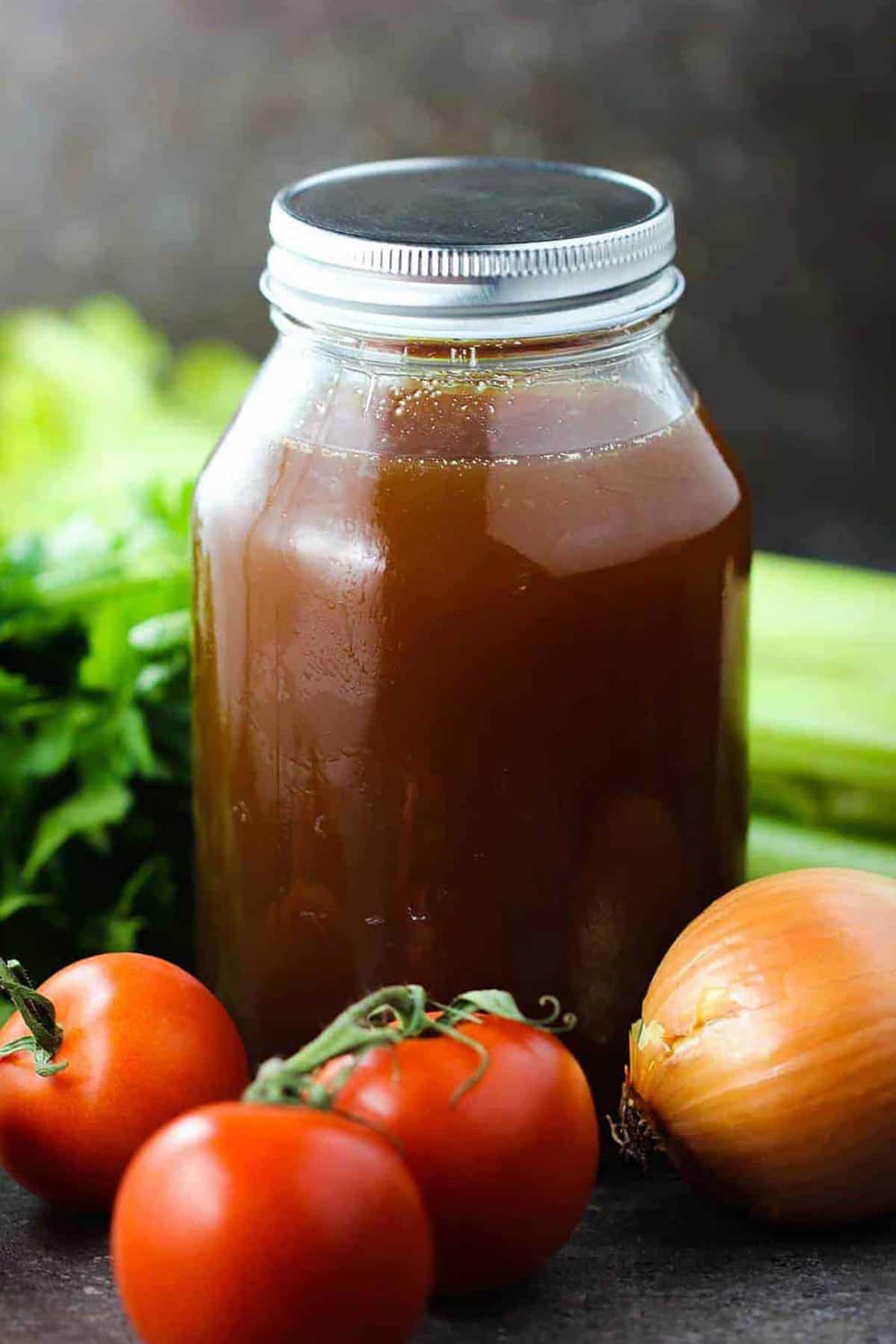
Elevate your cooking with this rich, Homemade Beef Stock. By roasting marrow bones and slow-simmering them with fresh aromatics and white wine, you create a savory “liquid gold” that far surpasses anything in a carton. This collagen-rich base adds incredible depth to soups, stews, and sauces. Simply simmer, strain, and skim for a restaurant-quality foundation ready for your fridge or freezer.
Jump to:
🌿 The Ingredients
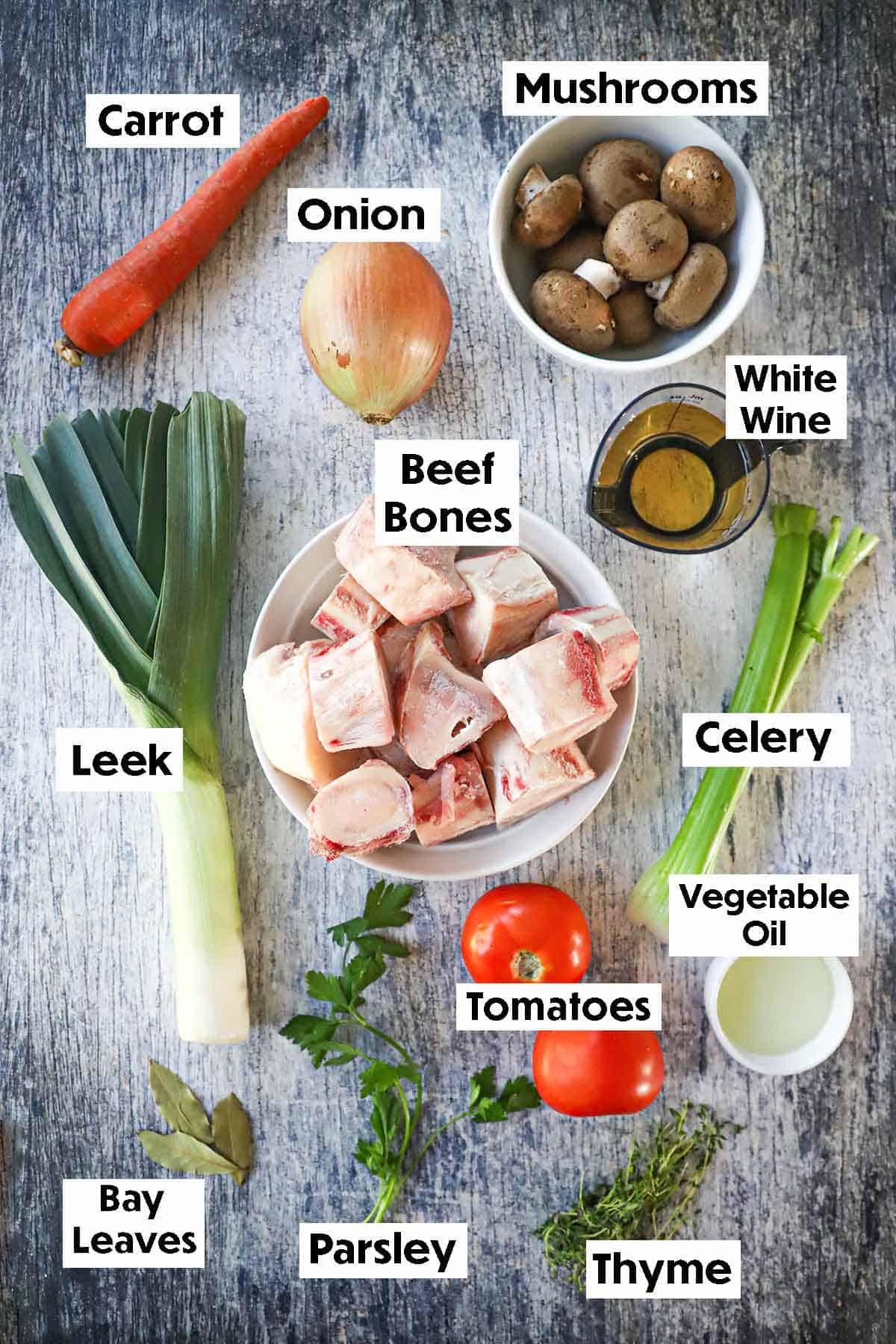
This recipe combines slow-roasted marrow with earthy aromatics and fresh herbs to create a deeply savory, collagen-rich foundation for all your favorite dishes. Find ingredient notes (including substitutions and variations) below.
🗒️ Ingredients Notes & Substitutions
- Beef Marrow Bones: Roasting these is essential for a deep, caramelized flavor. You can also use knuckle bones or neck bones, which are high in collagen and will give the stock even more body and a “gelatinous” texture when chilled.
- Leeks: Use the white and light green parts only. Be sure to wash them thoroughly after slicing, as they often trap grit and sand between their layers.
- Mushrooms: These are a “secret ingredient” that adds a massive boost of earthy umami, making the stock taste much richer and meatier without adding extra salt.
- White Wine: This is used to deglaze the roasting pan, lifting the caramelized bits (the “fond”) off the bottom. You can substitute red wine for a darker, bolder stock, or use a splash of water if you prefer to cook without alcohol.
- Tomatoes: These add a touch of acidity to help break down the connective tissue in the bones and provide a beautiful, deep color to the finished stock.
- Vegetable Oil: Use any neutral oil with a high smoke point for roasting and sautéing, such as canola, grapeseed, or avocado oil.
More Substitutions
- Aromatics: If you don’t have leeks, you can substitute with extra onions or a few shallots.
- Herbs: While fresh thyme and parsley are ideal for a 6-hour simmer, you can use dried herbs in a pinch (use about 1 teaspoon of dried for every tablespoon of fresh).
- Tomatoes: If you don’t have fresh tomatoes, a tablespoon of tomato paste sautéed with the vegetables will provide a similar color and acidity.
Refer to the recipe card (with video) below for a full list of ingredients and measurements.
📌 Tips & Tricks
- Don’t Skip the Roast: Roasting the bones at 400°F for a full hour is what gives the stock its deep mahogany color and rich, toasted flavor. Without this step, your stock will be pale and lack depth.
- The Power of the “Fond”: Those brown bits stuck to the bottom of your roasting pan are pure flavor (called the fond). Deglazing with white wine ensures every bit of that savory essence ends up in your stock pot rather than the sink.
- Simmer, Don’t Boil: Keep the heat at a very low simmer—just a few bubbles breaking the surface. A rolling boil will emulsify the fat into the liquid, resulting in a cloudy, greasy stock rather than a clear, clean one.
- Clean Your Leeks: Leeks are notorious for hiding dirt between their layers. Slice them lengthwise and rinse them under cold running water before chopping to ensure no grit ends up in your 6-hour simmer.
- The Fat Cap Advantage: Leaving the congealed fat on the surface while the stock chills in the fridge actually creates a natural seal that keeps the stock fresh for longer. Only remove it once you are ready to use or freeze the liquid.
- Freeze in Portions: If you aren’t using all the stock at once, freeze it in silicone molds or ice cube trays. This allows you to pop out exactly what you need for a pan sauce or a small recipe without thawing a whole jar.
- Fine-Mesh Straining: For the clearest restaurant-quality stock, strain the liquid through a fine-mesh sieve lined with cheesecloth to catch the smallest bits of herbs and marrow.
👩🏼🍳 How to Make Homemade Beef Stock
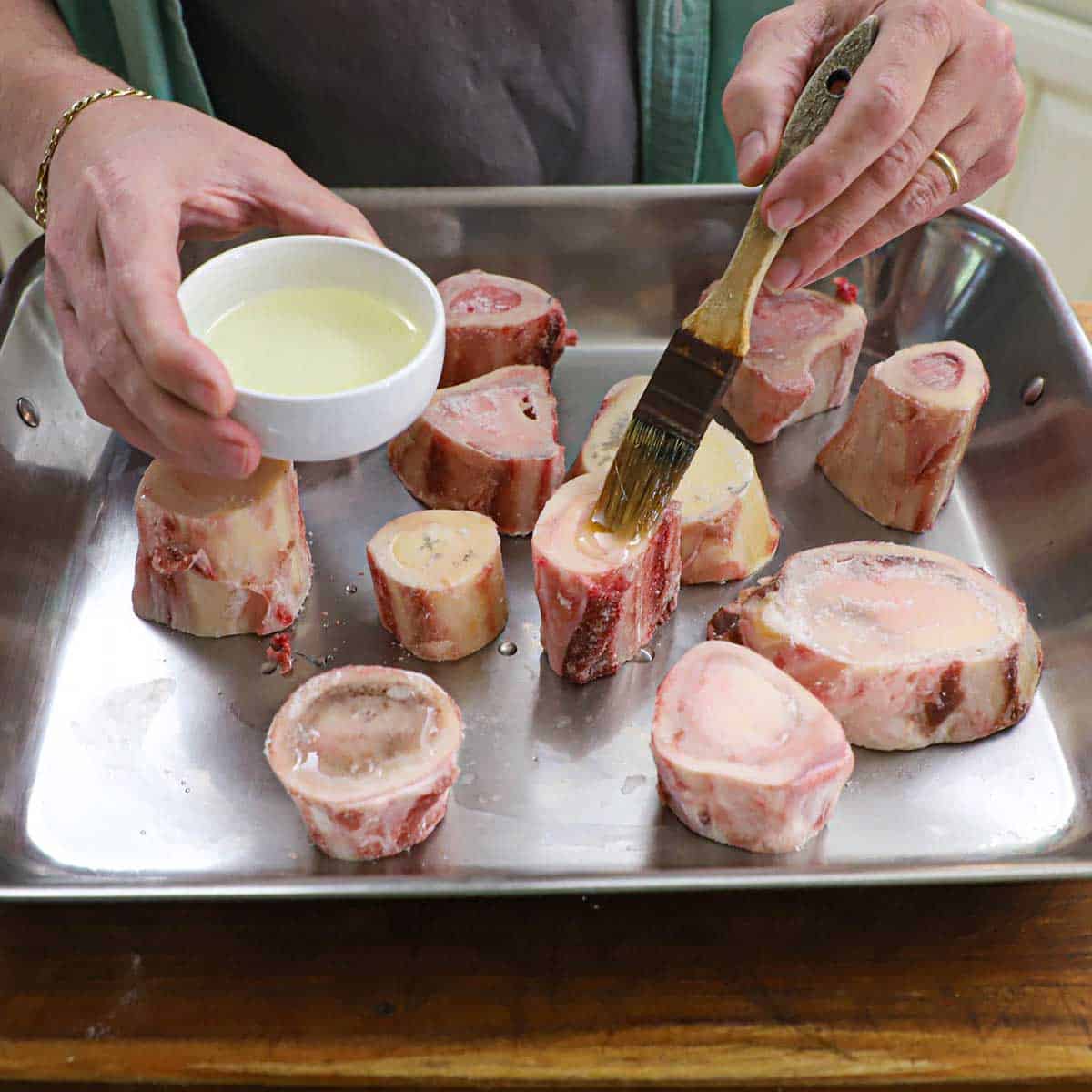
- Step 1: Brush the marrow bones with oil and then roast them for 1 hour at 400°F, turning them every 20 minutes.
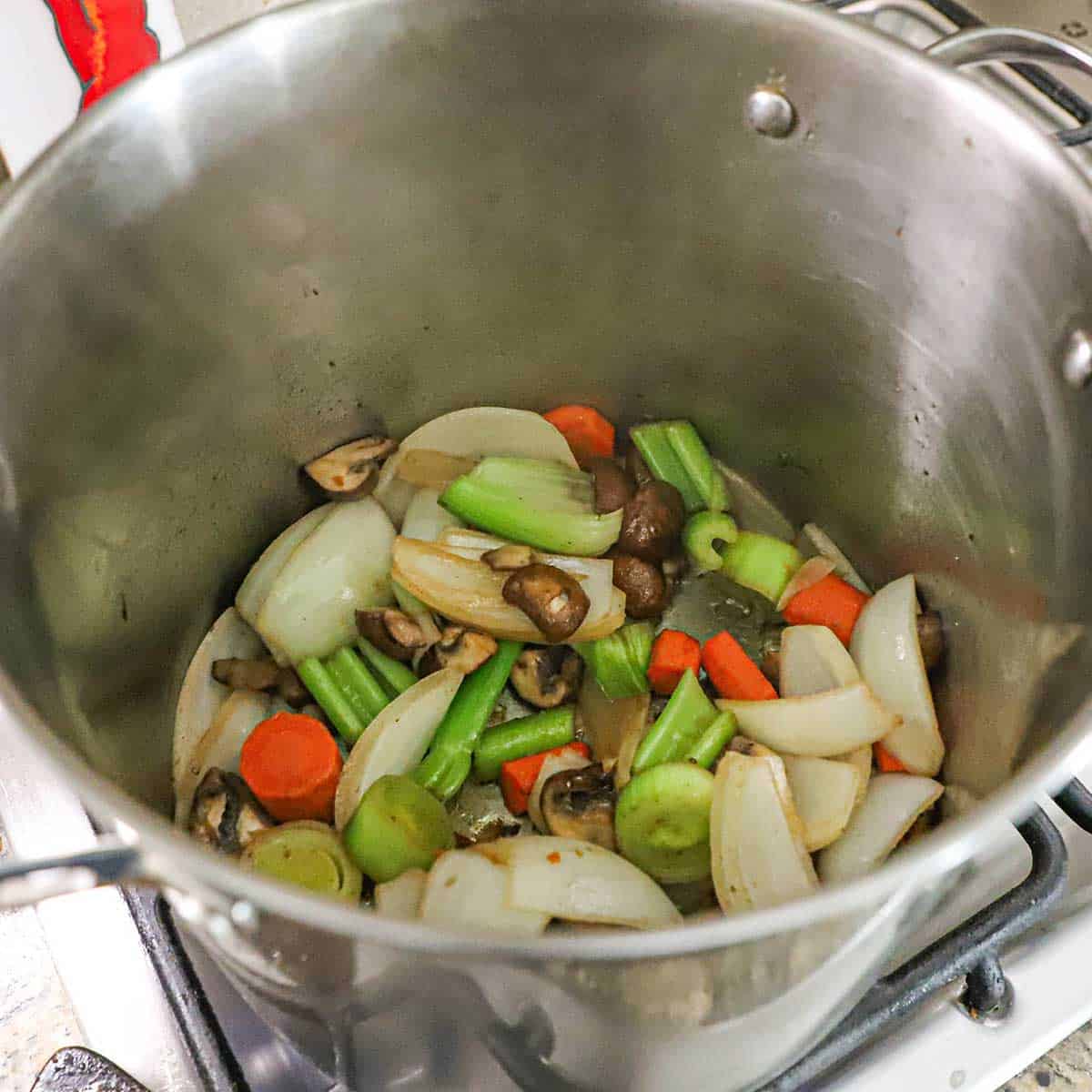
- Step 2: In a large stock pot, sauté the onion, leeks, celery, carrot, and mushrooms in oil over medium heat for about 15 minutes.
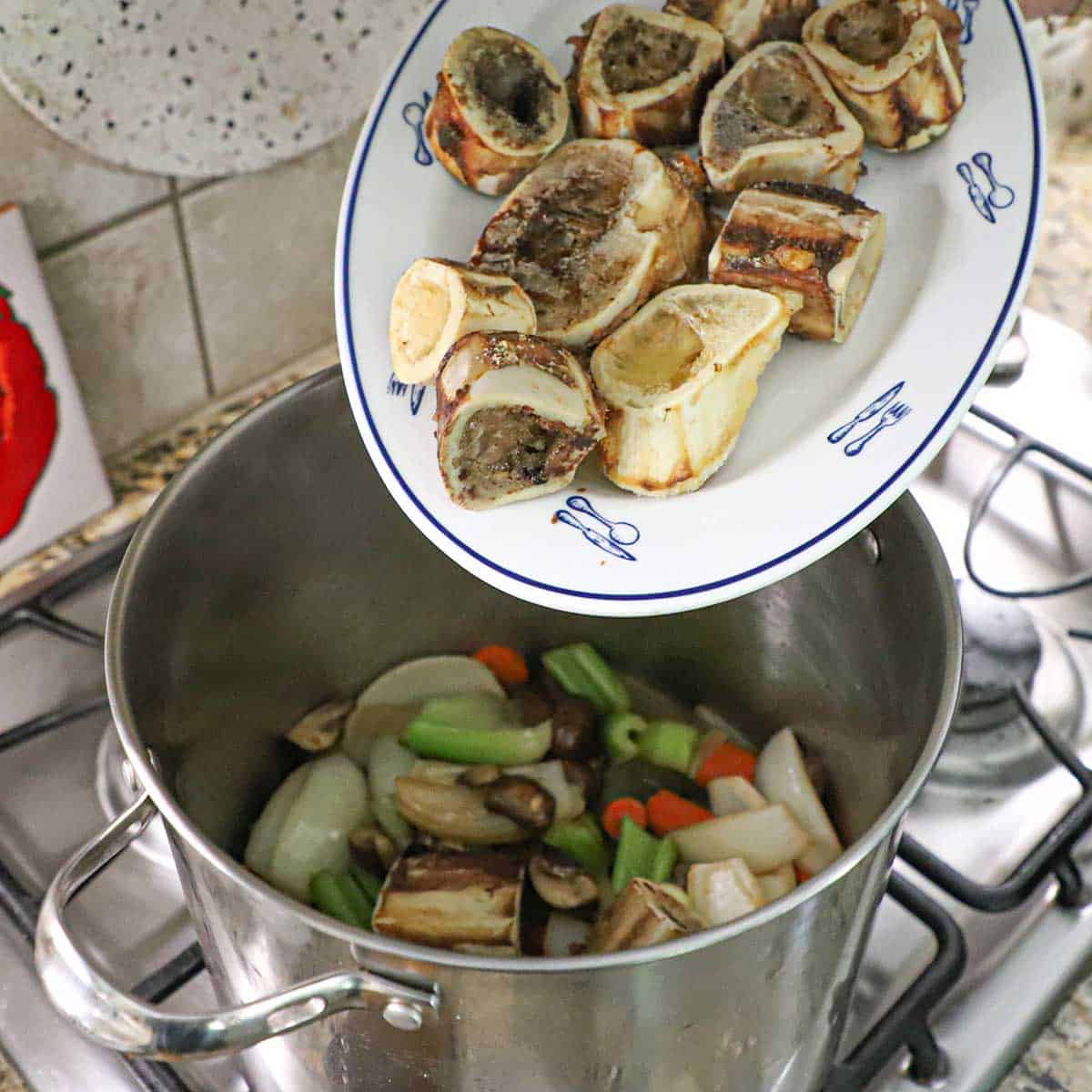
- Step 3: Transfer the roasted bones into the stock pot with the veggies.
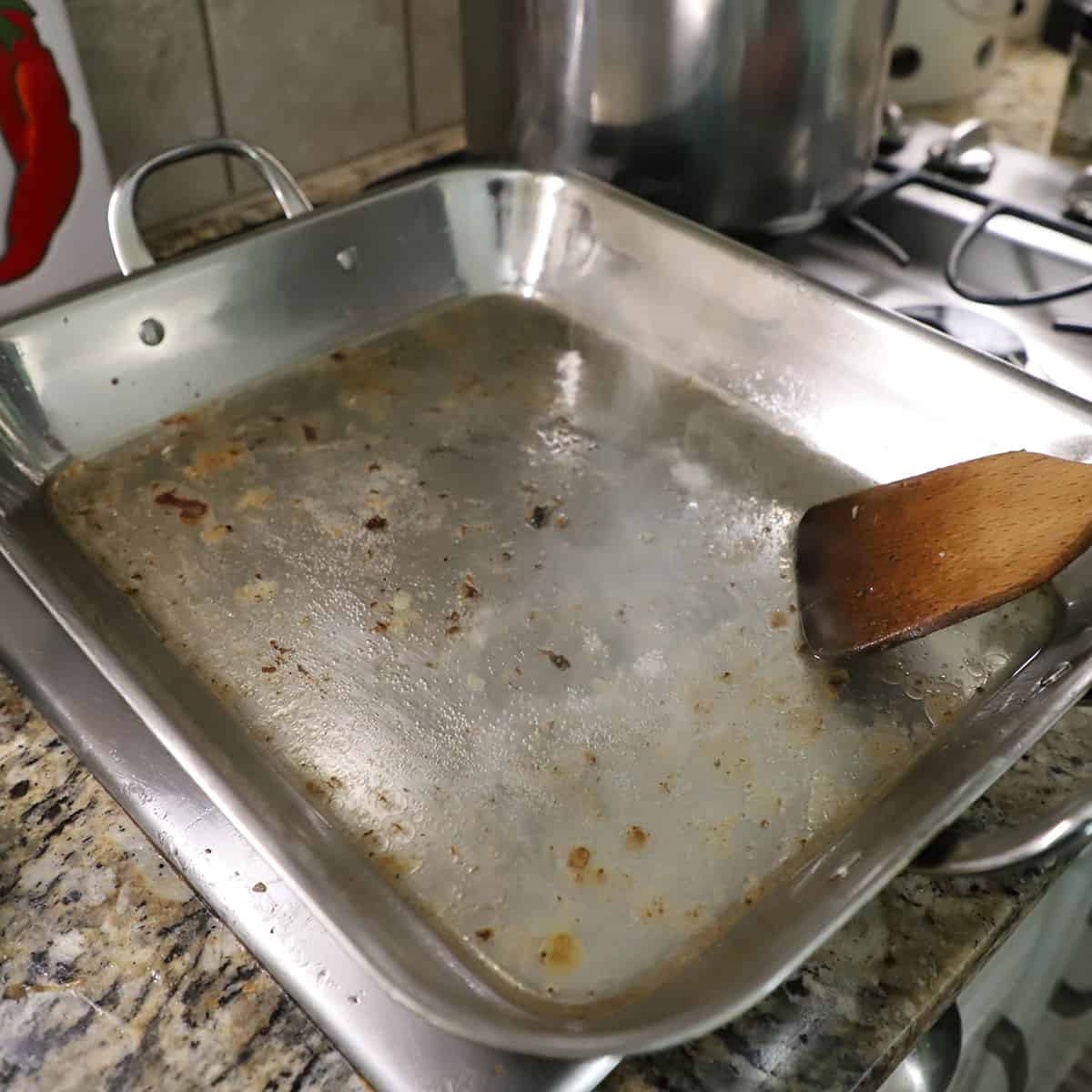
- Step 4: Deglaze the roasting pan with white wine (or broth) over direct heat and add to the pot (this is optional).
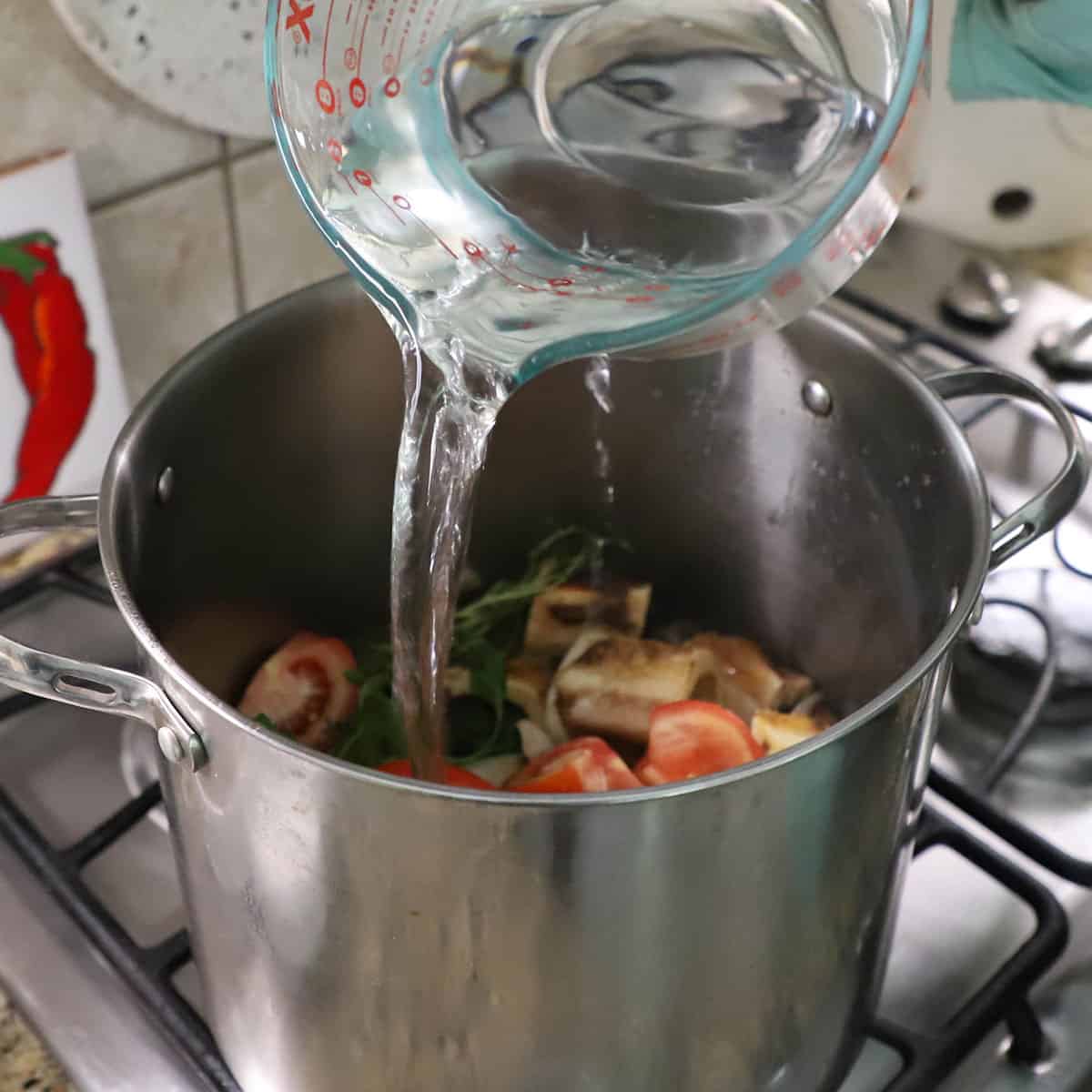
- Step 5: Add the tomatoes, herbs, and 1½ gallons to the stock pot and simmer for 6 hours.
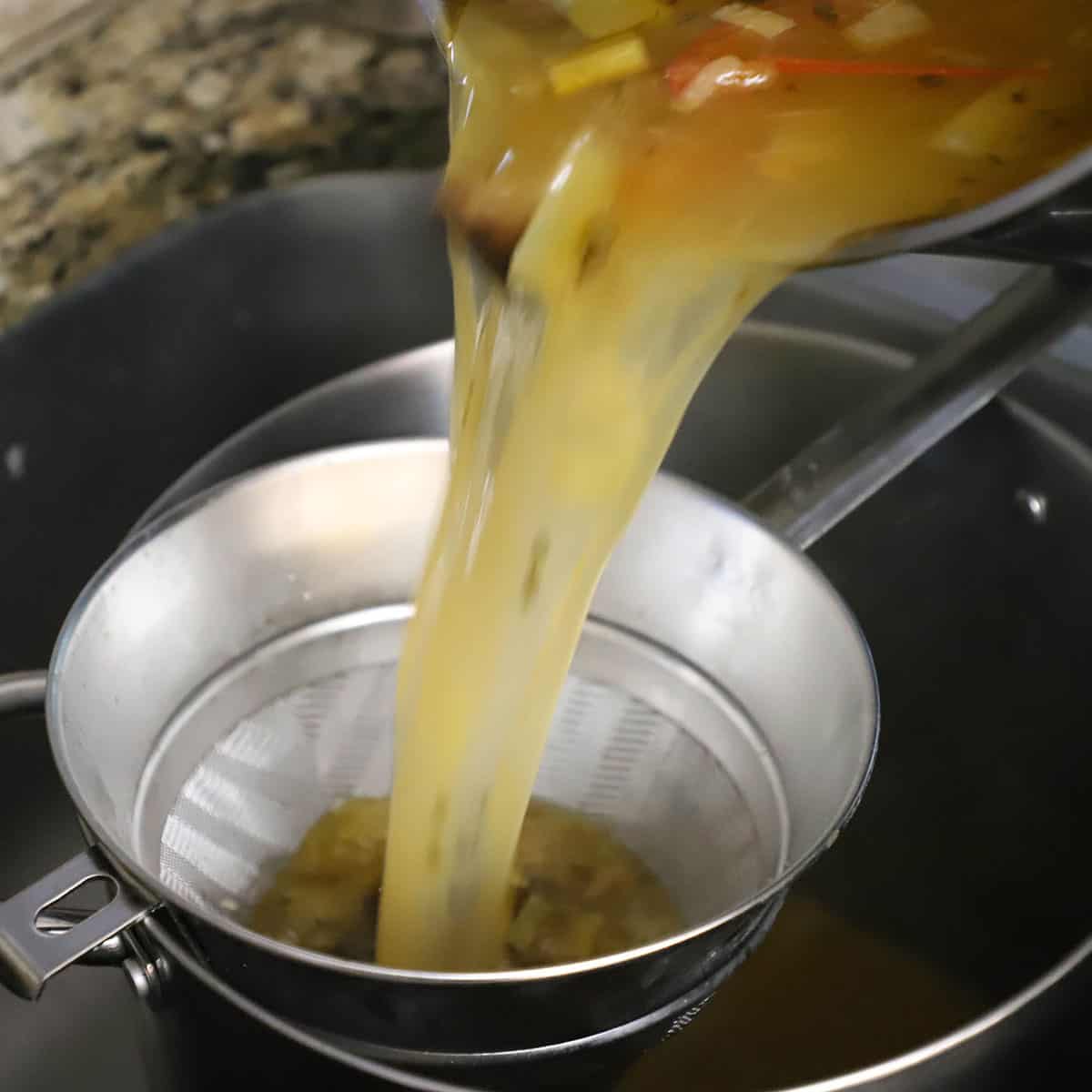
- Step 6: Strain the stock through a fine mesh sieve.
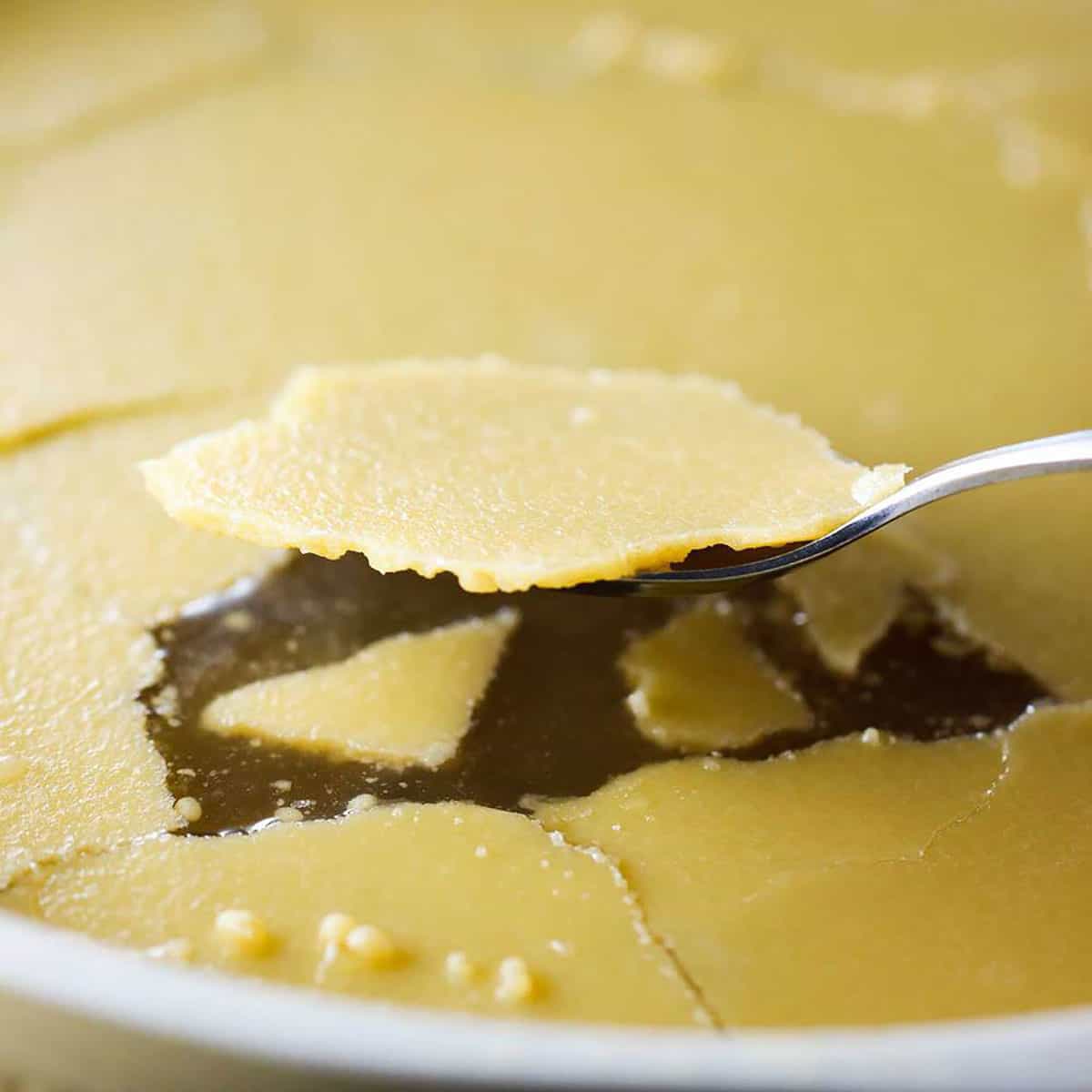
- Step 7: Chill overnight and then use a spoon to remove the congealed fat on the surface.
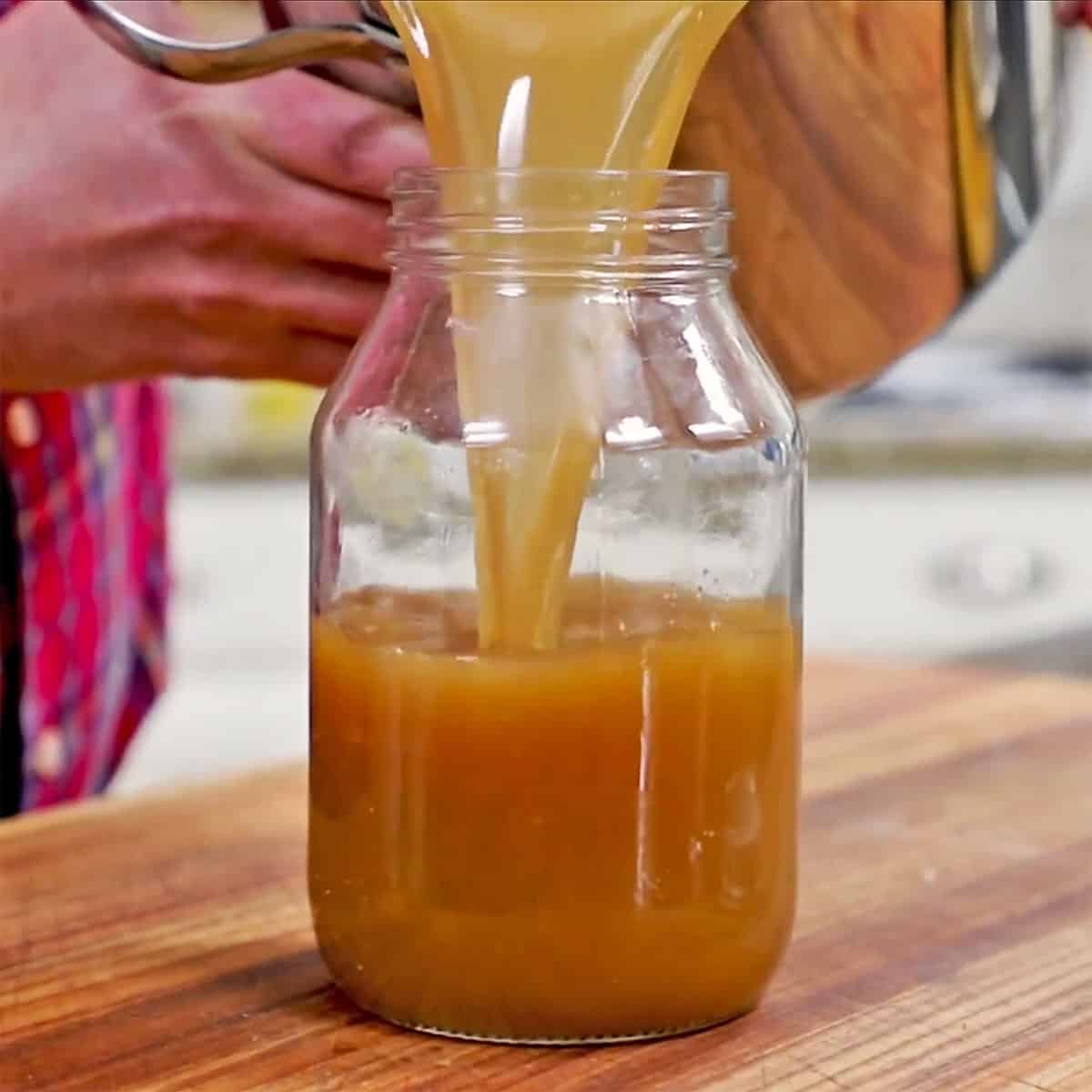
- Step 8: Bring to room temperature and then transfer to jars with tight-fitting lids. Store in the fridge for 2 weeks, or freeze (in freezer-safe containers) for up to 3 months.
🥣 When to Use Homemade Beef Stock
- The Ultimate French Onion Soup: Because this soup relies almost entirely on the quality of the broth, using homemade stock is a total game-changer. It provides the deep, savory backbone and silky mouthfeel that store-bought versions simply can’t replicate.
- Hearty Stews and Pot Roasts: Use it as the braising liquid for Hearty Beef Stew or Slow-Cooker Chuck Roast. The natural collagens in the stock will help thicken the sauce as it reduces, creating a rich, velvety gravy.
- Pan Sauces and Gravies: After searing a steak or roast, use a splash of this stock to deglaze the pan. Reduce it down with a bit of butter for a restaurant-quality sauce in minutes.
- Elevated Grains: Instead of using water, cook your rice, quinoa, or farro in beef stock to infuse the grains with a savory, nutty flavor.
- Classic Sauces: This is the perfect base for traditional French sauces like Bordelaise or Demi-Glace, where the purity and concentration of the stock are the stars of the show.
🙋🏽♂️ Frequently Asked Questions
This is actually a sign of a perfect stock! It means you successfully extracted the natural collagen from the marrow bones. Once you heat it up, it will return to a liquid state with a rich, silky mouthfeel.
Absolutely. It freezes beautifully for up to six months. For convenience, try freezing it in smaller portions or ice cube trays so you can easily grab exactly what you need for pan sauces or gravies.
This step is crucial for developing a deep, caramelized color and a complex, toasted flavor profile. Without it, the final result will be much lighter in color and taste significantly more bland.
t will typically stay fresh for about 4 to 5 days. If you leave the layer of congealed fat on top, it acts as a natural seal that can help it stay fresh toward the longer end of that range.

🫕 More Classic Broths and Stocks



Ready to put your soups and sauce over the top in pure deliciousness? Go for it!
And when you do, be sure to take a photograph, post it on Instagram, and tag @HowToFeedaLoon and hashtag #HowToFeedaLoon!
Homemade Beef Stock
Video
Equipment
- Stock pot
Ingredients
- 4 lbs beef bones such as ribs or marrow bones
- ¼ cup vegetable oil
- 1 large yellow onion quatered
- 1 large carrot thickly sliced
- 1 medium celery stalk thickly sliced
- 1 leek rinsed and sliced
- 1 lb mushrooms button, quartered
- ½ cup white wine or broth or water
- 2 medium tomatoes halved
- 5 sprigs thyme fresh
- 3 sprigs parsley fresh
- 3 bay leaves
Instructions
- Position a rack in the center of the oven, and heat the oven to 400°F.
- Arrange the beef bones in a single layer in a large flameproof roasting pan. Drizzle with 2 tablespoon of the oil and then rub the oil all over the bones. Roast, turning the bones every 20 minutes, until deep brown, about 1 hour.4 lbs beef bones, ¼ cup vegetable oil
- Put the remaining 2 tablespoon of oil and the onion, carrot, celery, leek, and mushrooms in an 8-quart stockpot. Cover and cook over low heat, stirring once or twice, until tender, about 15 minutes. Uncover, raise the heat to medium, and cook until the vegetables are browned in spots, about 3 minutes.1 large yellow onion, 1 large carrot, 1 medium celery stalk, 1 leek, 1 lb mushrooms
- Transfer the bones to the pot with the vegetables, leaving any rendered fat in the pan.
- Discard the fat from the pan, and set the pan over medium heat. Add the wine (or water) and bring to a boil, using a wooden spoon to scrape up any stuck-on bits from the bottom of the pan. Pour the liquid from the pan into the stock pot with the bones and vegetables. Add the tomatoes, thyme, parsley, and bay leaves, and 1½ gallons of water to the stock pan. Bring to a boil and then reduce the heat to low and simmer gently, uncovered – the stock should barely bubble – for 6 hours, topping up the water level occasionally to keep the solids covered.½ cup white wine, 2 medium tomatoes, 5 sprigs thyme, 3 sprigs parsley, 3 bay leaves
- Strain the stock through a fine sieve into a large bowl and let cool to room temperature. Chill overnight, then skim off the layer of congealed fat. You'll have about 7 to 8 cups of stock. The stock can be refrigerated for up to 2 days or frozen for up to 2 months.
Notes
Nutrition
POST UPDATE: This recipe was originally published in December 2013 but was updated with improved tweaks to the recipe with new tips and photography and a fabulous new video in January 2022.




Bob Wright says
Regarding Homemade Beef Stock
When I increase the number of people to be served, the ingredients increase accordingly. However, the amount of water to be added in step 5 remains the same: 1 gallon.
Am I correct in assuming that this is an error, and the amount of water should be increased in the same ratio as all the other ingredients?
Mahalo for the help!
Kris Longwell says
Hi Bob! That’s so strange! We need to look into why the water quantity didn’t increase. But you are absolutely correct, increase the water amount by the same ratio as the other ingredients. Let us know how it turns out!! All the best, Kris & Wesley