



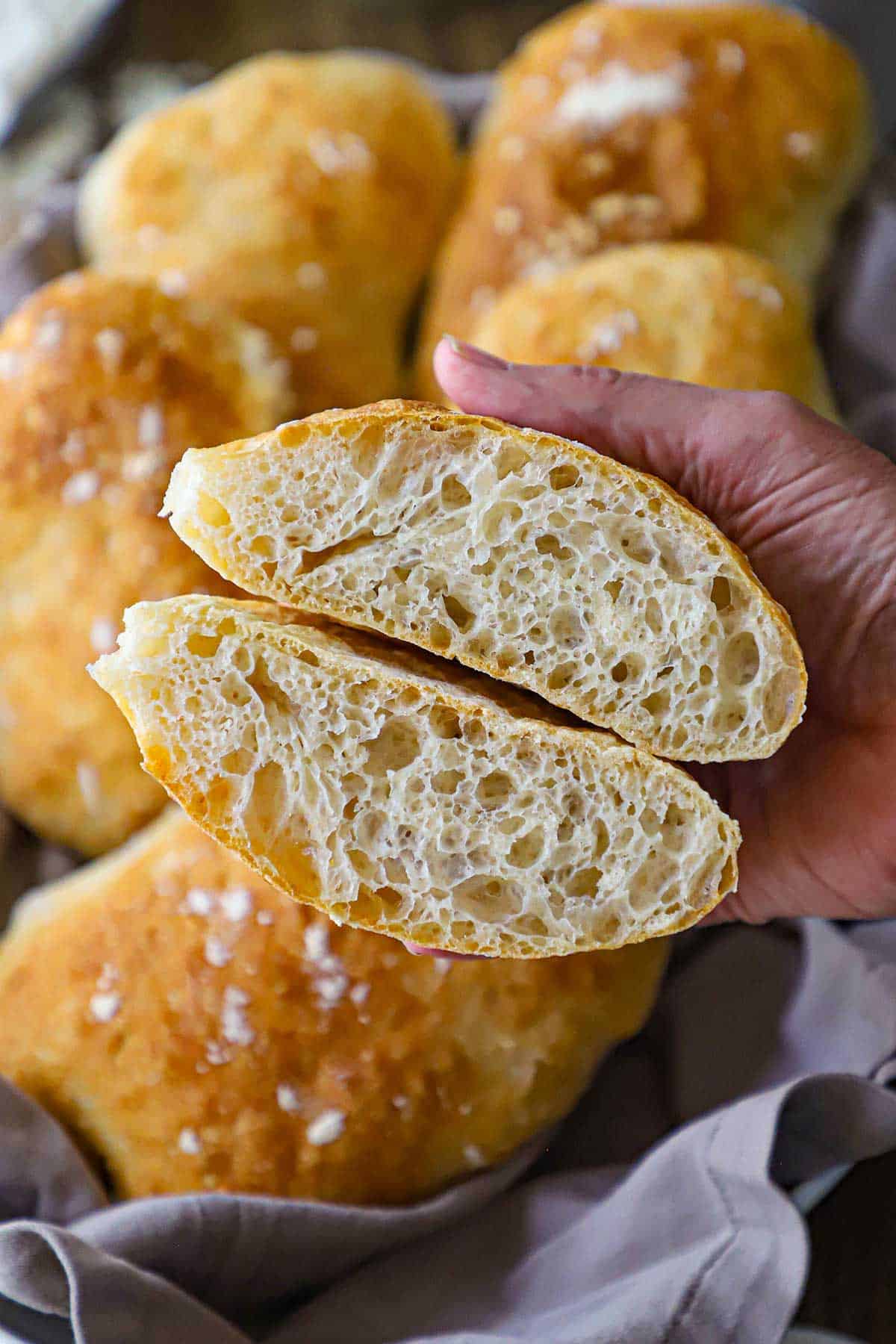
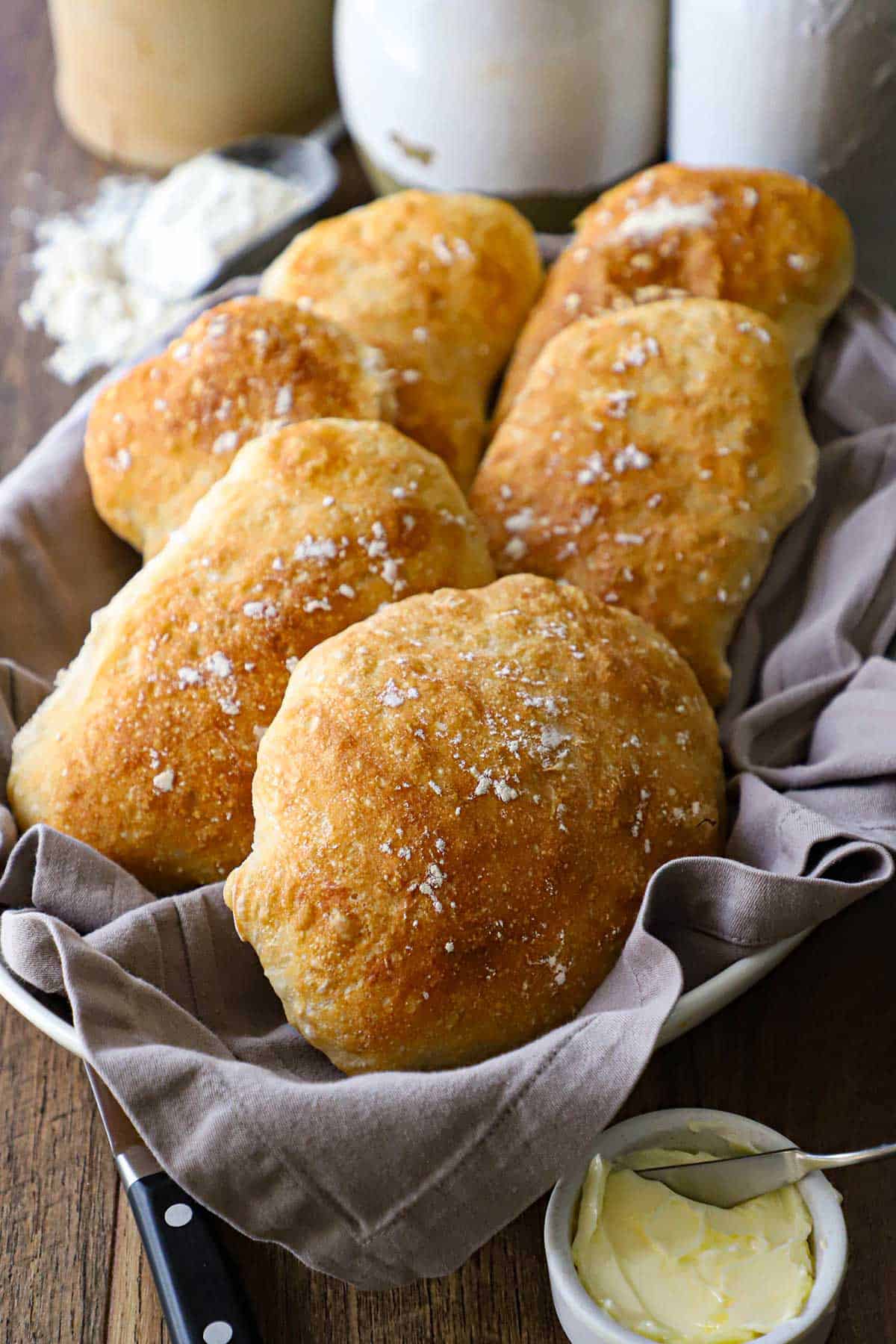
Achieve a bakery-worthy, crackly crust and light, airy crumb at home with these authentic homemade ciabatta rolls. Soft yet delightfully sturdy, they are incredibly versatile and serve as the ultimate foundation for a Grilled Pesto Chicken Sandwich!
Jump to:
💦 The Ingredients
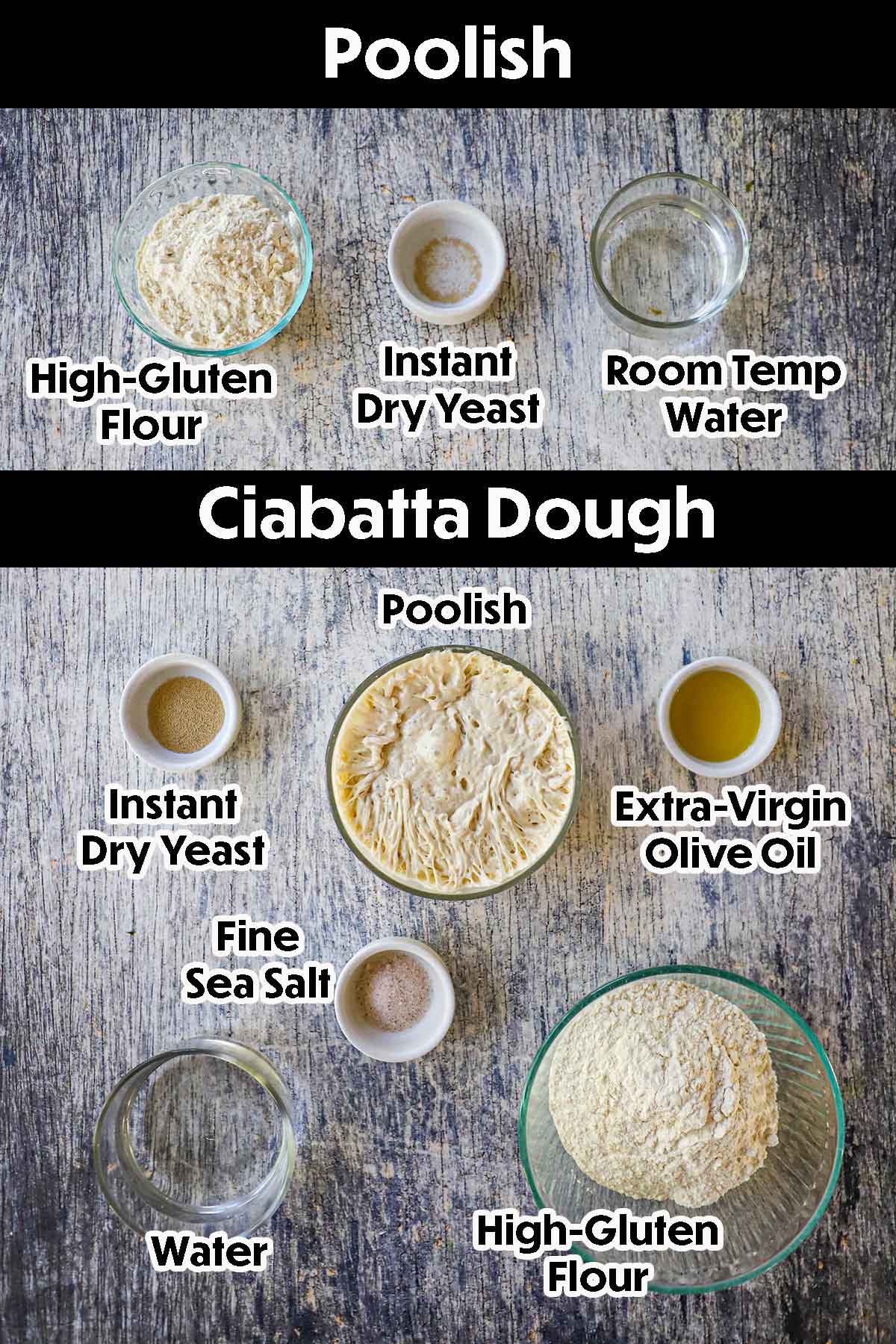
Made with just a few simple baking staples, this minimalist recipe relies on time and high hydration to transform basic elements into rich, artisan-quality bread. Find ingredient notes below.
📝 Ingredient Notes
- King Arthur High-Gluten Flour: The high protein content (around 14%) is the secret to this recipe’s success. It provides the structural strength needed to absorb high moisture (~84% hydration) and trap expanding gas without turning the dough into a soupy puddle. (Bread flour with at least 12.7% protein can be substituted, but avoid all-purpose flour).
- Instant Dry Yeast: We use a tiny fraction of a teaspoon for the overnight poolish to develop deep, sweet fermentation flavors, then a small dose in the main dough to give the rolls explosive rise in the oven.
- Water: Room-temperature or lukewarm water hydrates the flour and creates the high-moisture environment responsible for ciabatta’s iconic open, bubbly crumb structure.
- Fine Sea Salt: Salt does double duty here—it seasons the dough so it isn’t bland and tightens the gluten network and controls yeast activity so the dough doesn’t over-proof.
- Extra Virgin Olive Oil: Just a touch of quality olive oil adds a hint of rich, fruity flavor, makes the dough more elastic, and gives the finished crust a subtle, golden sheen.
Refer to the recipe card (with video) below for a full list of ingredients and measurements.
📌 Tips and Tricks for Perfect Ciabatta Rolls
- Water for Folds, Flour for Shaping: Keep your hands and surface wet during the stretch-and-fold phase to prevent sticking. Switch to a heavily floured surface only when shaping so the wet dough handles easily.
- Handle with Care: Never punch down or knead the dough after bulk fermentation. Gentle handling preserves the trapped gas pockets responsible for ciabatta’s signature open crumb.
- Supercharge Your Baking Steel or Pizza Stone: Preheat your oven and steel at 450°F (230°C) for a full 45–60 minutes. Saturated, intense heat is required for explosive “oven spring.”
- Steam for Maximum Rise: Throwing ice cubes into a hot skillet creates an instant blast of steam. This keeps the outer skin elastic so the rolls can expand fully before the crust sets.
- Use a Bottom Heat-Shield: If the bottoms of the rolls are browning too fast on the steel, slide an empty baking sheet onto the rack directly underneath it for the final minutes of baking.
- Cool Before Slicing: Let the rolls rest on a wire rack for at least 20–30 minutes. Cutting into hot bread traps moisture and can make the interior gummy.
👩🏼🍳 How to Make Homemade Ciabatta Dough
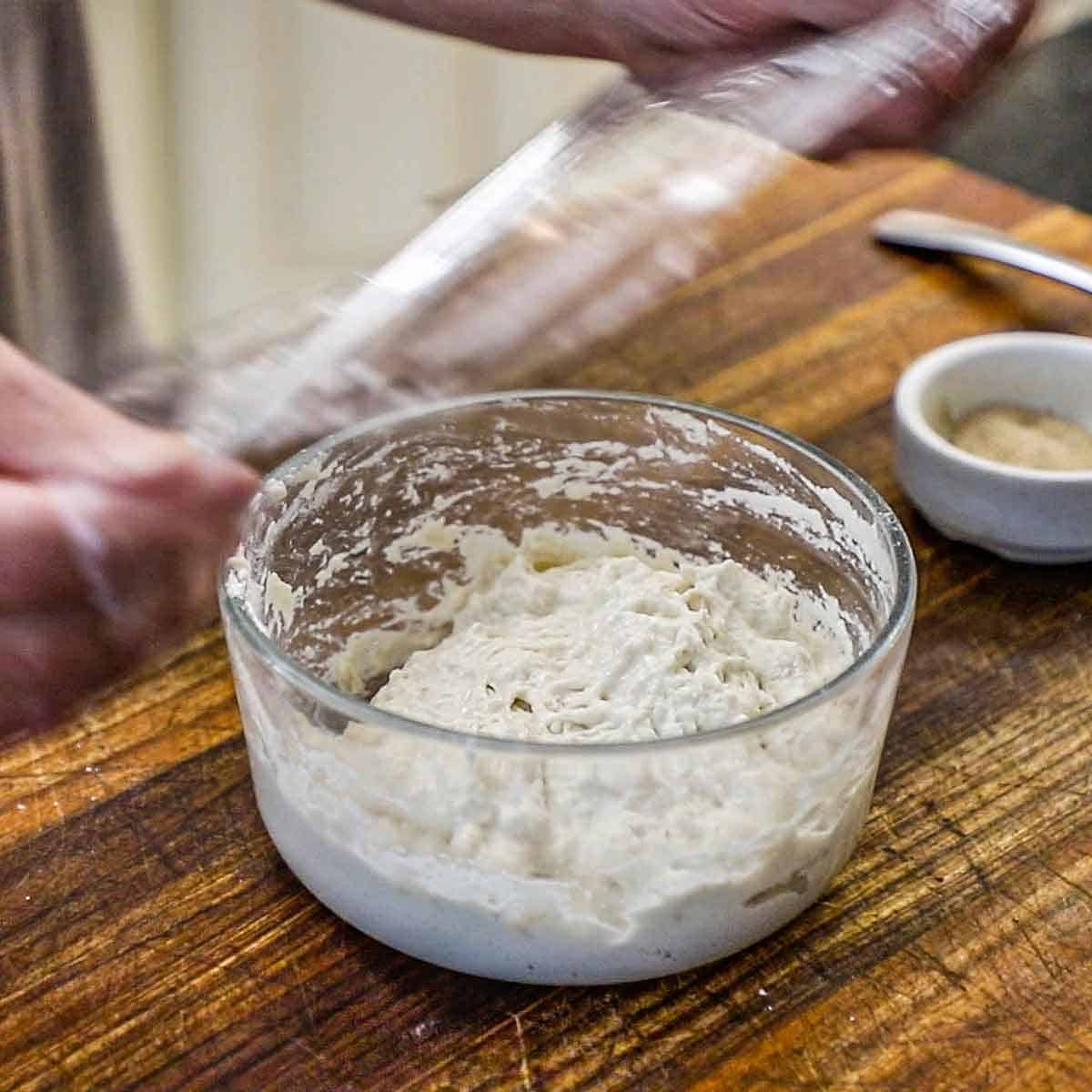
- Step 1: The night before baking, mix the flour (200g) and water (200g) with a small pinch of yeast. Cover it, and the next day it will be foamy and domed.
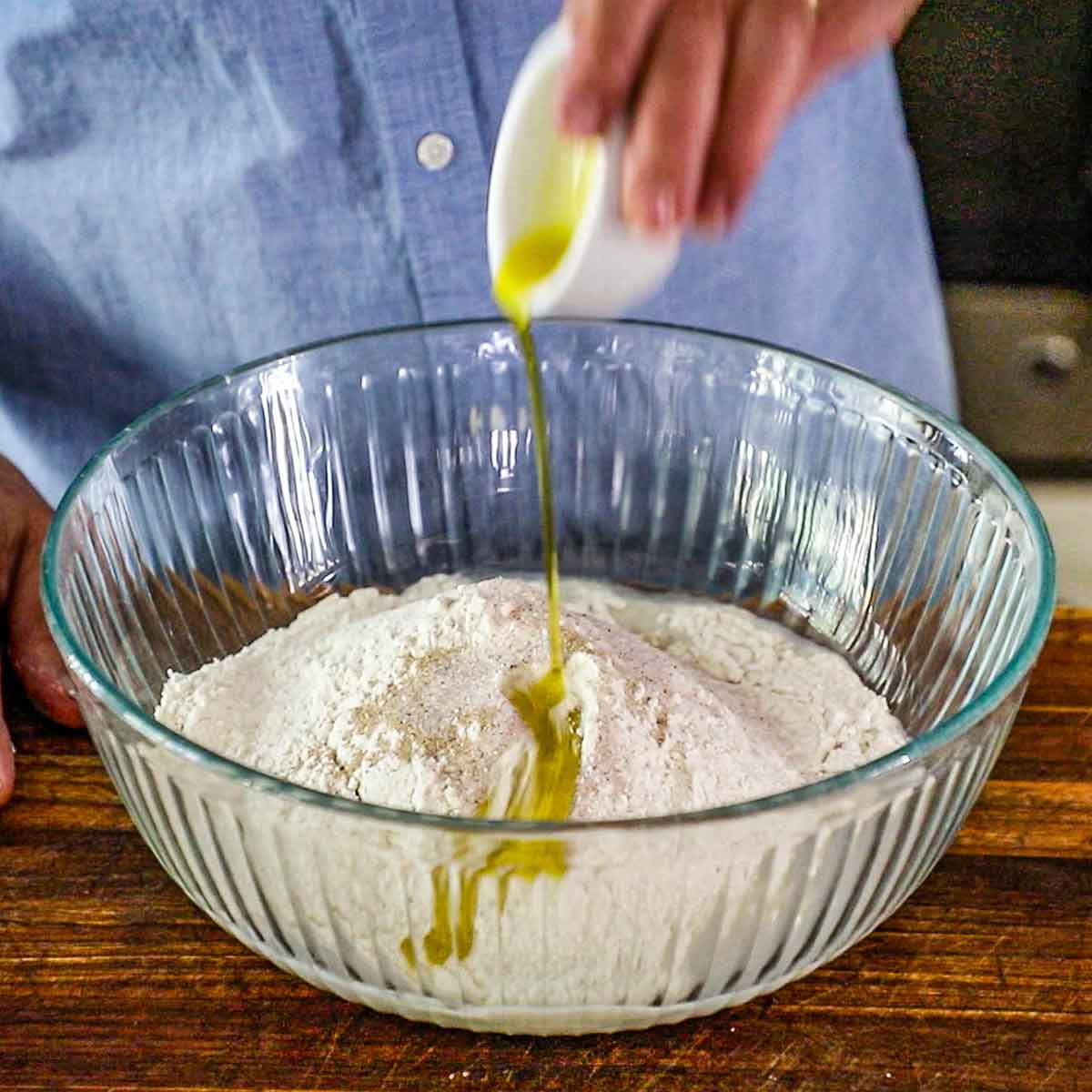
- Step 2: The next day, in a large mixing bowl, combine the poolish, water, flour, instant yeast, salt, and olive oil.
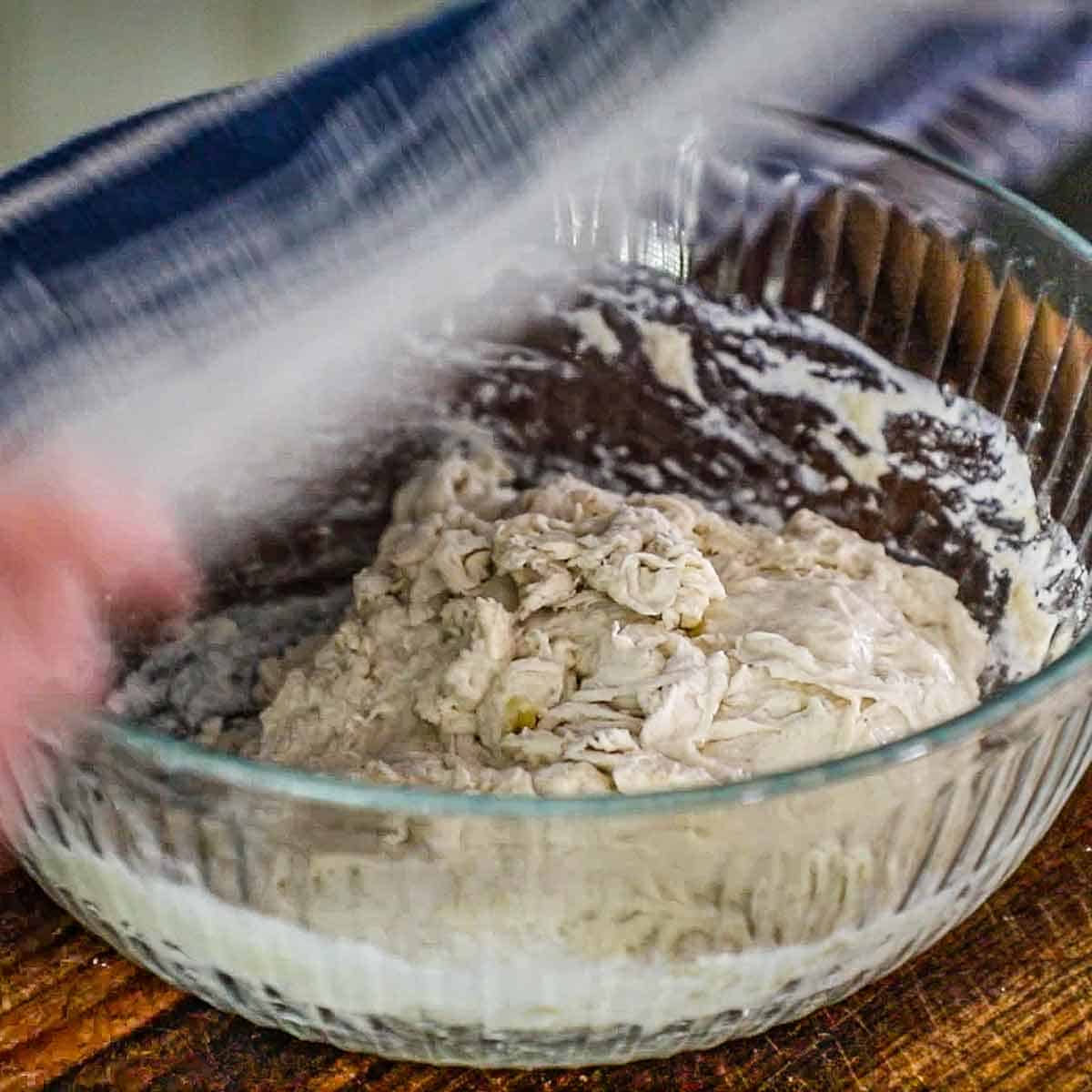
- Step 3: Mix until a shaggy dough forms. Cover with plastic wrap and let rest for 20 minutes.
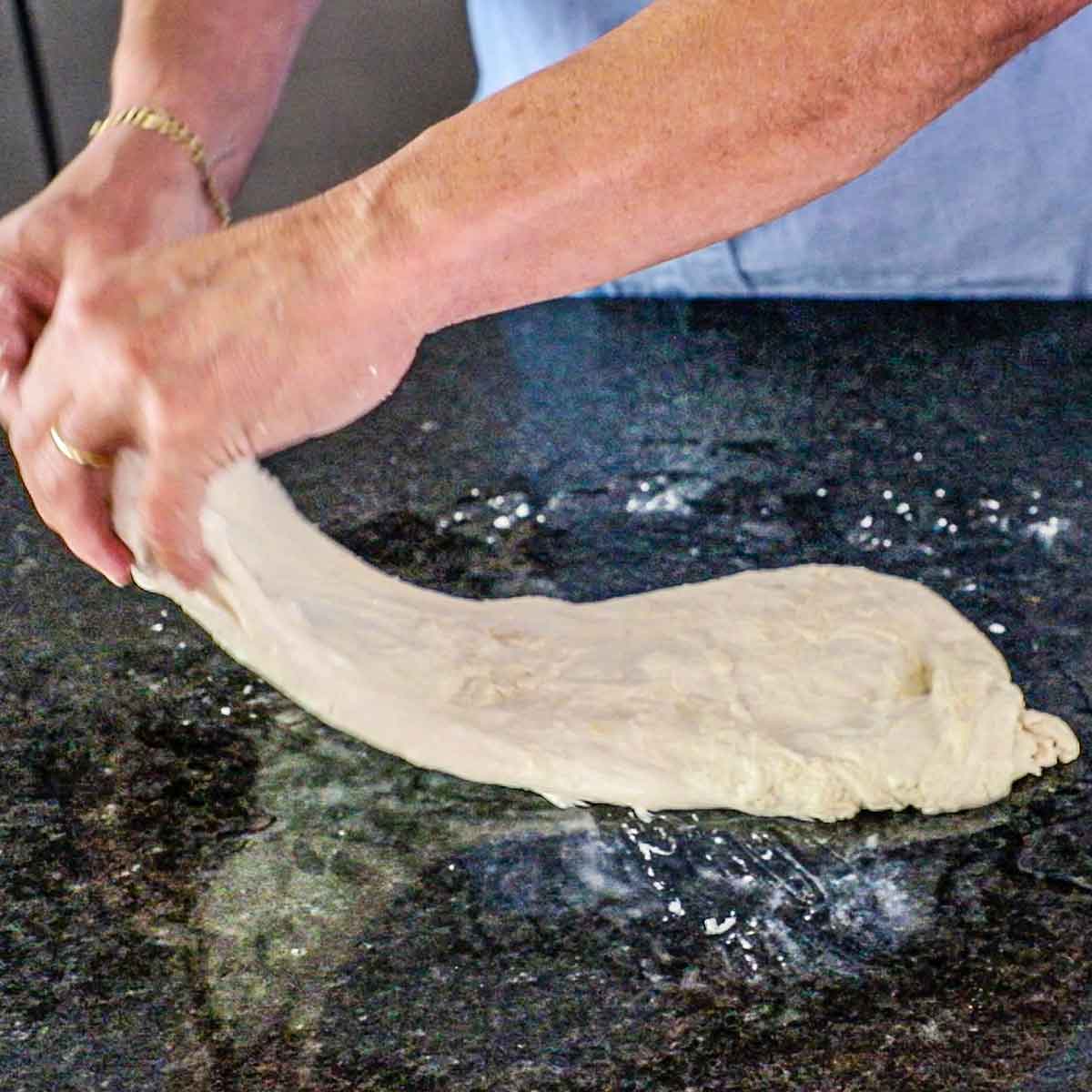
- Step 4: Transfer the dough to a counter dampened with a little water. Stretch the dough with wet hands, then fold over, stretch the other side, and fold like a letter. Turn 90°F, and repeat this process for 2 minutes.
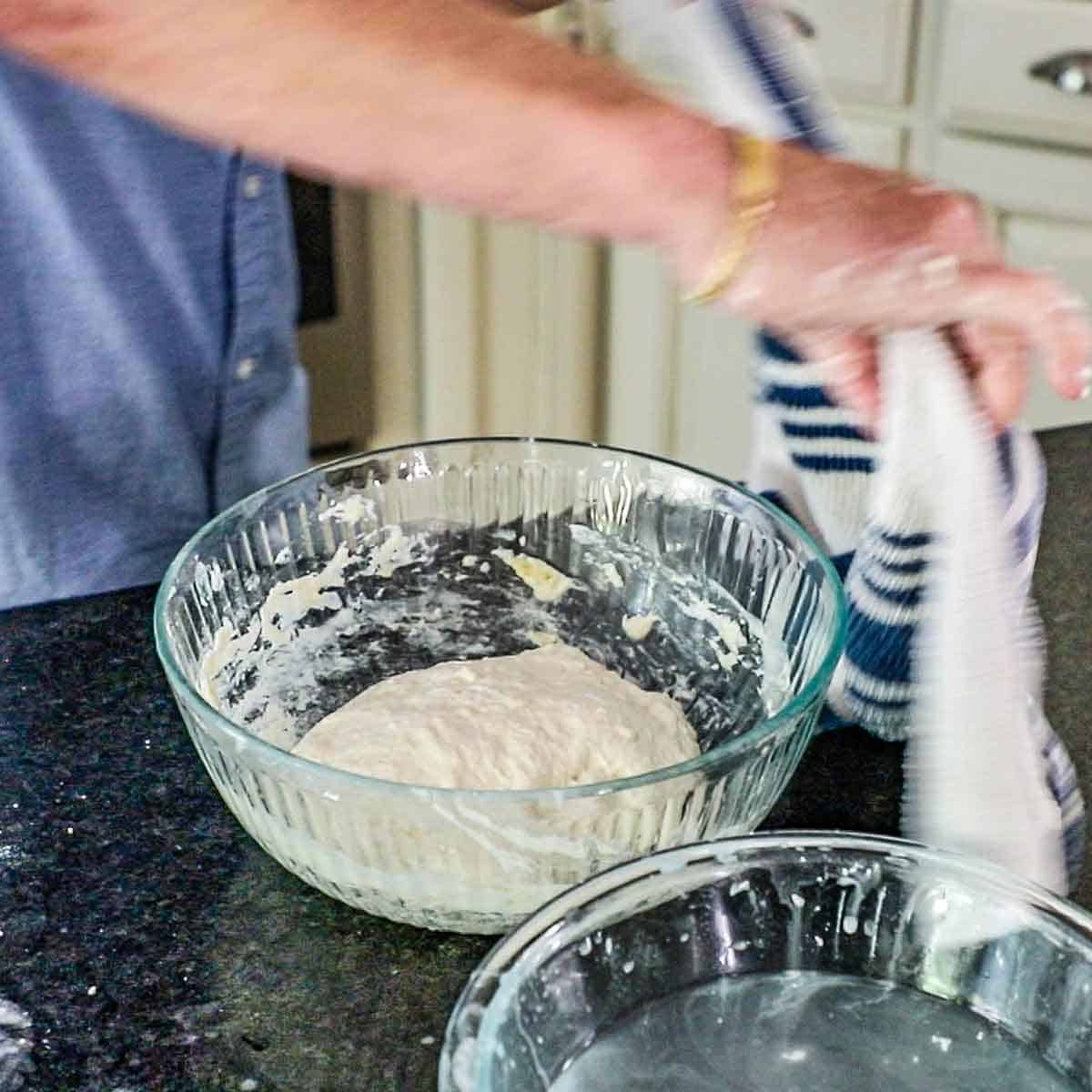
- Step 5: Place back in the bowl and cover with plastic wrap for 45 minutes. Repeat this “stretch and fold” process two more times.
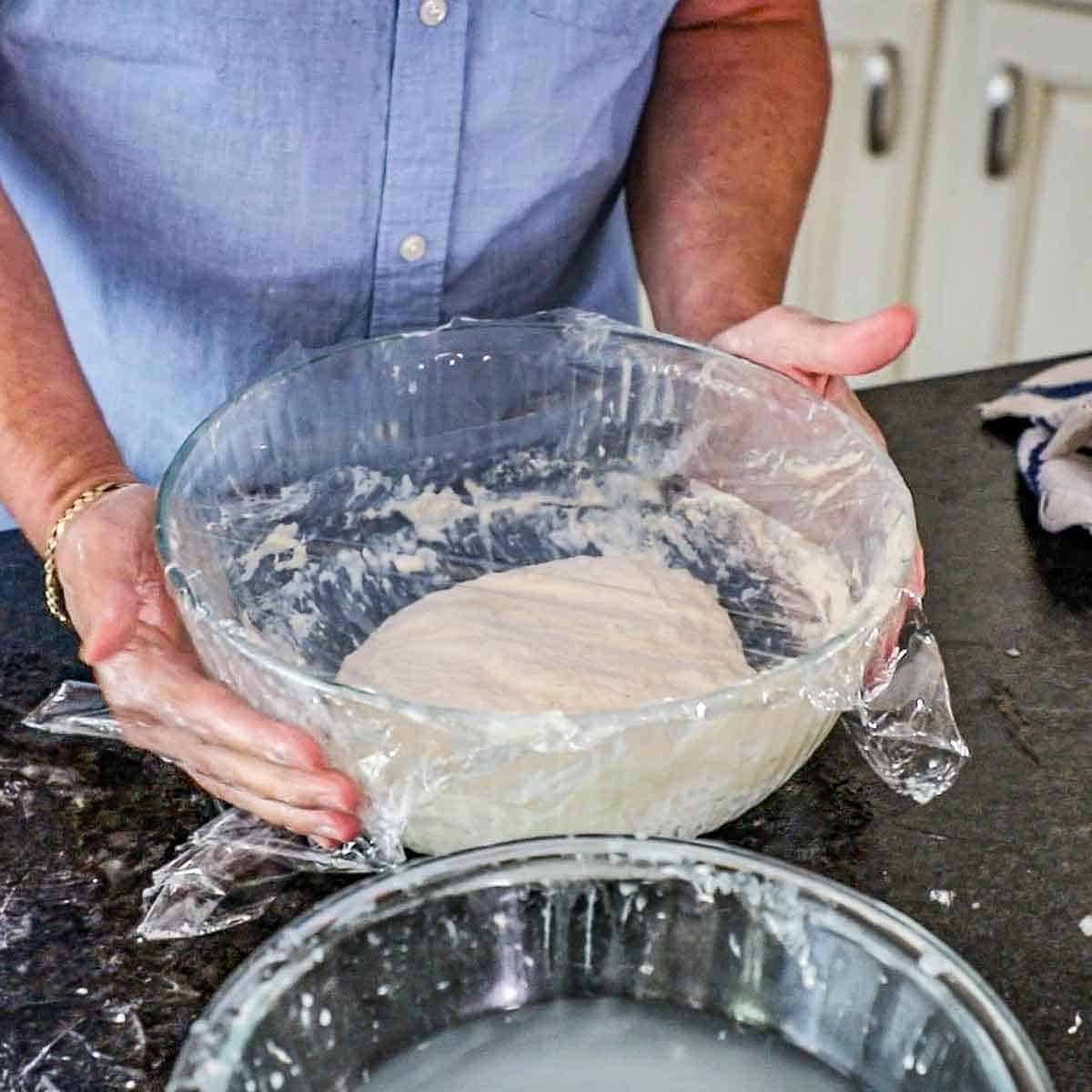
- Step 6: Allow the final rest (or fermentation) to last for 60 minutes.
Expert Tip: Master the 90° Letter-Fold
When working with high-hydration dough, ditch traditional kneading in favor of wet-counter stretch-and-folds. Working with wet hands on a slick surface, stretch the top edge up, fold it over itself like a letter, and rotate the dough 90 degrees after each fold.
In just 1 to 2 minutes, you’ll feel the dough transform from a shaggy, teary mess into a smooth, elastic cushion—building maximum gluten strength effortlessly without knocking out delicate air pockets.
🔥 How to Bake Homemade Ciabatta Rolls
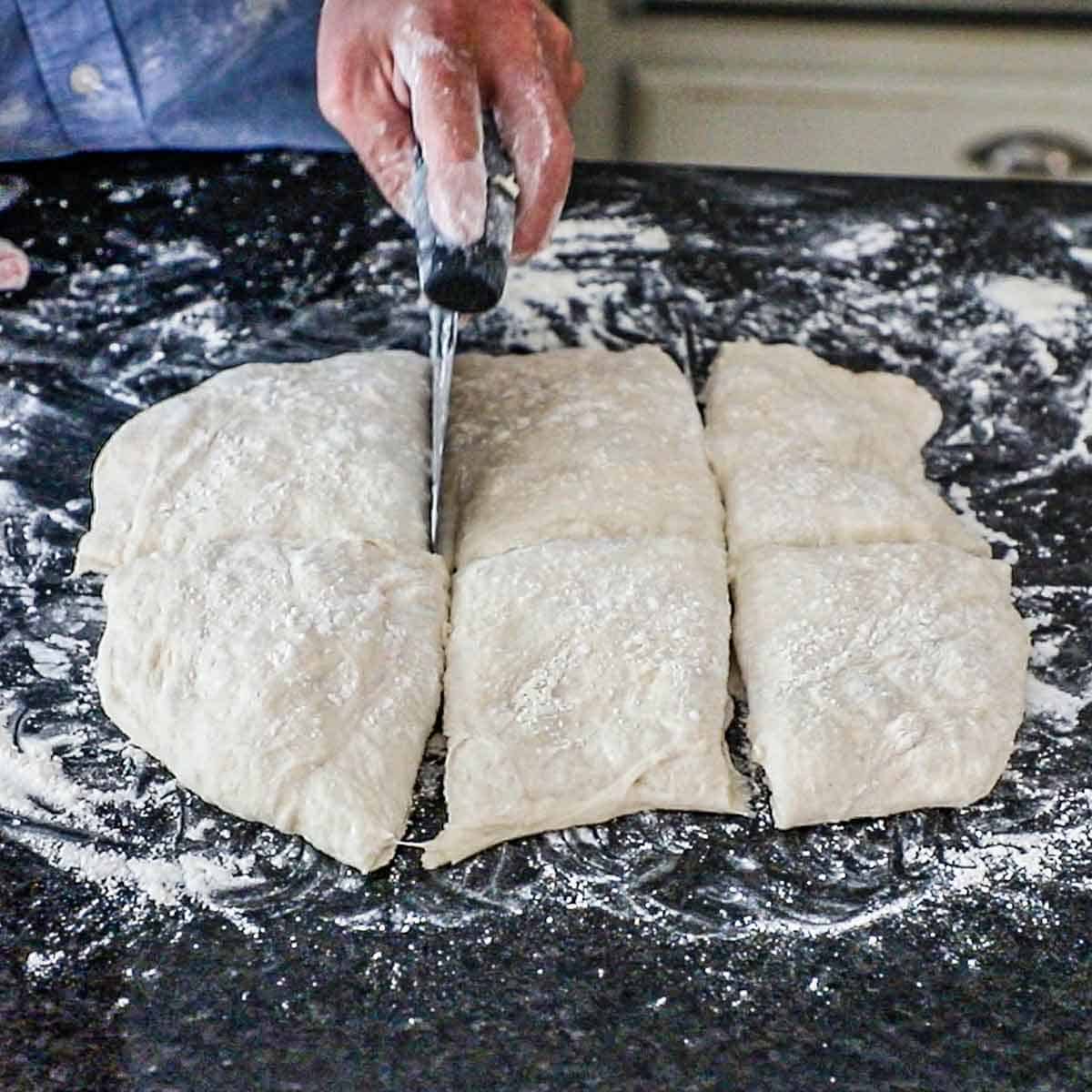
- Step 1: Carefully transfer the dough onto a floured surface and form a rectangle about 1 inch thick. Don’t knead! Use a bench scraper to swiftly cut the dough into six rectangles.
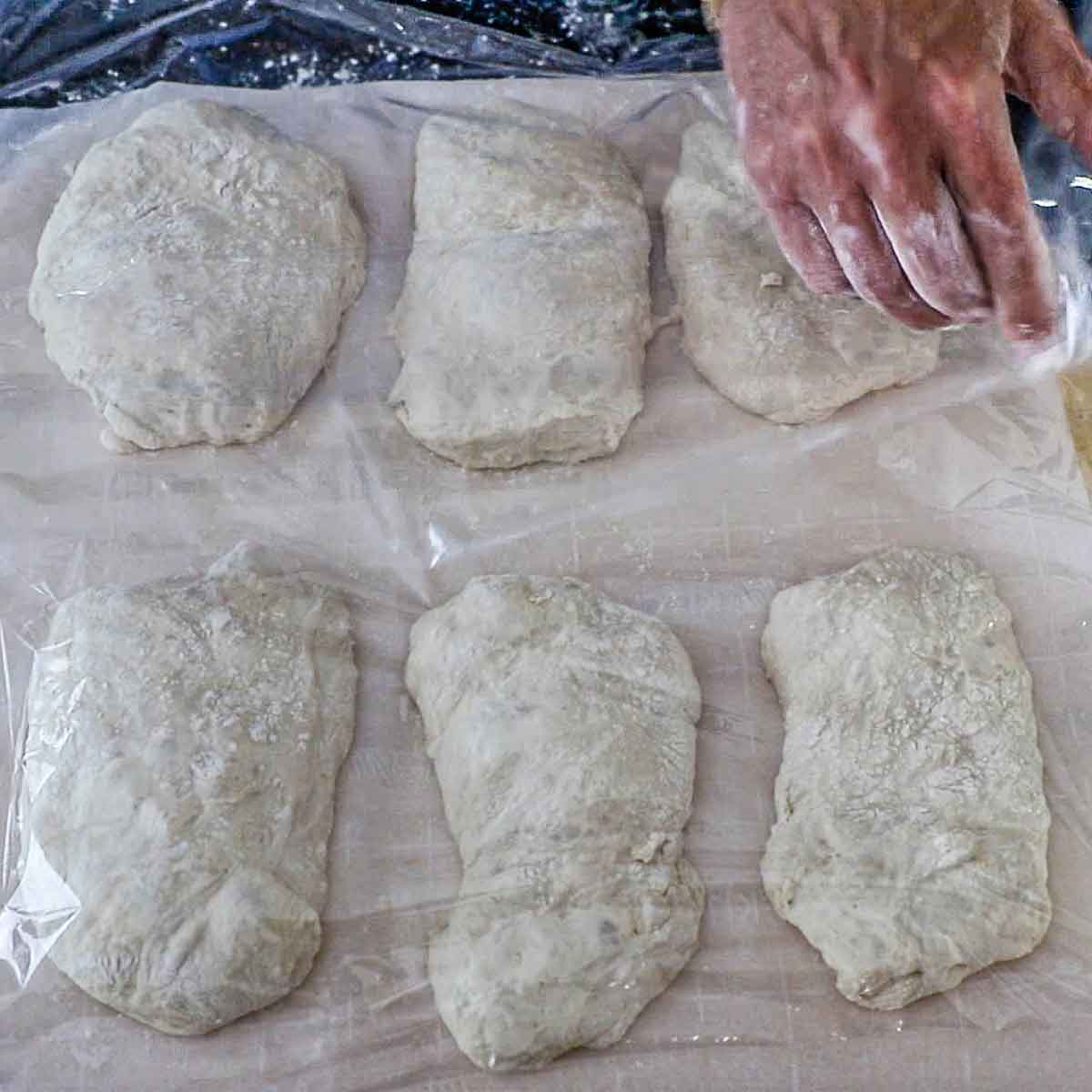
- Step 2: Place the rolls on a pizza peel and parchment paper. Cover with plastic wrap and let the dough rest for 45 minutes. Meanwhile, place a pizza steel or pizza stone in your oven and turn the heat to 450°F (let it heat for 45 to 60 minutes). Place a cast-iron skillet on the bottom grate.
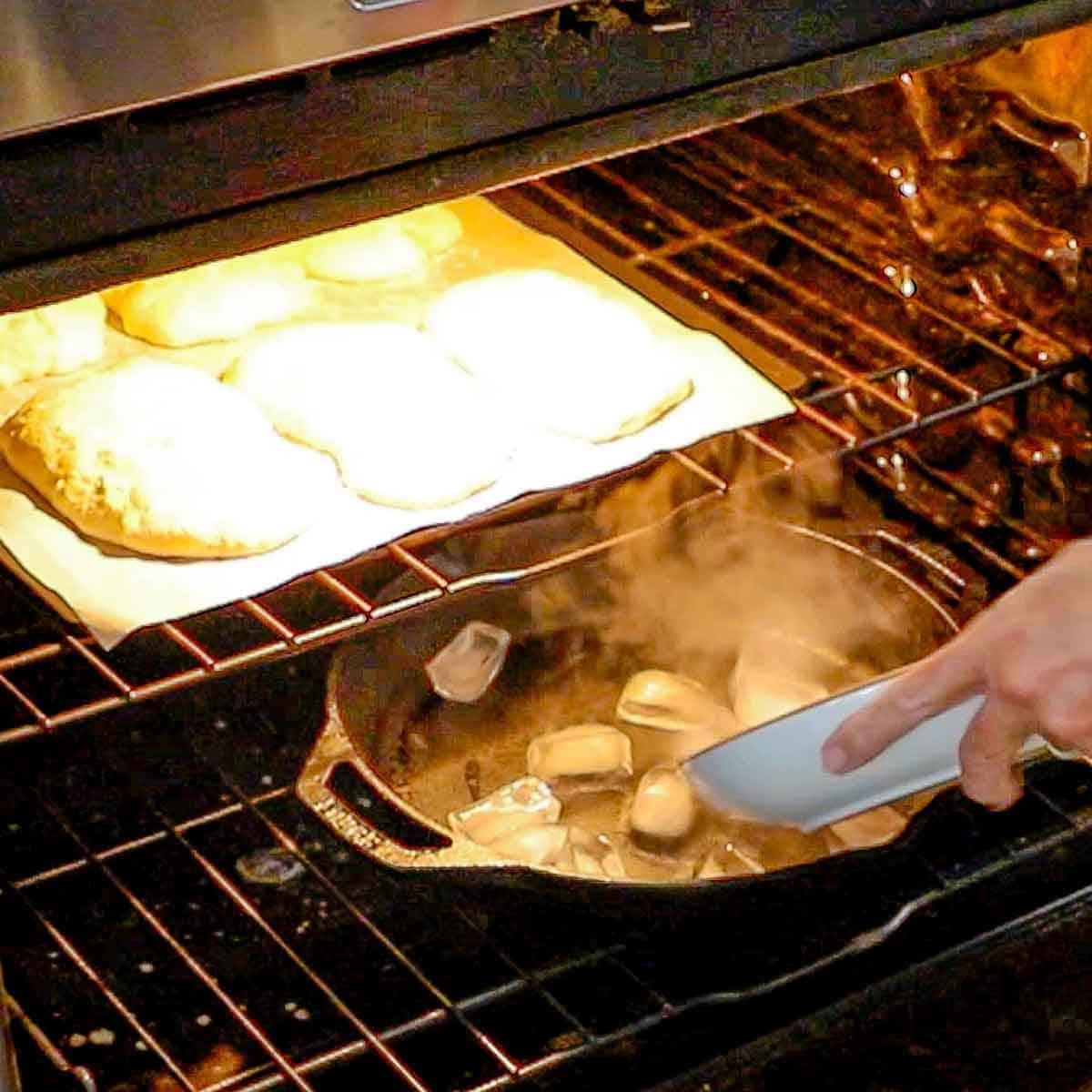
- Step 3: Carefully transfer the rolls to the pizza steel and add ice cubes to the hot skillet. Immediately close the oven door.
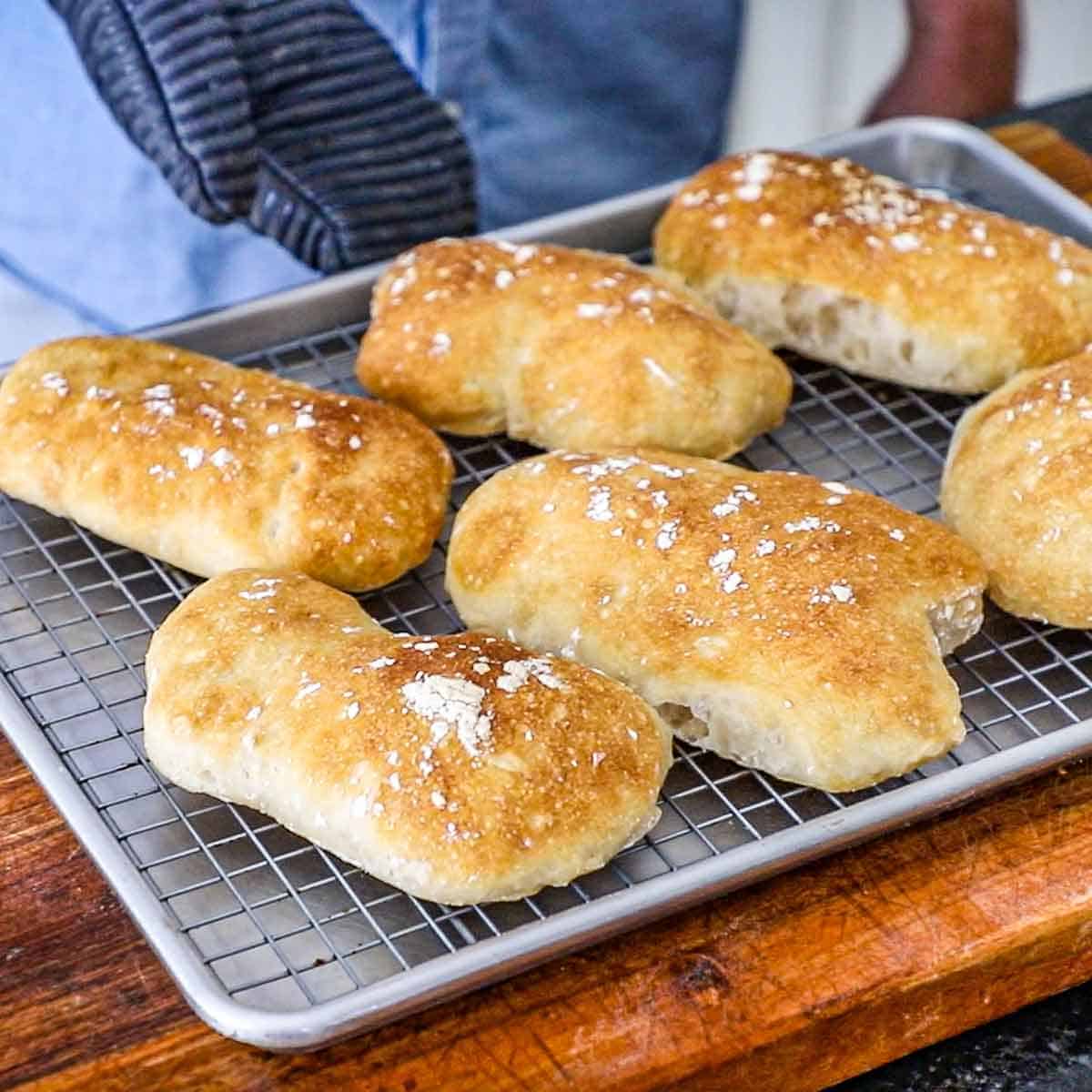
- Step 4: Bake for 18 to 22 minutes, until golden. Transfer to a baking rack and allow to rest for 20 minutes.
🍽️ How to Serve
- The Ultimate Pesto Chicken Sandwich: Slice, butter, and toast the cut sides on a griddle, then stack high with warm grilled chicken, rich basil pesto, and sliced smoked mozzarella melted under a steam dome for the ultimate bakery-worthy sandwich.
- Classic Italian Panini: Layer with prosciutto, capicola, sharp provolone, fresh arugula, and a drizzle of balsamic glaze. Press in a panini grill or heavy skillet for a crispy, melty lunch.
- Dipping Bread: Serve warm alongside a shallow bowl of good extra virgin olive oil, aged balsamic vinegar, flaky sea salt, and crushed red pepper to showcase the crackly crust and airy crumb.
- Soup Companion & Croutons: Dunk thick slices into rich tomato basil soup or rustic minestrone. Have leftovers? Cube day-old rolls and toss with olive oil to bake into ultra-crunchy croutons or an authentic Tuscan Panzanella bread salad.
- Artisan Bruschetta or Garlic Bread: Rub toasted cut sides with a raw garlic clove, brush with olive oil, and top with seasoned diced tomatoes, fresh basil, and a drizzle of balsamic glaze.
🙋🏽♂️ Frequently Asked Questions
High-gluten flour (around 14% protein) is strongly recommended because it provides the structural strength needed to absorb high moisture and trap gas. Bread flour works well as a secondary substitute, but all-purpose flour lacks sufficient protein, which can cause the dough to spread flat and lose its airy structure.
While a baking steel offers the superior heat transfer needed for maximum oven spring, you can also use an inverted heavy baking sheet, an upside-down cast-iron skillet, or a pizza stone. Just ensure your substitute preheats in the oven for a full 45 to 60 minutes before baking.
Flatness usually results from over-handling the dough during shaping, which deflates trapped air pockets, or from insufficient oven heat. Be extremely gentle when cutting the dough, and ensure your oven and baking surface are screaming hot so the moisture instantly turns to steam and lifts the dough.
Store them at room temperature in a paper bag or wrapped loosely in a kitchen towel for up to two days; avoid sealed plastic bags, as they trap moisture and soften the crisp crust. To restore their freshly baked texture, place them directly on an oven rack at 375°F (190°C) for 3 to 5 minutes.
🥯 More Bakery-Style Bread Recipes
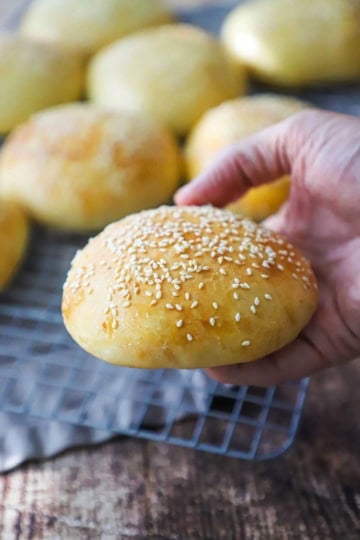
Ready to make the rolls that will rival the best bakery in town? Go for it!
And when you do, be sure to take a photo of it, post it on Instagram, and tag @HowToFeedaLoon and hashtag #HowToFeedaLoon
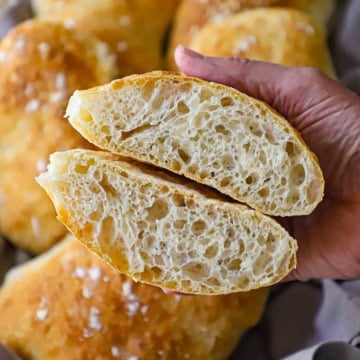
Bakery-Style Homemade Ciabatta Rolls
Video
Equipment
- Bench scraper optional, but helpful
- Pizza steel or large pizza stone, see NOTES
- baking rack
Ingredients
For the Poolish
- 200 grams high-gluten flour about 1½ cups + 2 tbsp
- 200 grams water a little less than 1 cup
- ⅛ teaspoon instant dry yeast a small pinch
For the Dough
- all of the poolish
- 300 grams high-gluten flour about 2⅓ cups, plus extra for the counter
- 220 grams lukewarm water just slightly less than one cup
- 10 grams fine sea salt about 1½ tsp
- 3 grams instant dry yeast about 1 tsp
- 10 grams extra-virgin olive oil about 1 tbsp
- water in a bowl for dampening your hands and counter
- 1 cup ice
Instructions
Start the Poolish (The Night Before Baking)
- In a medium-sized bowl, whisk the flour and water with a small pinch of yeast. Cover with plastic wrap and let rest at room temperature for 8-12 hours. It will become bubbly, domed, and sweet-smelling. (If resting longer before baking, refrigerate.)200 grams high-gluten flour, 200 grams water, ⅛ teaspoon instant dry yeast
Make the Ciabatta Rolls
- In a large mixing bowl, combine the poolish, flour (300g), water (220g), instant yeast, salt, and olive oil. Mix thoroughly with a sturdy spatula until a wet, shaggy dough forms. Cover with plastic wrap or a kitchen towel and let rest on the counter for 20 minutes.all of the poolish, 300 grams high-gluten flour, 220 grams lukewarm water, 10 grams fine sea salt, 3 grams instant dry yeast, 10 grams extra-virgin olive oil
- Fill a bowl with water to have near you for the "stretch and fold" process.water in a bowl
- Sprinkle your clean work surface with a bit of water and wet your hands. Transfer the dough from the bowl onto the dampened counter. Gently form the dough into a rectangle.
- You will need to "stretch and fold" for 2 minutes:Use your wet hands to pick up one side of the dough and stretch the dough as best as you can. Fold the stretched dough back to the halfway point. Repeat with the other side of the dough, folding the stretched dough over the top of the previously stretched dough, like folding a letter. Turn the dough 90°F and repeat this process. Stretch and pull, then rotate for a total of 2 minutes. Place the dough, seamside down, back into the bowl. Cover and let rest on the counter for 30 to 45 minutes.
- Repeat the "stretch and fold" process for another two minutes. Place it back in the bowl, cover, and let it rest for another 30 to 45 minutes. Repeat this process one more time (a 3rd time) and then let the final resting time be 45 to 60 minutes, covered.
- Heavily flour your work surface. Gently tip the dough onto the floured surface. DO NOT punch down or knead the dough! Dust the top of the dough with flour. Gently pat the dough into a rectangle, about 1 to 1½-inch thick. Using a floured bench scraper, make swift, clean cuts to divide the dough into 6 rectangles.
- Place the pizza steel (or pizza stones) on the middle rack in your oven and place a heatproof skillet (preferably cast-iron) on the bottom rack. Turn your oven to 450°F (it will need to heat the steel for 45 to 60 minutes).
- Place parchment paper on a large pizza peel, or the back of a large baking pan (this is what you'll use to transfer the rolls onto the steel in the hot oven). Carefully transfer the cut dough onto the parchment paper. Lightly cover with plastic wrap and let rest for 30 to 45 minutes.
- Remove the plastic wrap from the dough and carefully transfer the parchment paper along with the rolls onto the hot pizza stone (be careful!). Immediately add the ice to the hot skillet and quickly close the door.1 cup ice
- Bake for 18-22 minutes. Check the underside of one of the rolls at 15 minutes. If it is a deep golden/brown color, add a large baking pan over the skillet to help shield the heat.
- Remove the rolls from the oven and place on a baking rack for 20 minutes (don't cut into them before the 20 minutes! Slicing too early traps steam and makes the interior gummy).
- Serve, or store in a paper bag on the counter. Don't refrigerate or completely seal them.
Notes
- No Baking Steel? No Problem: If you don’t own a baking steel, place an inverted (upside-down) heavy rimmed baking sheet, a pizza stone, or a large cast-iron griddle on the middle rack. Ensure it preheats at 450°F (230°C) for a full 45 to 60 minutes before baking to guarantee maximum heat transfer.
- Flour Substitute: King Arthur High-Gluten Flour (~14% protein) yields the absolute best open, holy interior. Bread flour (at least 12.7% protein) is the next best substitute. Avoid All-Purpose flour, as it lacks the protein strength to hold this high level of water (~84% hydration).
- Golden Handling Rule: Remember to keep your hands wet with water during the stretch-and-fold phase to prevent sticking, then switch to a heavily floured surface when shaping. Handle the dough gently at all times to preserve the delicate trapped air pockets.
- Freezer-Friendly: These rolls freeze exceptionally well! Slice cooled rolls, place them in a freezer-safe Ziploc bag, and freeze for up to 3 months. Reheat directly from frozen in a 375°F (190°C) oven for 5 to 7 minutes to restore their crackly crust and warm, fluffy interior.

Leave a Reply