
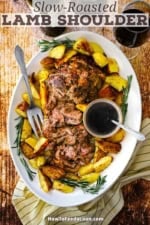
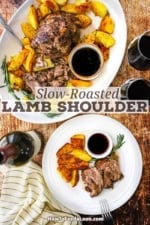
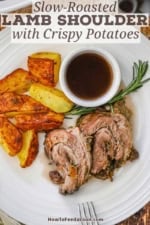
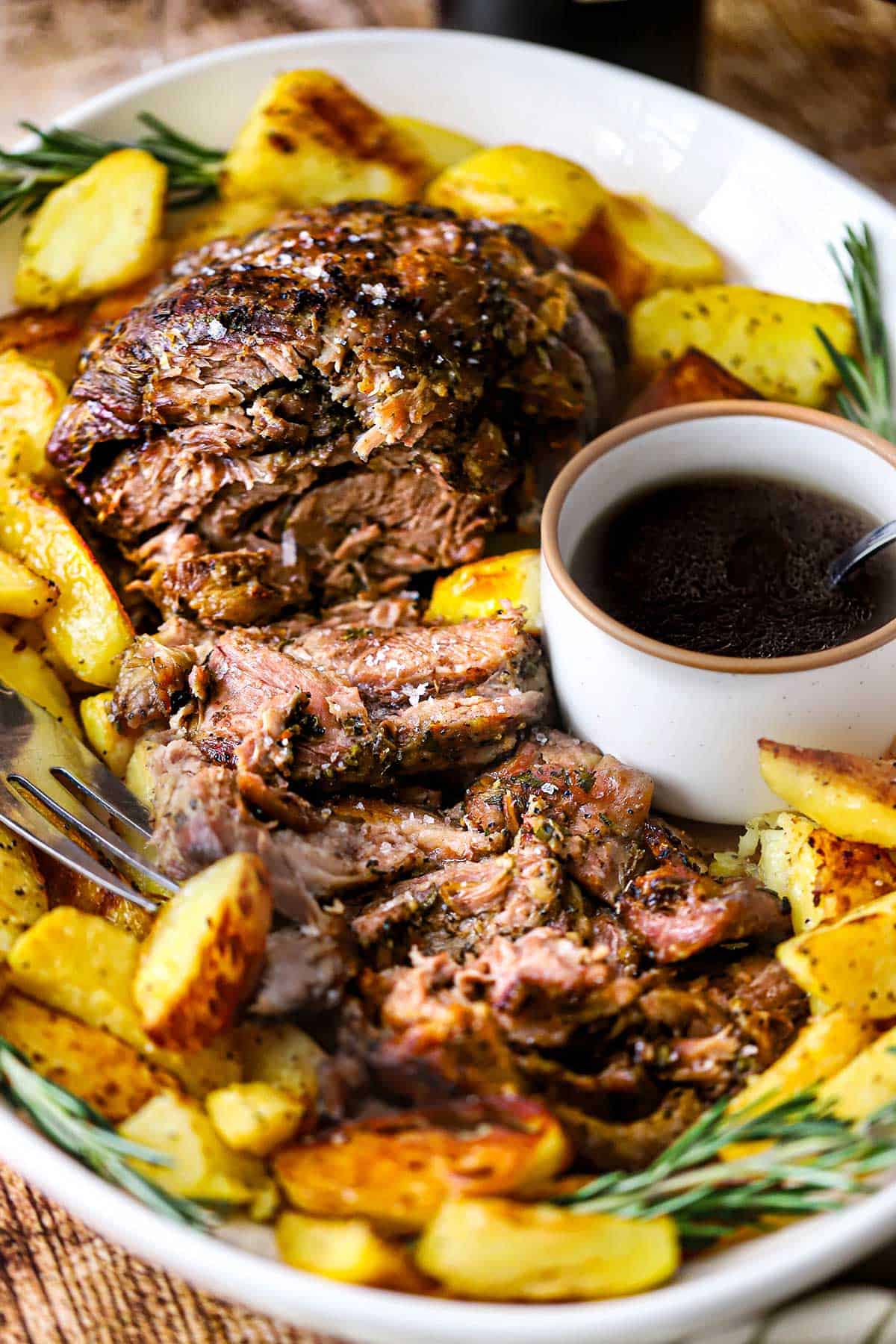
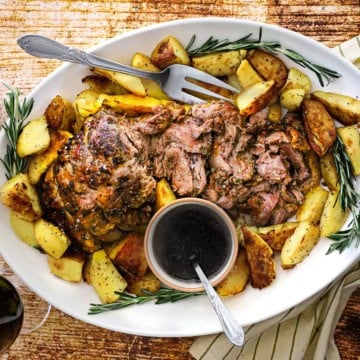
For a truly spectacular roast, nothing beats the succulent, pull-apart texture of a slow-cooked lamb shoulder. This recipe infuses a boneless roast with fresh garlic and rosemary, resulting in a melt-in-your-mouth main dish served alongside the ultimate crispy potatoes roasted in rendered lamb fat. It’s a timeless, “set-it-and-forget-it” meal that transforms simple ingredients into a sophisticated, flavor-packed feast.
Jump to:
- 🧄 The Ingredients
- 📝 Ingredient Notes and Substitutions
- 🔥 Tips and Tricks for Perfect Roast Lamb Shoulder
- 👩🏼🍳 How to Prep a Boneless Lamb Shoulder
- 👨🍳 How to Roast a Lamb Shoulder and Crispy Potatoes
- 🙋🏽♂️ Frequently Asked Questions
- ✨ Other Centerpiece Roasts
- Slow-Roasted Lamb Shoulder with Crispy Potatoes
🧄 The Ingredients
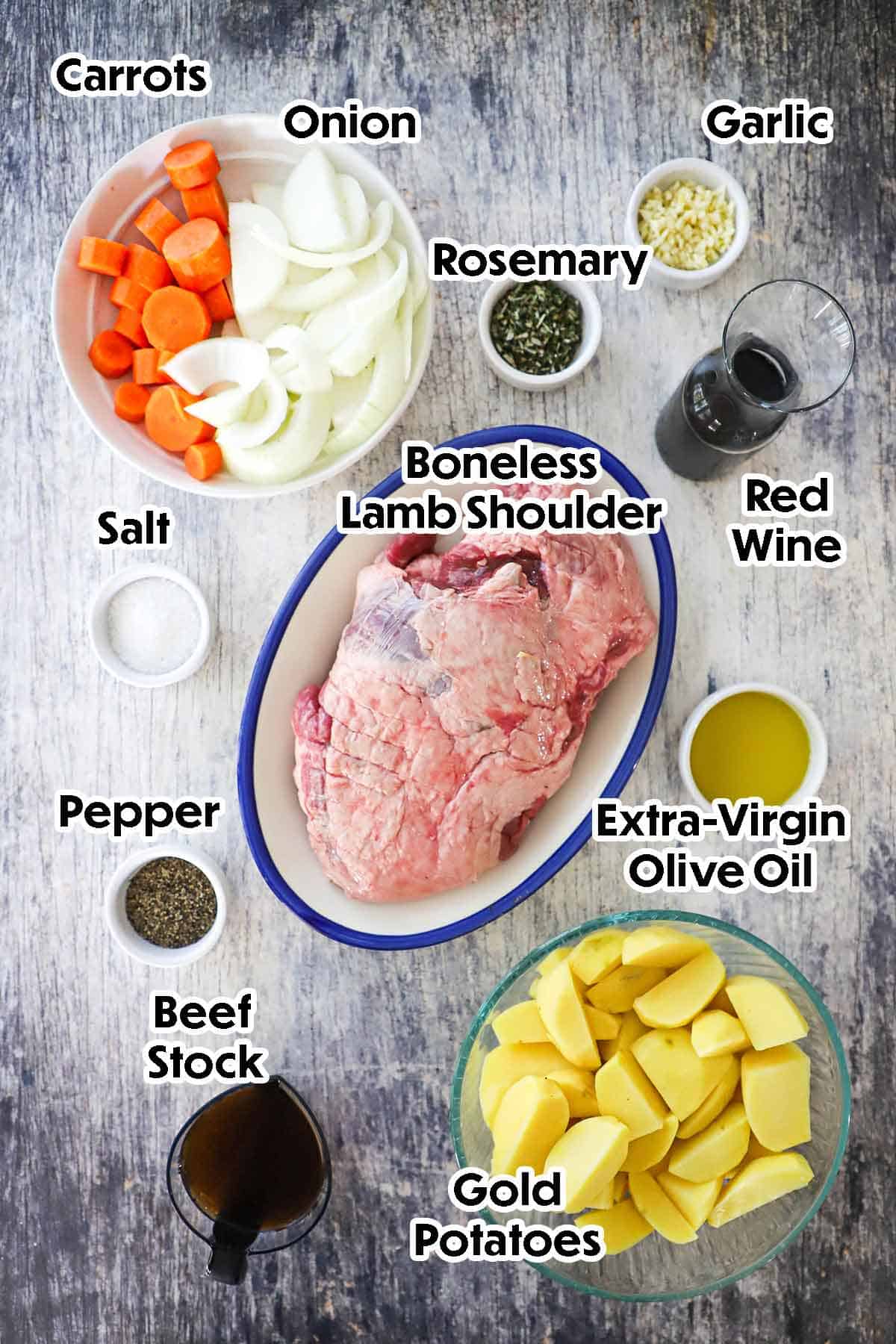
This recipe utilizes a simple combination of fresh aromatics and savory liquids to slowly infuse the meat with flavor, creating a naturally rich and glossy reduction. Find ingredient notes (including substitutions and variations) below.
📝 Ingredient Notes and Substitutions
- Boneless Lamb Shoulder: This cut is prized for its high fat content and connective tissue, which break down during the slow-roasting process to create incredibly tender meat; if you only have access to a leg of lamb, keep in mind it is much leaner and may require a shorter cooking time to avoid drying out.
- Fresh Rosemary: Fresh herbs provide the most vibrant, aromatic flavor, but you can easily substitute the rosemary with fresh thyme or use one teaspoon of dried rosemary if fresh is unavailable.
- Beef Stock: A high-quality beef or lamb stock serves as the savory foundation for your pan juices; however, chicken stock can be used in a pinch for a lighter, more delicate flavor profile.
- Red Wine: Choose a dry red wine you enjoy drinking, such as a Shiraz, Malbec, or Cabernet Sauvignon, to add a sophisticated depth to the jus; if you prefer to cook without alcohol, replace the wine with extra stock and a teaspoon of balsamic vinegar for a similar hit of acidity.
- Coarse Kosher Salt: We recommend coarse salt for its ability to create a savory crust on the meat, but if you are using fine table salt, be sure to reduce the amount by half to prevent the dish from becoming too salty.
Refer to the recipe card (with video) below for a full list of ingredients and measurements.
🔥 Tips and Tricks for Perfect Roast Lamb Shoulder
- Temper the Meat: Take the lamb out of the fridge at least an hour before cooking to bring it to room temperature; this ensures the heat penetrates the center evenly and prevents the meat from tightening up in the oven.
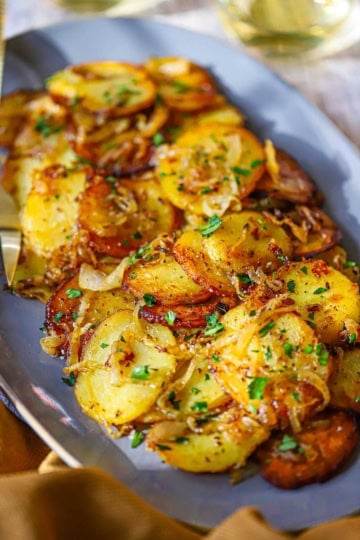
- The “Fluff” Factor: After par-boiling your potatoes, give the pot a vigorous shake to roughen up the edges; those starchy, fuzzy bits are exactly what transform into a glass-like, golden crunch when they hit the hot lamb fat.
- The “Spoon-Tender” Test: Unlike a leg of lamb, which is often served pink, a shoulder is at its best when it is “spoon-tender.” If the meat still feels springy or tough when pressed, it simply needs another 30 minutes under the foil to allow the connective tissue to fully break down.
- Non-Negotiable Resting: Never skip the resting period! Giving the lamb 30–45 minutes to rest allows the muscle fibers to relax and reabsorb all those delicious juices, ensuring the meat is succulent rather than dry when you carve it.
- Skim for a Glossy Jus: When preparing the red wine reduction, let the pan drippings settle in a glass jug for a minute so the fat rises to the top; skimming this off before making your sauce ensures the final jus is rich and concentrated rather than greasy.
- Maintain a Uniform Shape: When tying your boneless roast, aim for a consistent “log” shape from end to end; this prevents the thinner tapered ends from overcooking while the thicker center is still reaching its peak tenderness.
👩🏼🍳 How to Prep a Boneless Lamb Shoulder
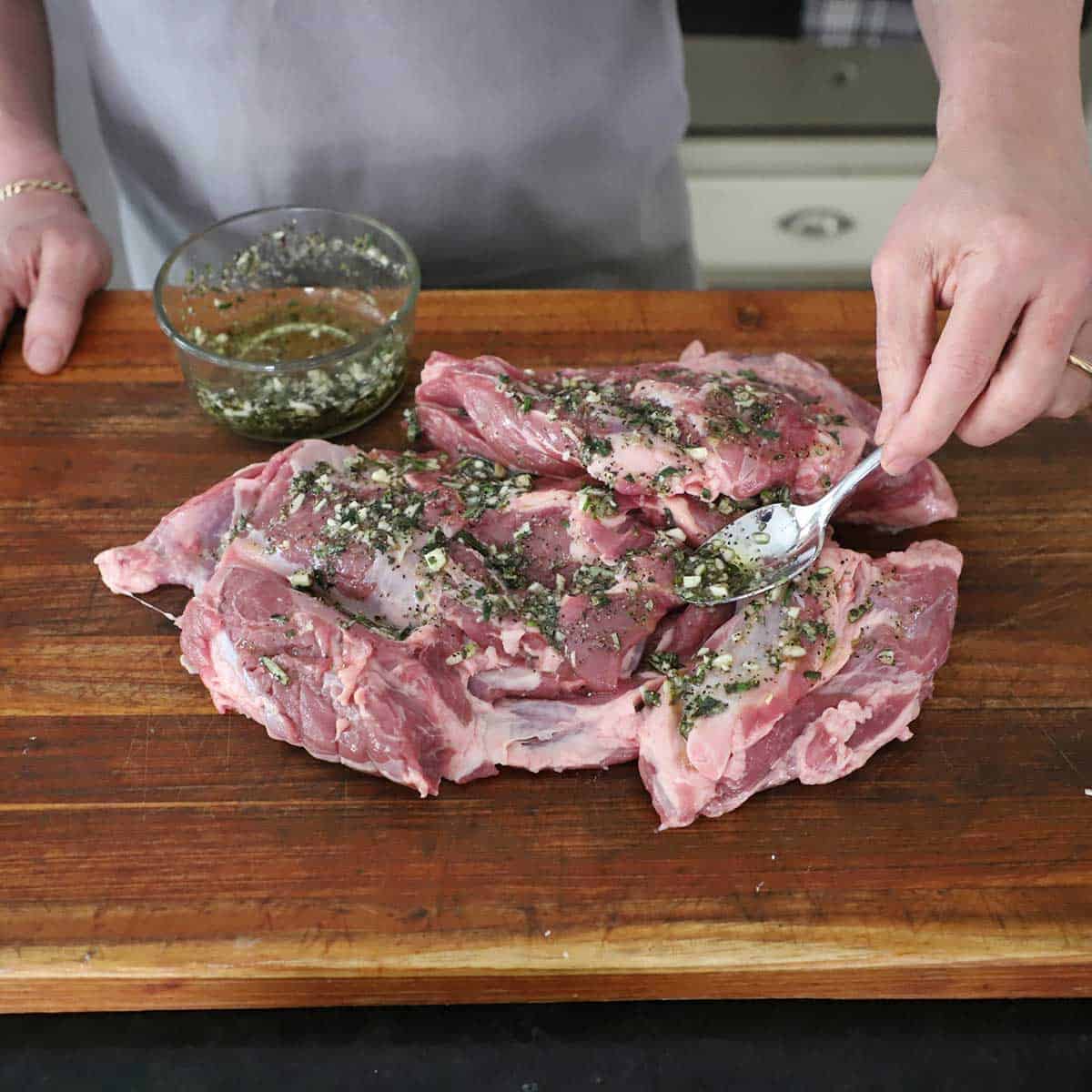
- Step 1: Season the lamb all over with salt and pepper. In a small bowl, mix the rosemary, garlic, and oil. Open the lamb shoulder up and rub the herb and garlic mixture all over the top of it.
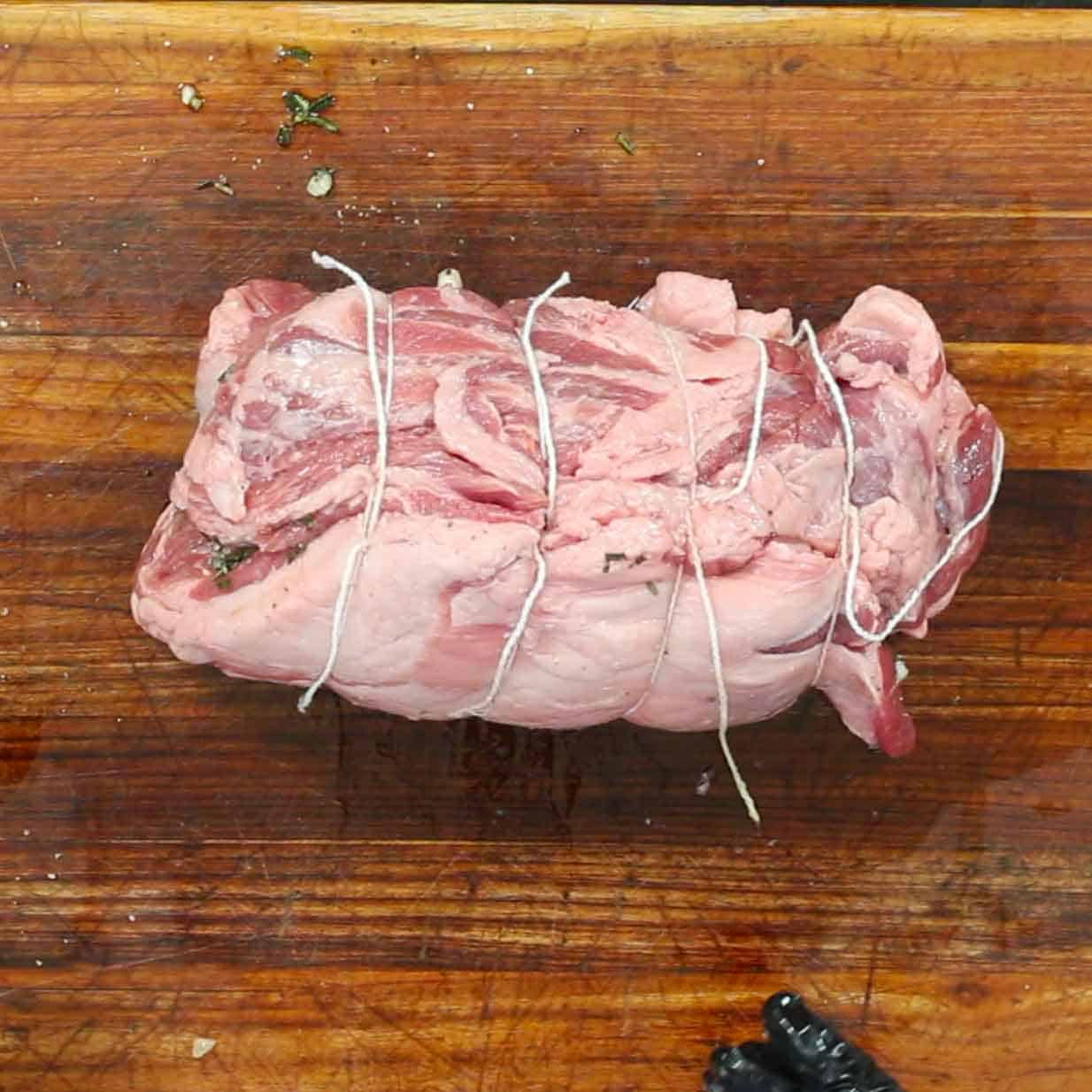
- Step 2: Tightly roll the lamb and tie it up with twine. Seas
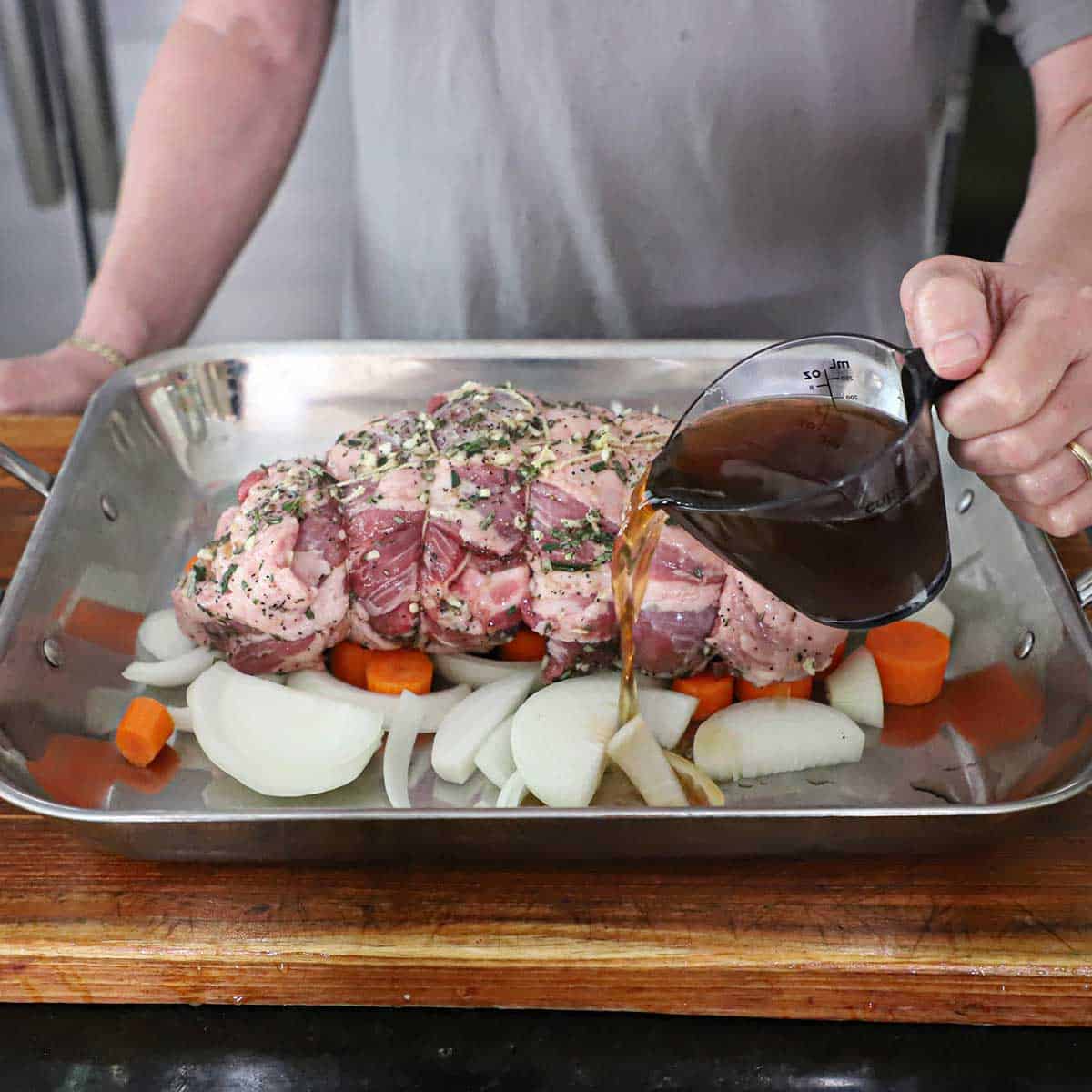
- Step 3: Place the roughly cut onion and carrots in a large roasting pan.
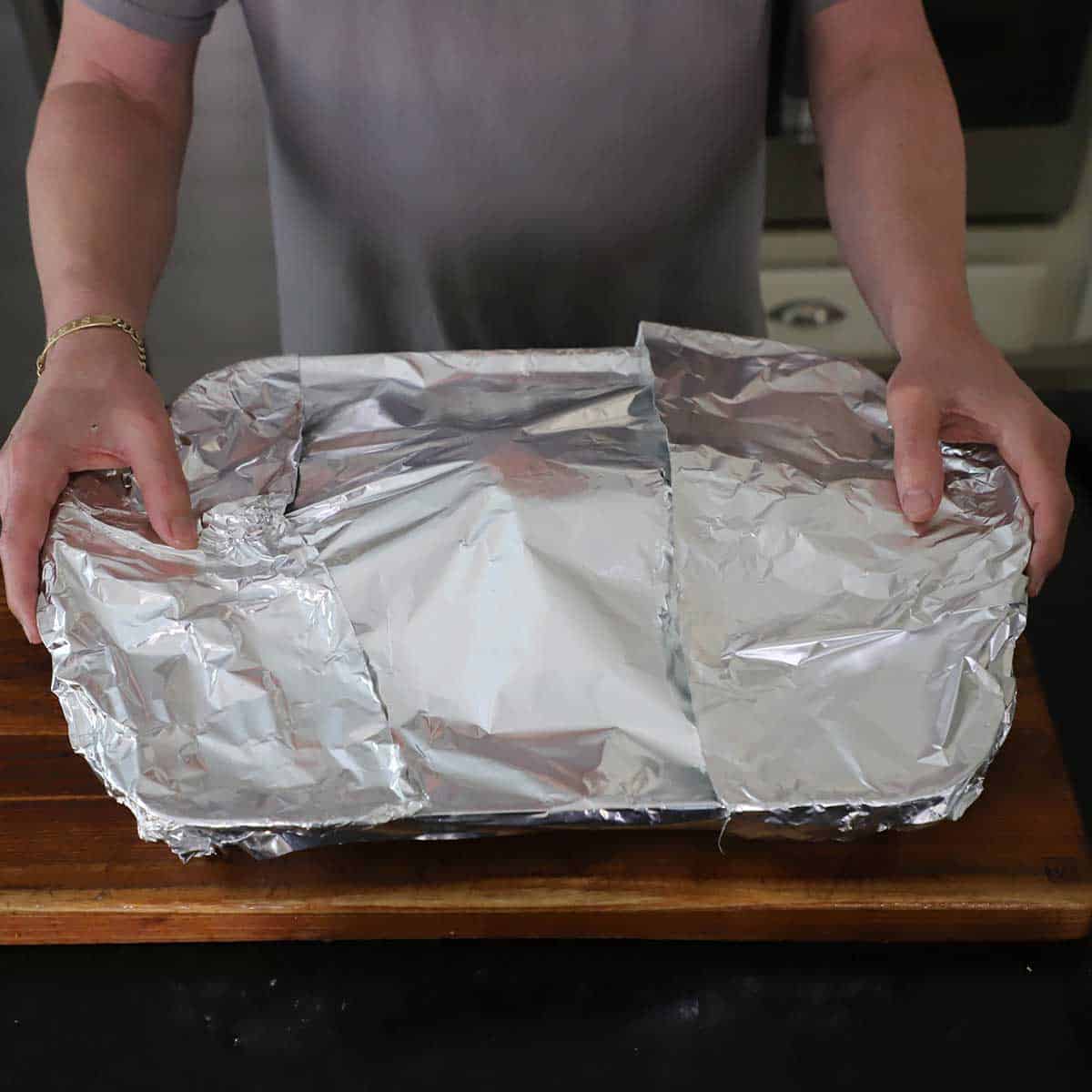
- Step 4: Cover the pan tightly with heavy-duty foil. Preheat your oven to 325°F. Roast for 3 hours.
👨🍳 How to Roast a Lamb Shoulder and Crispy Potatoes
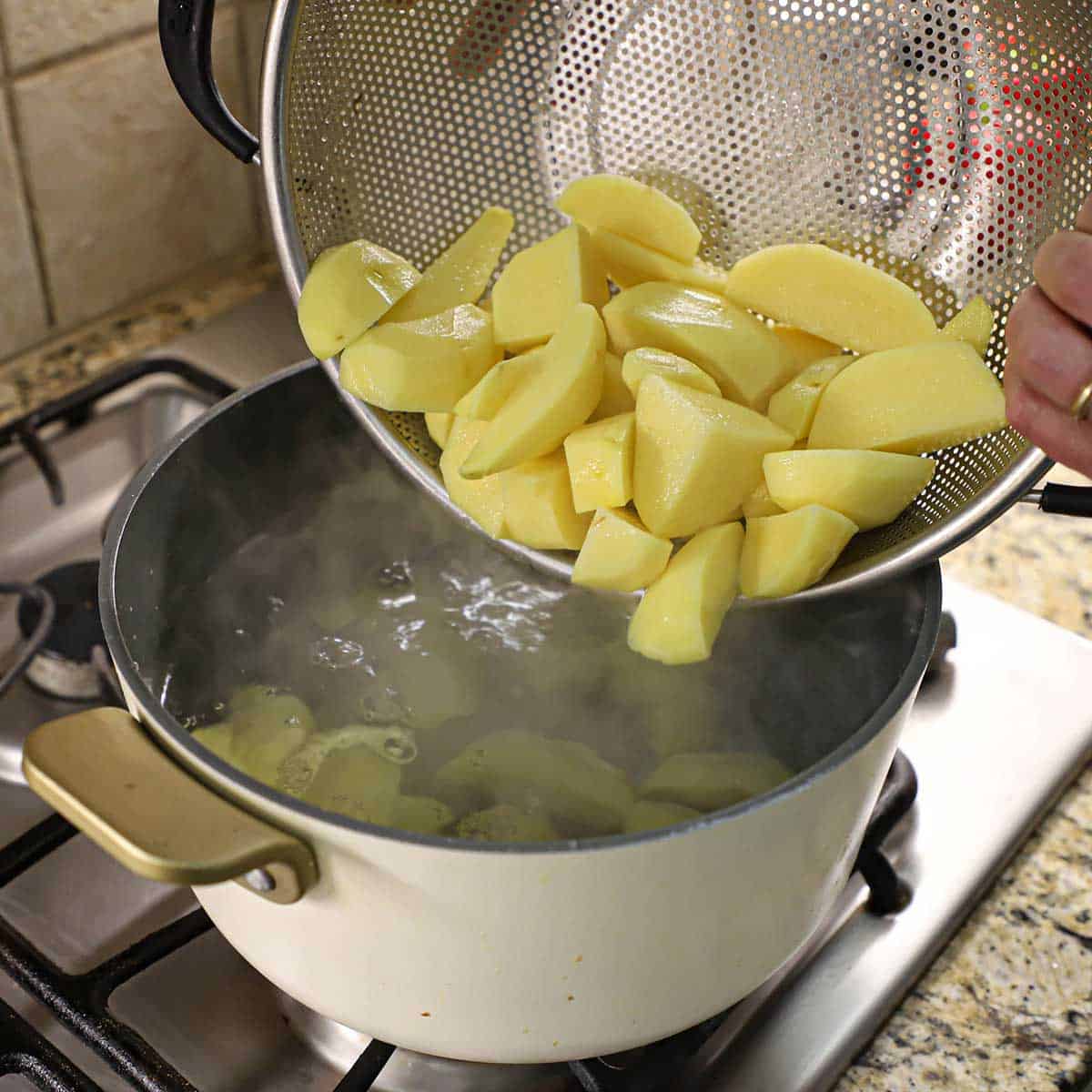
- Step 1: Add the peeled and cut potatoes to boiling water. Bring back to a boil and simmer for 8 minutes.
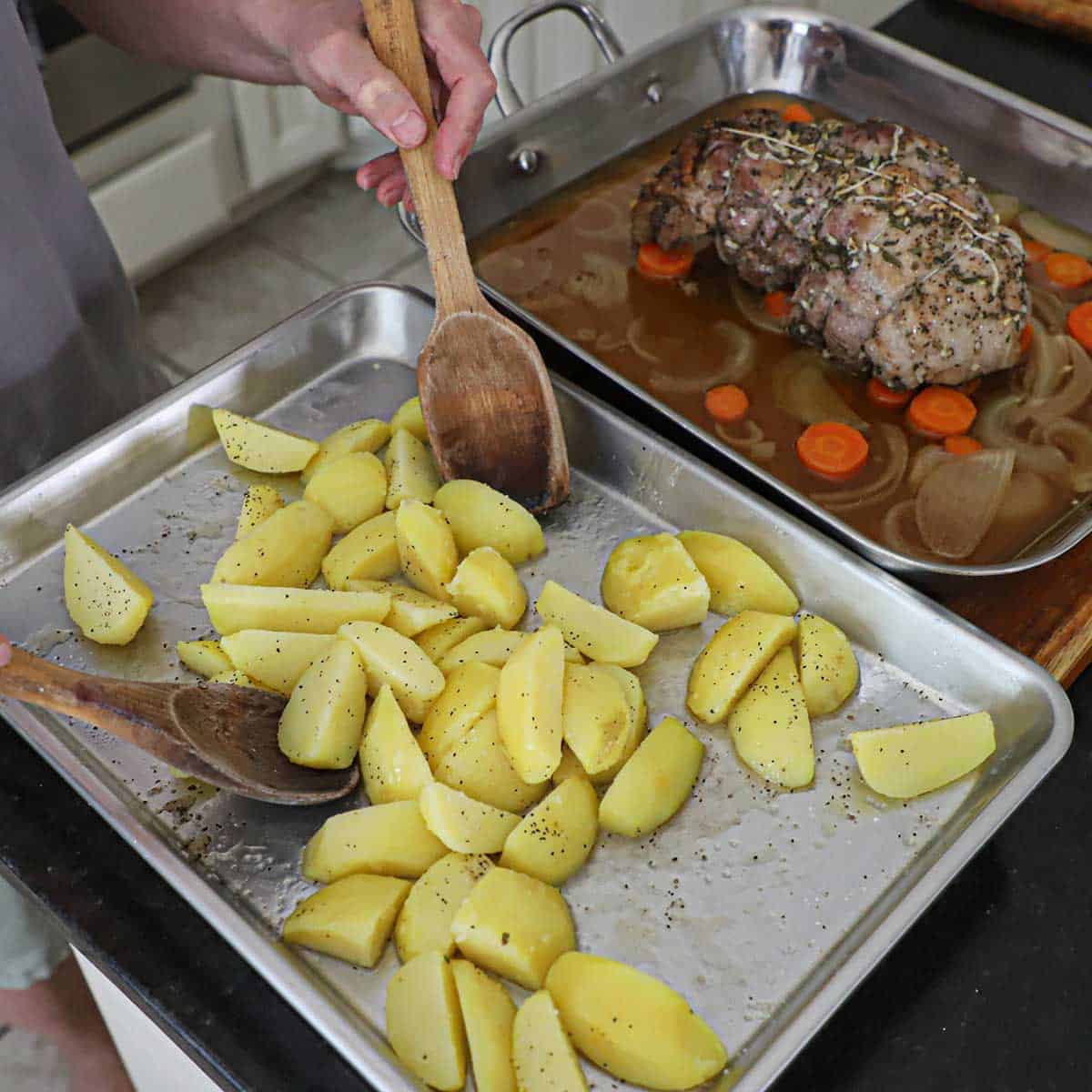
- Step 2: Remove the roast from the oven and take off the foil. Add the potatoes to another pan and toss with ¼-cup of the braising liquid, olive oil, salt, and pepper. Turn the oven up to 400°F. Place the potatoes and lamb in the oven for 25 minutes.
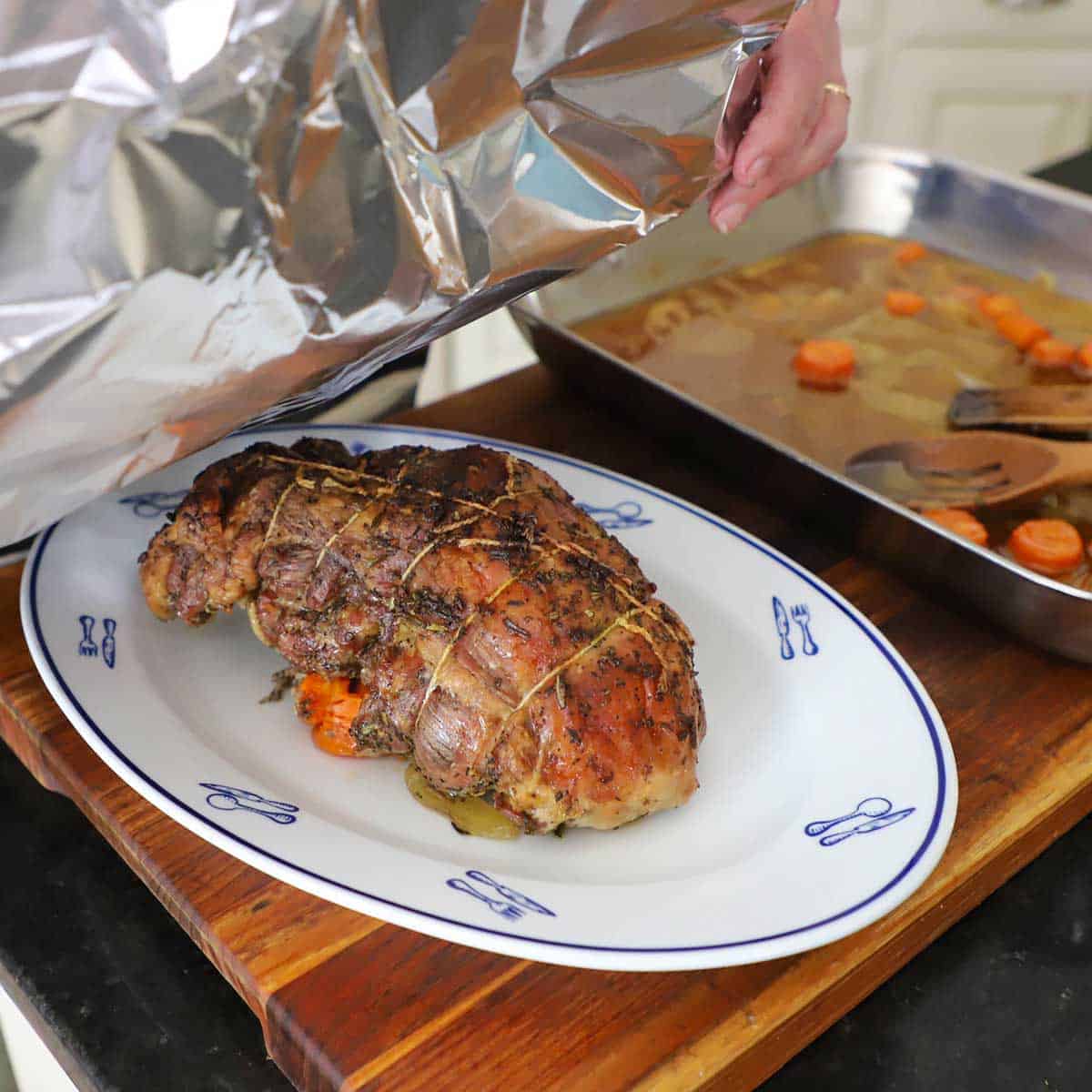
- Step 3: Remove the lamb from the pan and tent loosely with foil. Toss the potatoes and add another splash of oil, if needed. Roast them for another 30 to 40 minutes, until crispy.
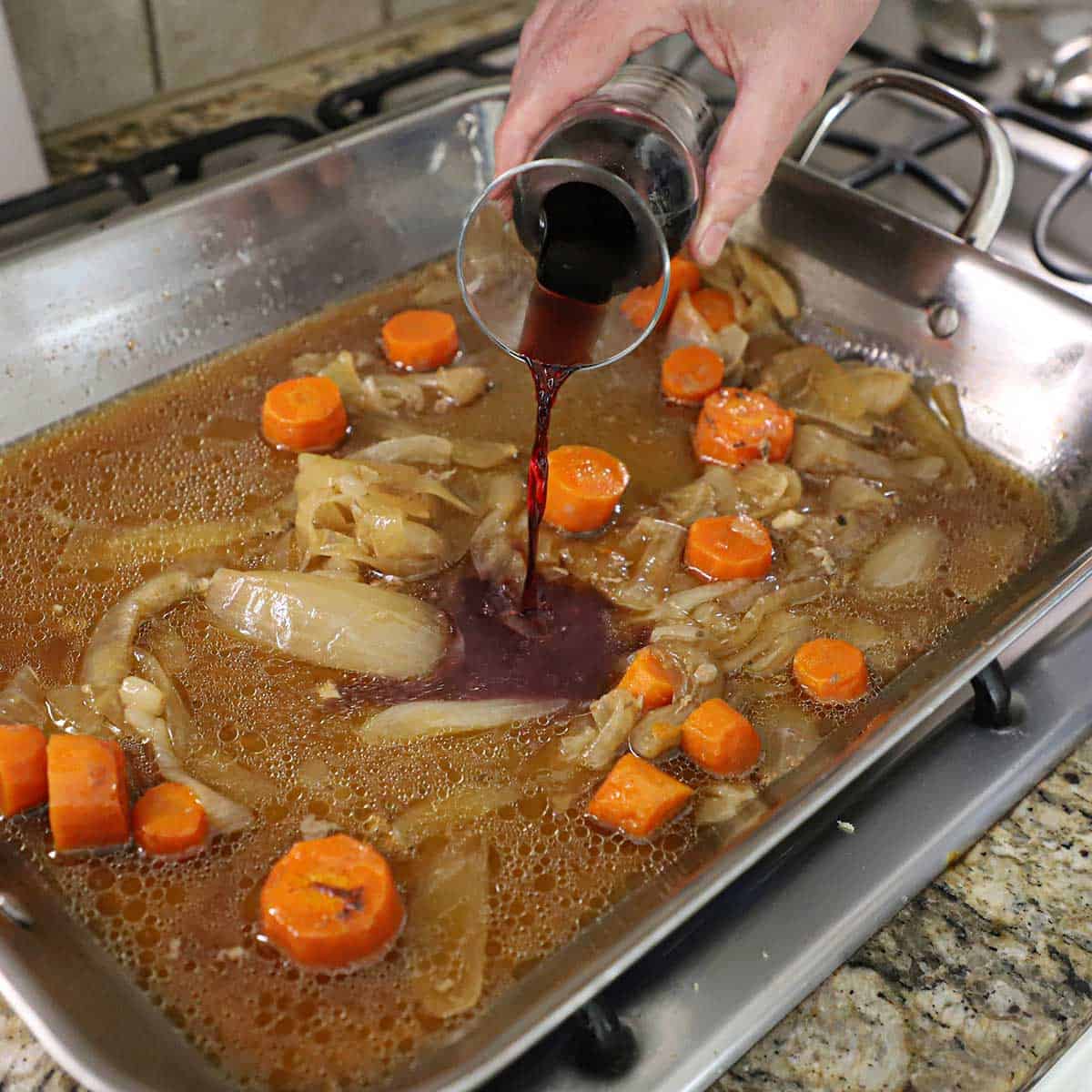
- Step 4: Place the roasting pan on the stove and add the wine. Cook over medium-high heat until reduced by half. Strain and season with salt and pepper.
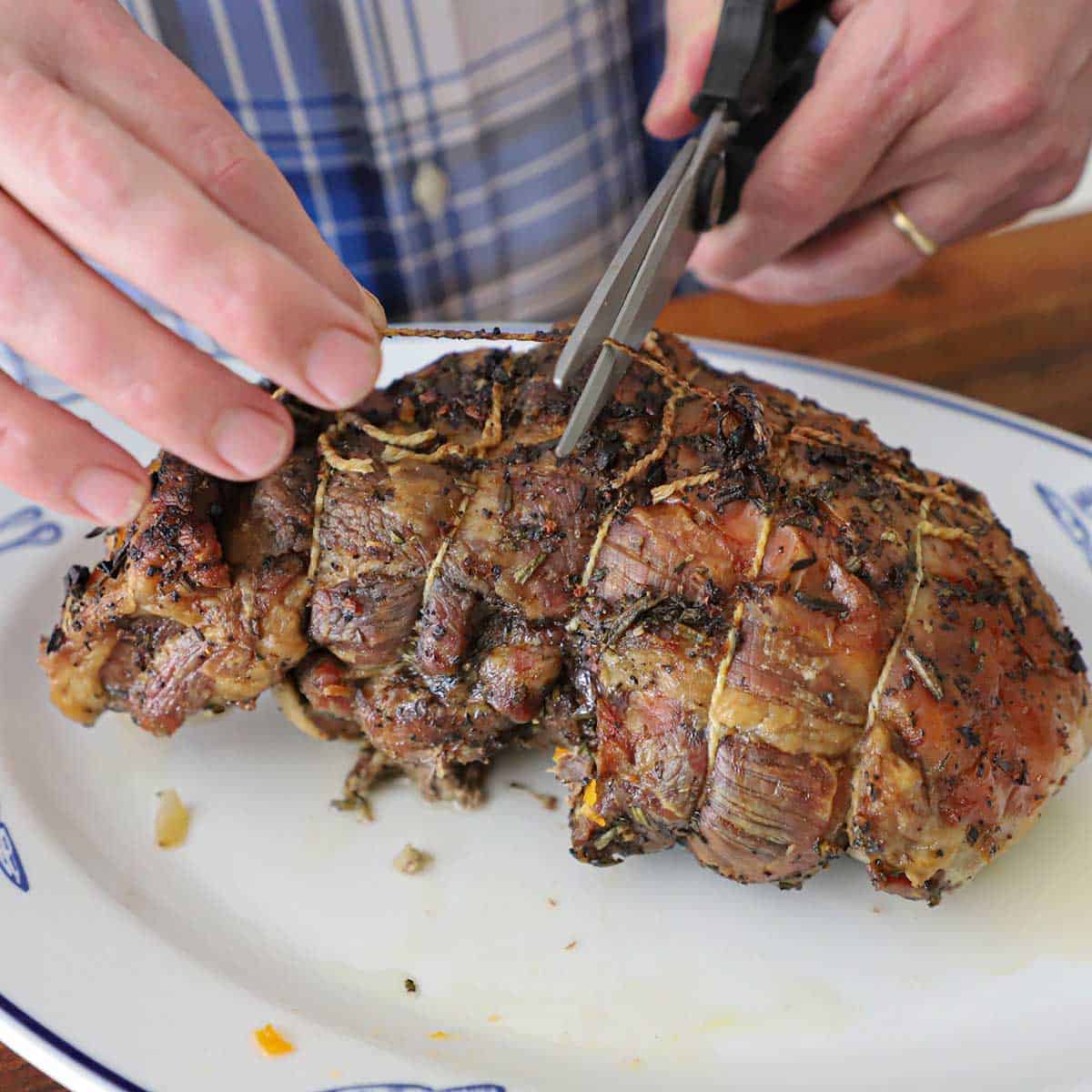
- Step 5: Remove the twine from the roast.
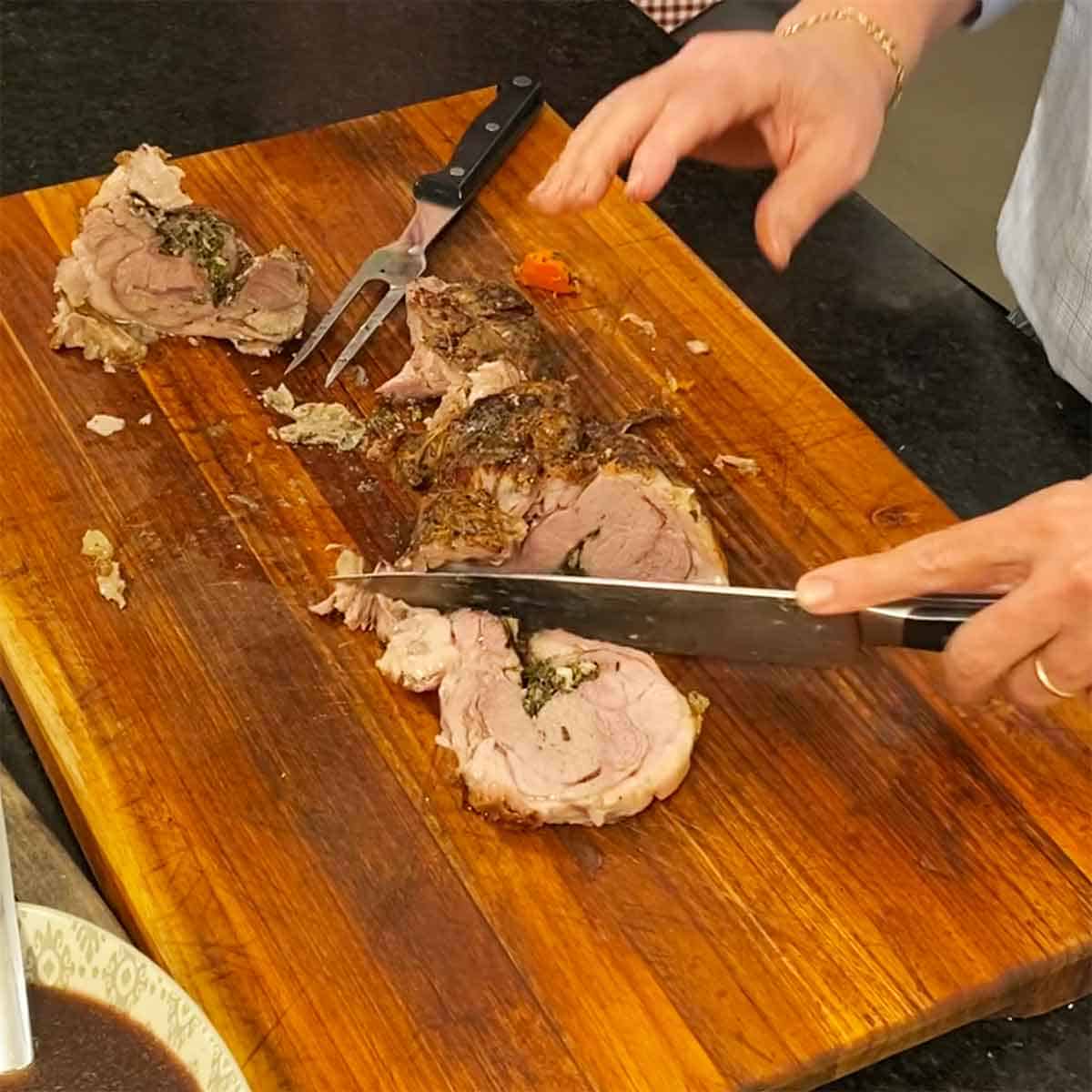
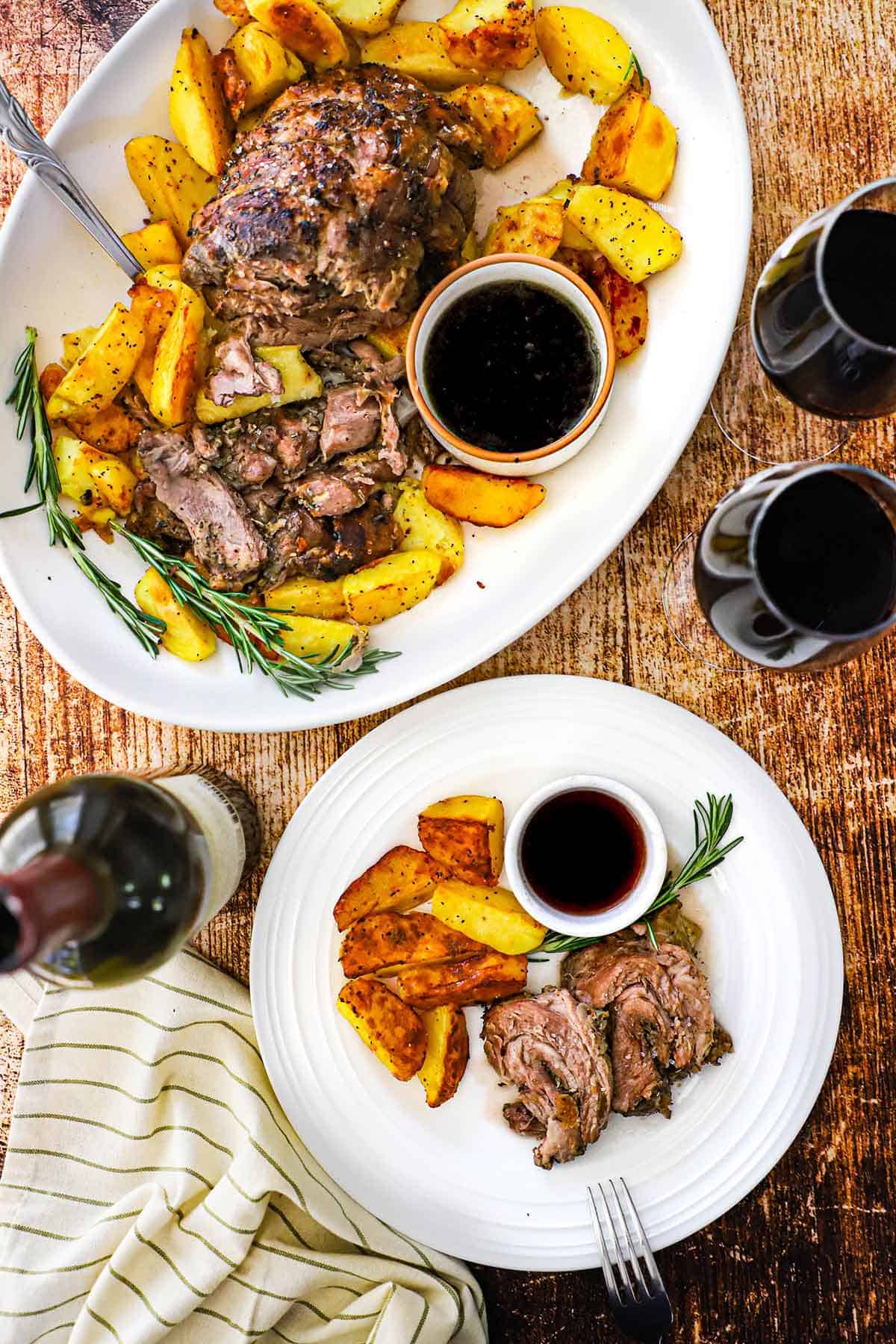
- Step 6: Slice the lamb and serve at onces with the crispy potatoes and au jus.
Expert Tip: Mastering the Fat Separation
Lamb shoulder is a beautifully marbled cut, but it releases a significant amount of rendered fat during its long roast. To ensure your red wine jus is silky and concentrated rather than greasy, we highly recommend using a fat separator—a specialized pitcher that pours from the bottom, allowing you to easily drain the flavorful juices while leaving the oil behind.
If you don’t have one, simply pour the pan drippings into a tall glass jug and let them settle for 2–3 minutes; the clear fat will rise to the top, allowing you to carefully skim it off with a large spoon or use a turkey baster to draw the dark, savory liquid from underneath.
🙋🏽♂️ Frequently Asked Questions
To achieve that signature “pull-apart” texture, aim for an internal temperature of around 195°F to 205°F (90°C to 96°C). At this stage, the connective tissues have fully broken down, allowing the meat to be easily shredded with a fork rather than sliced like a traditional steak.
While you can use other cuts, the leg is much leaner and tends to dry out if cooked for the same duration. If you choose the leaner option, you should reduce the oven time significantly and aim for a medium-rare finish to maintain moisture.
Keeping the roasting tin tightly covered with a double layer of heavy-duty foil is essential. This traps the steam and aromatics inside the pan, essentially braising the meat in its own savory drippings until it reaches peak tenderness.
Yes, you can cook the meat fully, let it cool, and store it in the refrigerator. When ready to serve, gently reheat it in a low oven with a splash of stock to prevent it from drying out, though we recommend making the potatoes fresh for the best possible crunch.
If the meat feels springy or difficult to shred, it likely just needs more time in the oven. This particular cut requires several hours at a low temperature to transform the tough collagen into succulent, melt-in-your-mouth goodness, so don’t be afraid to give it an extra 30 minutes if needed.
✨ Other Centerpiece Roasts

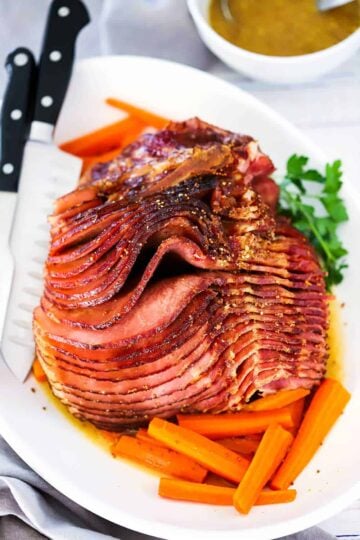

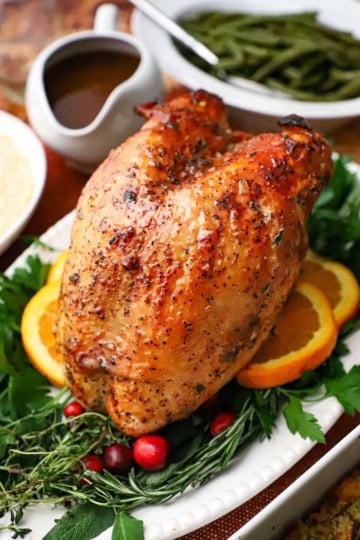
Ready to make an extra-special roast for that special occasion? Go for it!
And when you do, be sure to take a photo of it, post it on Instagram, and tag @HowToFeedaLoon and hashtag #HowToFeedaLoon!
Slow-Roasted Lamb Shoulder with Crispy Potatoes
Video
Equipment
- Kitchen twine
- Roasting pan You will need heavy-duty foil to cover it
- Fat separator see NOTES
Ingredients
- 1 4½ lb lamb shoulder boneless
- salt and pepper
- 6 sprigs rosemary fresh, chopped (leaves only)
- 8 cloves garlic minced
- 2 tablespoon extra-virgin olive oil
- 1 large onion roughly chopped (leave in wedges)
- 2 medium carrots peeled and cut into 2-inch pieces
- 1 cup beef stock or broth
For the Potatoes and au Jus
- 3 lbs gold potatoes peeled and cut into large wedges
- 2 tablespoon extra-virgin olive oil plus more, as needed
- salt and pepper
- 1 cup red wine
Instructions
- Remove the lamb 1 hour before roasting. If there is a netting on it, remove it.1 4½ lb lamb shoulder
- Preheat oven to 325°F.
- Open the lamb shoulder up and liberally season it all over with salt and pepper.salt and pepper
- In a small bowl, mix the rosemary and garlic with the oil. Rub the mixture all over one side of the lamb (the side with the least amount of fat).6 sprigs rosemary, 8 cloves garlic, 2 tablespoon extra-virgin olive oil
- Roll the lamb into a tight log. Use kitchen twine to tie it firmly at 1-inch intervals.
- Place the chopped onion and carrots in your roasting pan. Place the lamb shoulder on top of the veggies, fat-side up. Pour the beef stock into the pan and then cover the pan tightly with several pieces of heavy-duty foil. Roast for 3 hours.1 large onion, 2 medium carrots, 1 cup beef stock
- While the lamb is roasting, peel and cut your potatoes into large chunks/wedges. Bring a pot of salted water to a boil and carefully add the potatoes. Bring back to a boil and then simmer for 8 to 10 minutes. Drain and add them back to the pot. Give the pan a strong shake. This "fluffs" the potatoes a bit, which helps them get nice and crispy.3 lbs gold potatoes
- Remove the lamb from the oven and turn the oven up to 400°F.
- Place the par-boiled potatoes in another pan. Remove the foil from the roasting pan containing the lamb shoulder. Take about ¼-cup of the braising liquid and pour it over the potatoes. Drizzle 2 tablespoons of oil over the potatoes and toss to coat. Liberally sprinkle salt and pepper all over them. Once the oven reaches 400°F, add both pans.2 tablespoon extra-virgin olive oil, salt and pepper
- Remove the lamb after 25 minutes. Carefully transfer the roast to a cutting board and loosely tent with foil. Allow the potatoes to continue roasting for another 30 to 45 minutes, until crispy and lightly browned, tossing occasionally, and adding a little more oil, if needed. They
- Meanwhile, place the roasting pan over the stove and add the wine. Bring to a strong simmer until reduced by half, usually about 15 minutes. Stir in a healthy pinch of salt and pepper. Strain the liquid and use a fat separator, or skim the rendered grease from the surface of the au jus. See NOTES. Set aside.1 cup red wine
- Remove the twine, and carve the lamb into thick, juicy chunks. Serve immediately with the crispy potatoes and au jus.
Notes
- Removing Rendered Grease: To ensure a glossy, flavorful jus, it is essential to remove the excess rendered grease from the pan drippings. Pour the liquid into a fat separator or a tall glass jug and let it settle for a few minutes; the clear fat will rise to the top, allowing you to easily skim it off with a spoon or use a turkey baster to draw the dark, savory liquid from the bottom.
- The Importance of Resting: Never skip the 30–45 minute resting period. This allows the muscle fibers to relax and reabsorb the juices, ensuring the meat is succulent when carved, while also providing the potatoes with the uninterrupted oven time they need to reach peak crispiness.
- Doneness Check: Unlike a leg of lamb, a shoulder is best served “spoon-tender” rather than pink. If the meat still feels springy or resists being pulled apart with a fork, simply cover it back up and give it another 30 minutes in the oven.
- Alcohol-Free Substitution: If you prefer to make the jus without red wine, substitute the wine with an equal amount of beef stock and add a tablespoon of balsamic vinegar to provide the necessary acidity and depth of flavor.
- Potato Variety: For the best results, use a starchy roasting potato like Yukon Gold, as they create the fluffiest interior and the crunchiest exterior.
Leave a Reply