



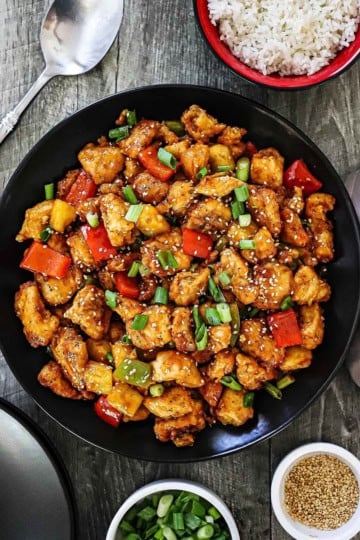
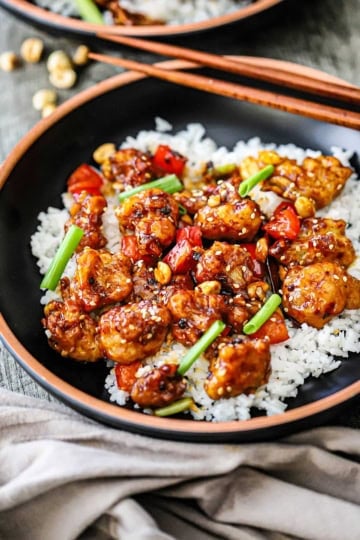
Skip the delivery and whip up this restaurant-quality Cashew Chicken, featuring tender velveted chicken and crunchy toasted nuts in a glossy, savory glaze. It’s an easy 30-minute meal that tastes even better when served over a bed of perfectly steamed rice.
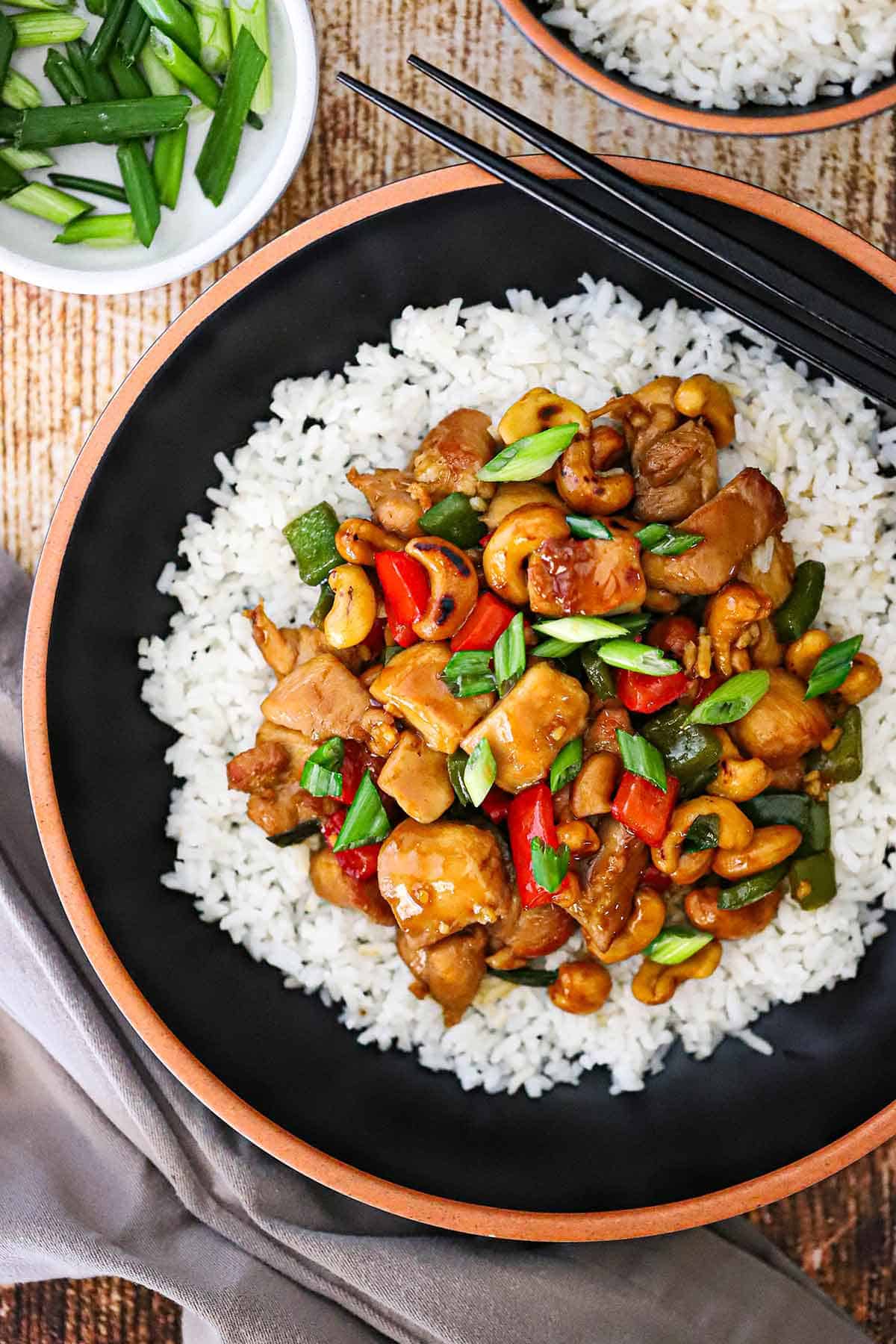
🫑 The Ingredients
A blend of traditional aromatics, crisp vegetables, and a rich, mahogany glaze transforms these simple staples into a deeply savory masterpiece that rivals your favorite takeout. Find ingredient notes (including substitutions and variations) below.
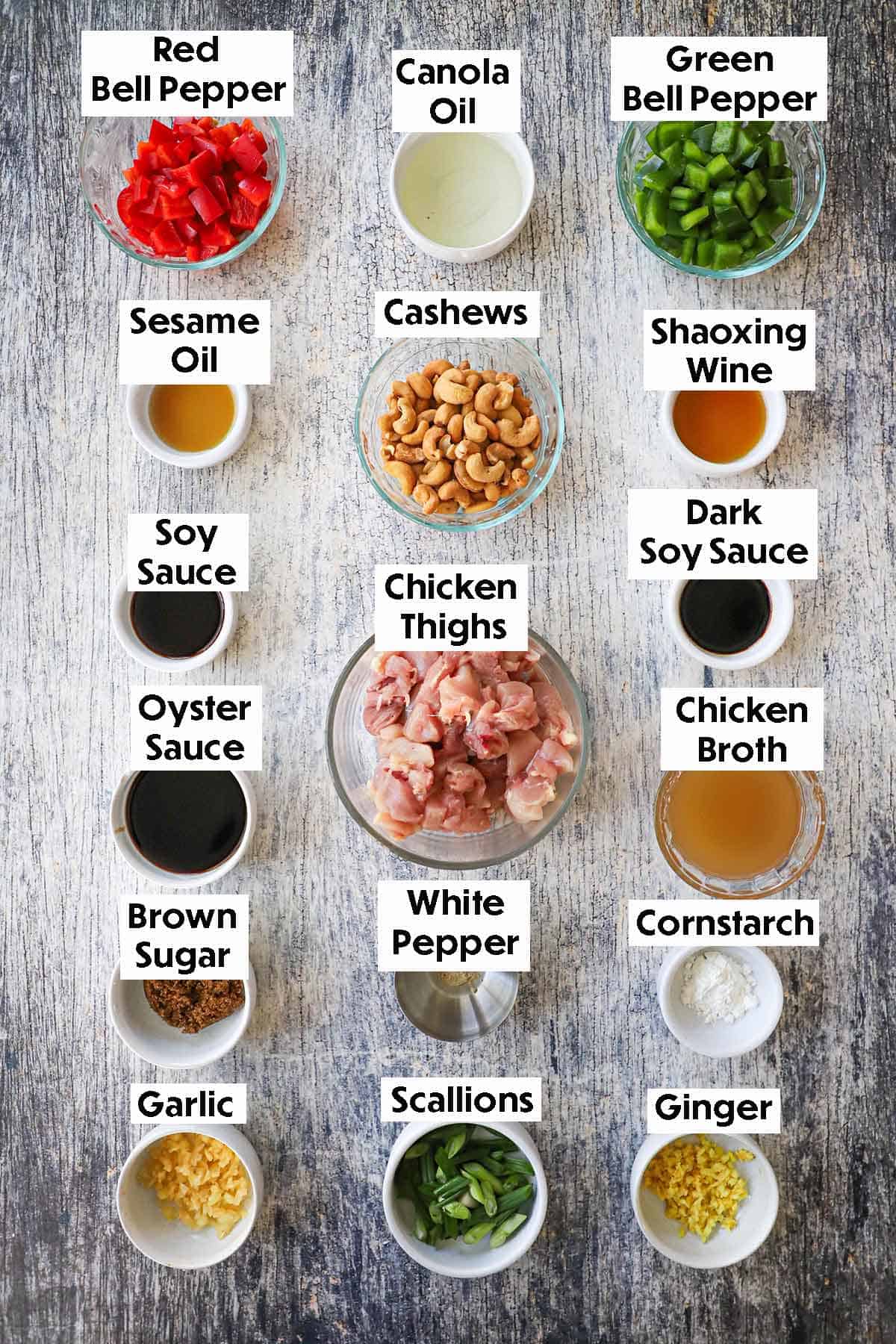
📝 Ingredient Notes and Substitutions
- Chicken Thighs: We recommend boneless, skinless thighs for the juiciest, most tender texture, but you can easily substitute chicken breasts or even firm tofu if you prefer.
- Shaoxing Wine: This traditional Chinese cooking wine is the secret to an authentic flavor profile; if you can’t find it, dry sherry is an excellent substitute, or you can use extra chicken stock for an alcohol-free version.
- Dark Soy Sauce: Used primarily for that dramatic, deep mahogany color you see in restaurant-style dishes, this can be replaced with regular soy sauce if needed (though the sauce will be lighter in color).
- Oyster Sauce: This provides the essential savory “umami” backbone of the glaze; for a shellfish-free alternative, a vegetarian mushroom stir-fry sauce works perfectly.
- Peanut Oil: This is ideal for high-heat stir-frying due to its high smoke point, but any neutral oil, like peanut, canola, vegetable, or grapeseed oil, will yield great results.
- Raw Cashews: Starting with raw nuts allows you to toast them fresh in the pan, which provides a much more intense, nutty flavor and a superior crunch compared to pre-roasted varieties.
Refer to the recipe card (with video) below for a full list of ingredients and measurements.
🔥 Tips and Tricks for Perfect Cashew Chicken
- Prep Everything in Advance: Stir-frying is a high-speed cooking process. Have your sauce mixed, vegetables chopped, and aromatics ready in small bowls before you turn on the stove, as you won’t have time to prep once the pan is hot.
- Don’t Skip the Velveting: Marinating the chicken in cornstarch and liquid (a technique called “velveting”) creates a protective barrier. This is the secret to getting that silky, tender restaurant texture and preventing the meat from drying out under high heat.
- Get the Pan Ripping Hot: To achieve a beautiful sear without overcooking the center, ensure your oil is shimmering before adding the chicken. If you are using a smaller skillet, sear the chicken in two batches to avoid crowding the pan, which causes the meat to steam rather than brown.
- Watch the Cashews Closely: When toasting raw cashews, they can go from perfectly golden to burnt in a matter of seconds. Stay at the stove and keep them moving constantly until they are fragrant and just lightly colored.
- Whisk the Sauce Before Pouring: Cornstarch naturally settles at the bottom of the bowl as it sits. Give your sauce a final, vigorous whisk right before adding it to the wok to ensure the glaze thickens evenly and achieves that stunning, camera-ready sheen.
- The “Gloss” Finish: If the sauce becomes too thick while simmering, add a tablespoon of chicken broth or water to thin it out. For an extra-glossy “Discover-worthy” finish, toss in a tiny drizzle of sesame oil right before serving.
👩🏼🍳 How to Make the Best Cashew Chicken
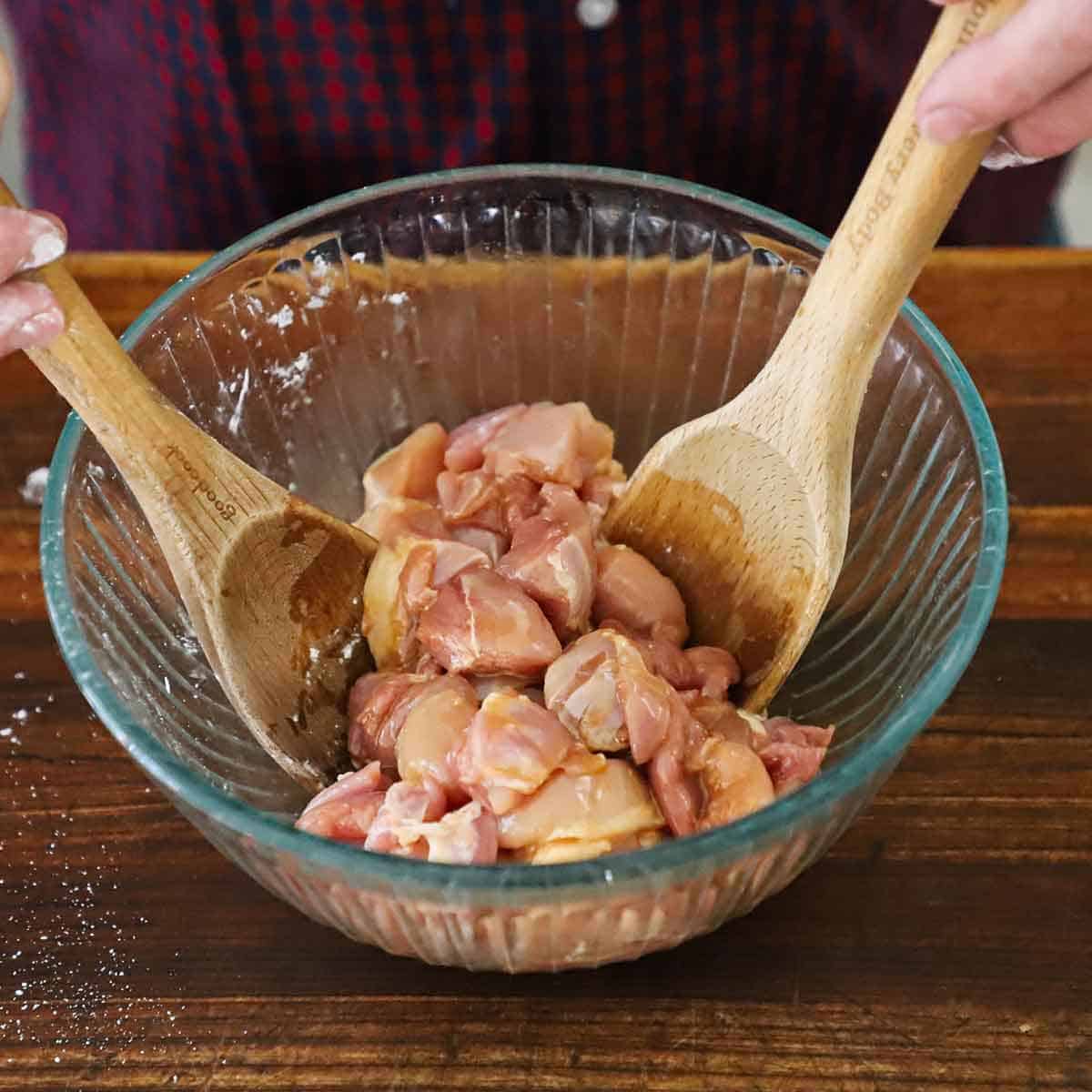
- Step 1: Toss to cover the chicken pieces with the soy sauce, Shaoxing wine, sesame oil, and cornstarch. Let it chill for 15 to 20 minutes.
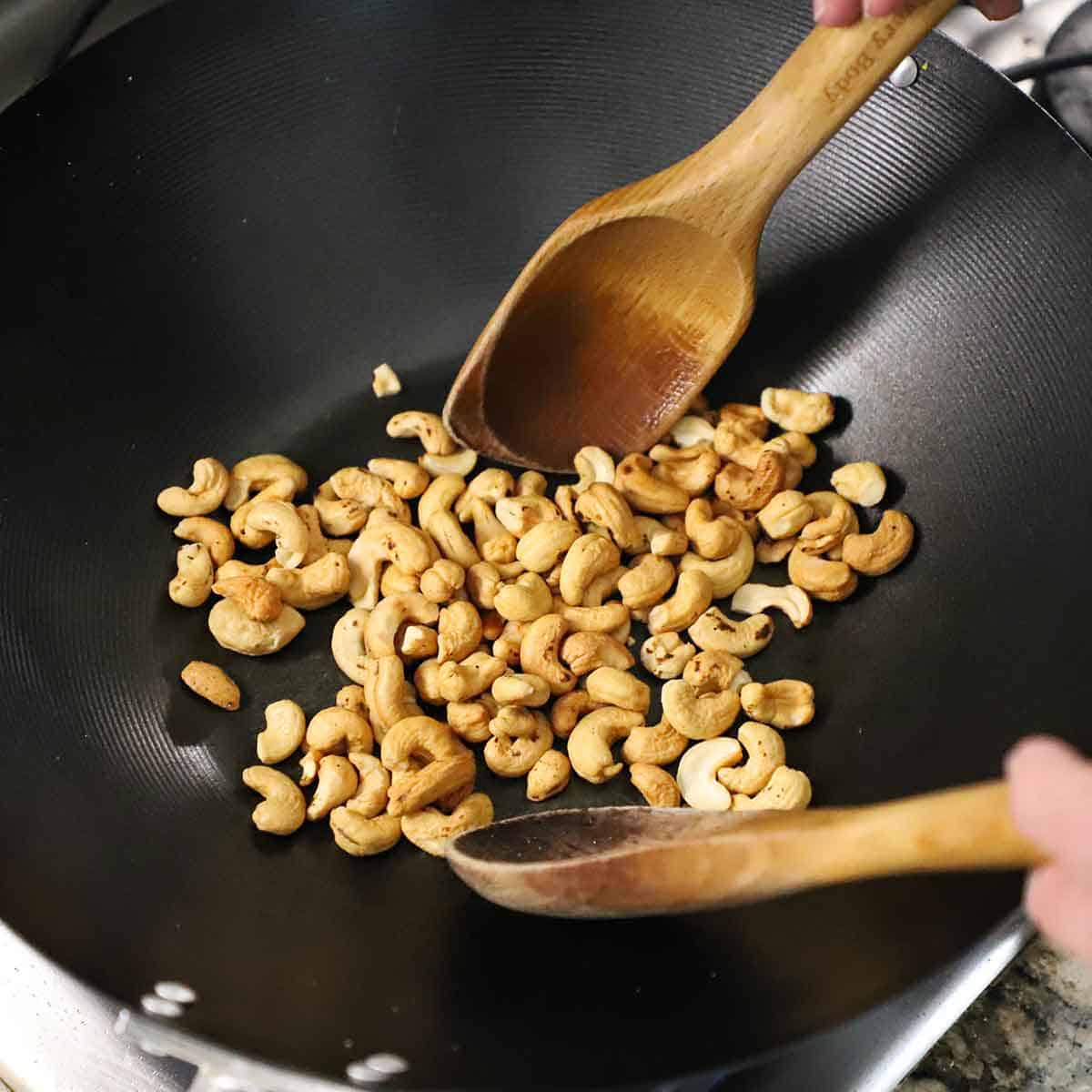
- Step 2: Toast the raw cashews in a very hot wok or skillet for 3 to 5 minutes, until golden brown and fragrant. Remove and set aside.
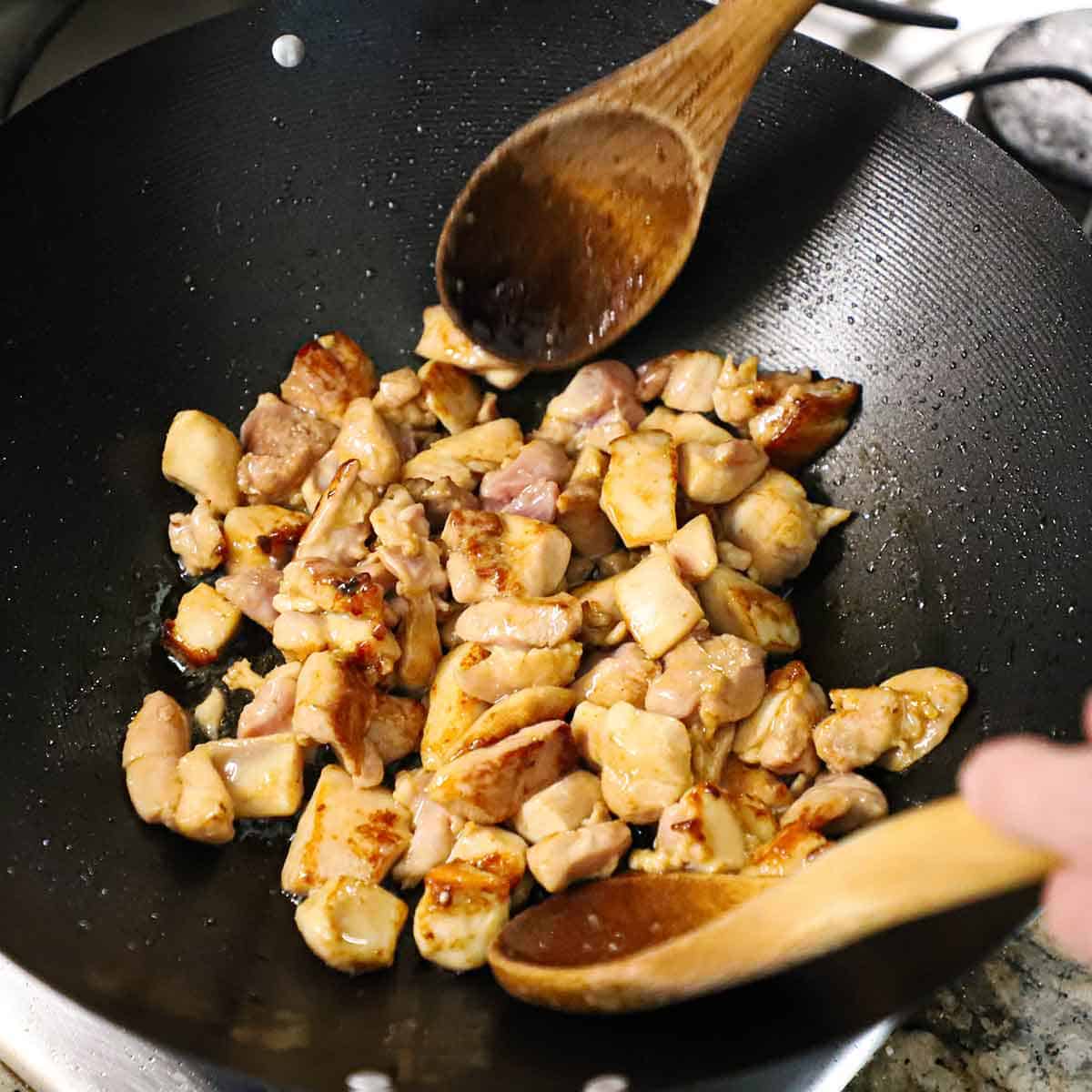
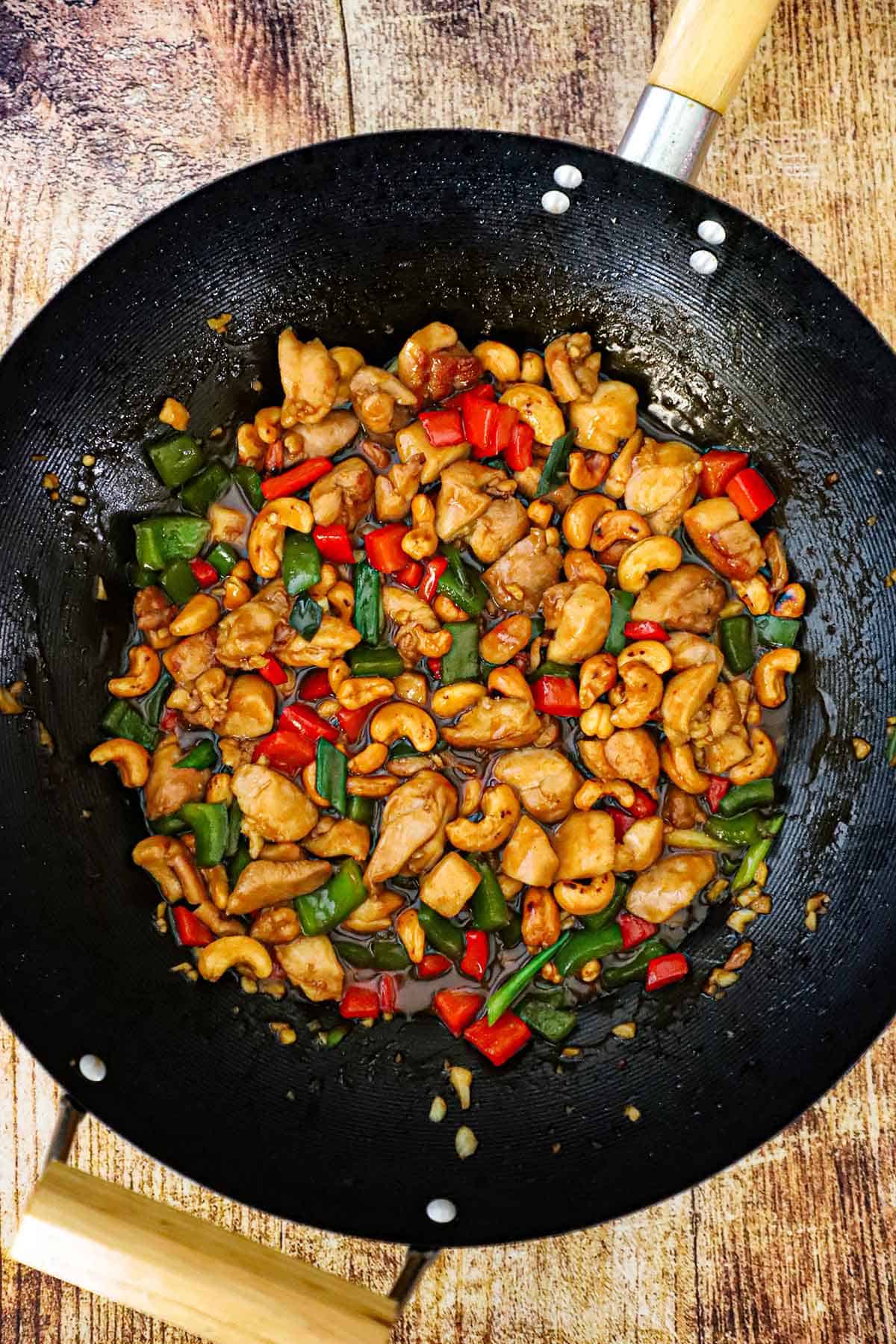
- Step 3: Dump the chicken with the marinade into the screaming hot wok and leave undisturbed for about 2 minutes. Stir and continue cooking until nearly cooked through, about another 2 minutes. Remove from the wok onto a plate and set aside.
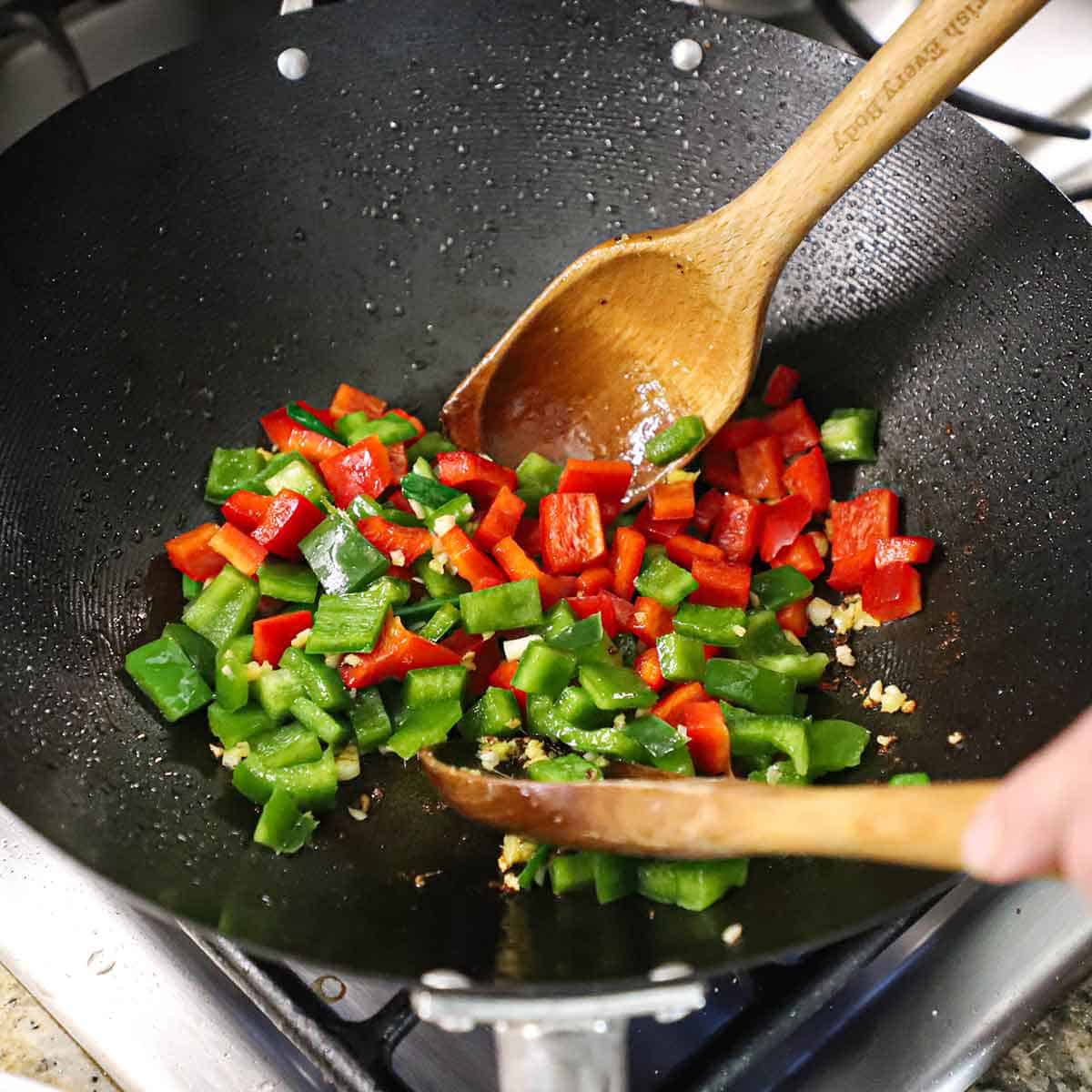
- Step 4: Add the oil to the hot wok and then stir-fry the garlic and ginger for 30 seconds. Add the red peppers, green bell peppers, and half of the scallions and stir-fry for another 2 minutes.
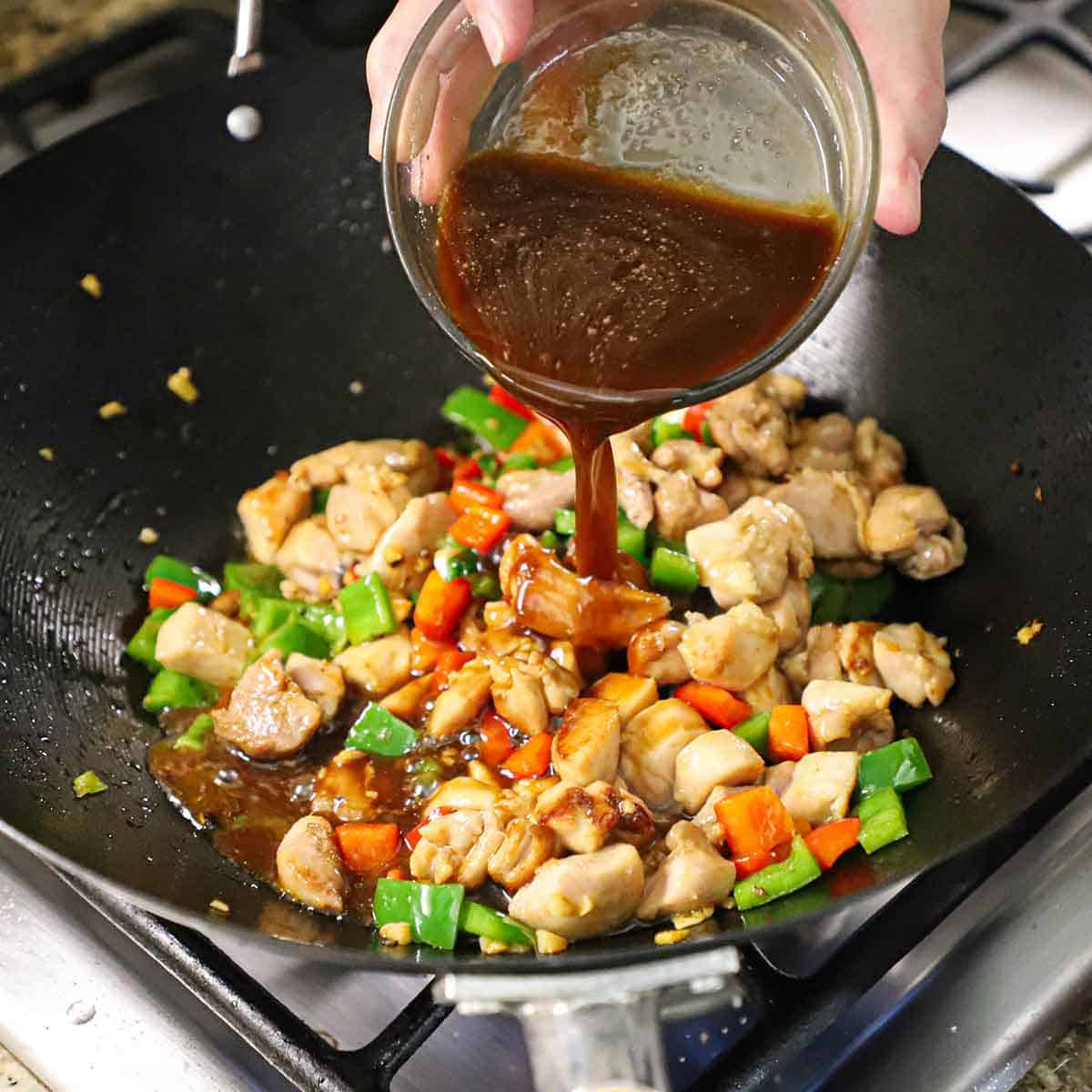
- Step 5: In a small bowl, whisk the sauce ingredients until all the cornstarch is dissolved. Add the chicken and the sauce to the wok and stir-fry until the sauce has thickened, about 2 more minutes.
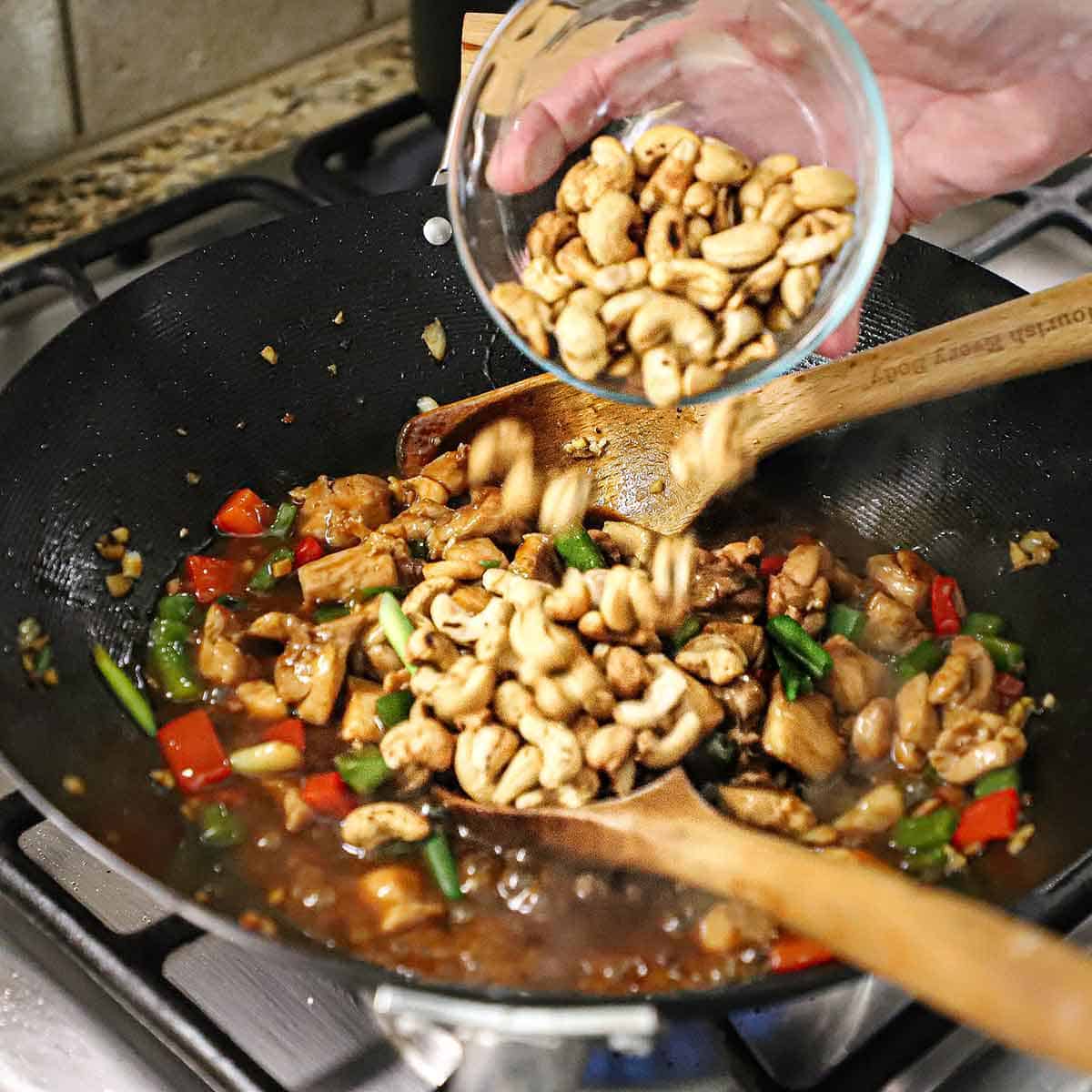
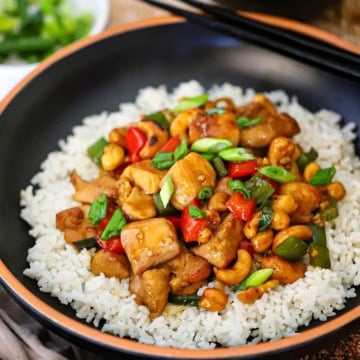
- Step 6: Stir in the cashews and serve at once over steamed rice, garnished with additional scallions.
Expert Tip: The Mahagoney Glow
For that authentic, deep mahogany color, use a teaspoon of dark soy sauce. It provides a rich, restaurant-quality glaze and a subtle sweetness that regular soy sauce alone can’t achieve.
🍽️ How to Serve
- Over Fluffy Rice: Serve immediately over a bed of perfectly steamed jasmine or white rice to soak up the rich, savory sauce.
- Fresh Garnishes: Top each bowl with a generous sprinkle of sliced green scallions and an extra handful of toasted cashews for added crunch.
- Add a Side: Pair with a refreshing cucumber salad or sautéed bok choy to provide a crisp, light contrast to the savory glaze.
- Optional Heat: For those who like a kick, serve with a side of chili crisp or a drizzle of Sriracha to cut through the sweetness of the sauce.
🙋🏽♂️ Frequently Asked Questions
Absolutely. Just be sure to monitor the cooking time closely, as leaner white meat can dry out more quickly than darker cuts.
Keep any extra portions in an airtight container in the refrigerator for up to three days.
As written, it is not; however, you can easily adapt the recipe by using tamari and a certified gluten-free oyster sauce alternative.
You can prep the sauce and chop the vegetables a day in advance, but for the best texture, it is recommended to stir-fry the dish just before serving.
Warm it in a skillet over medium heat with a splash of water or broth to help the glaze regain its original silky consistency.
🥡 More Classic Chinese Takeout Recipes

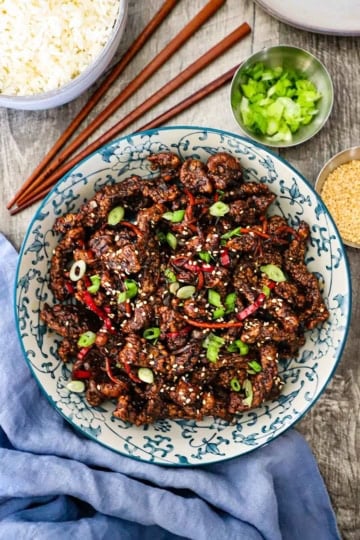

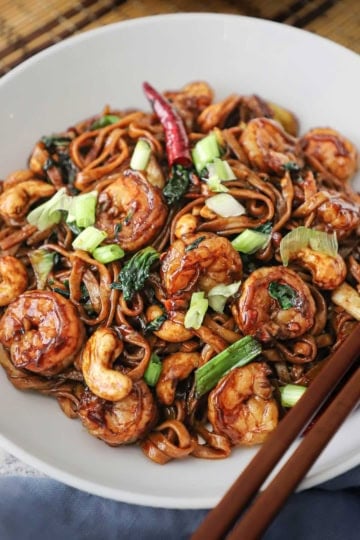
Ready to make a takeout classic that will rival any takeout in town? Go for it!
And when you do, be sure to take a photo of it, post it on Instagram, and tag @HowToFeedaLoon and hashtag #HowToFeedaLoon!
“Better Than Takeout” Cashew Chicken
Video
Equipment
- 1 Wok or skillet
Ingredients
For the Chicken and Marinade
- 1 lb chicken thighs boneless, skinless, cut into 1-inch cubes
- 1 tbsp soy sauce
- 1 tablespoon Shaoxing wine or dry sherry
- 1 teaspoon sesame oil
- 1 teaspoon cornstarch
For the Classic Sauce
- ½ cup chicken stock or broth
- 2 tablespoon oyster sauce
- 1 tablespoon soy sauce
- 1 tablespoon dark soy sauce
- 1 tablespoon dark brown sugar
- 1 teaspoon white pepper optional
- 1 tablespoon cornstarch
For the Stir-Fry
- 1 cup raw cashews
- 2 tablespoon peanut oil divided
- 3 cloves garlic minced
- 1 tablespoon ginger fresh, minced
- 1 red bell pepper Seeded and cut into 1-inch squares
- 1 green bell pepper Seeded and cut into 1-inch squares
- 4 green onions cut into 1-inch strips
- steamed rice for serving
Instructions
Marinate (Velvet) the Chicken
- In a medium bowl, toss the chicken with the soy sauce, Shaoxing wine, sesame oil, and cornstarch. Let it chill in the refrigerator for 15 to 30 minutes.1 lb chicken thighs, 1 tablespoon soy sauce, 1 tablespoon Shaoxing wine, 1 teaspoon sesame oil, 1 teaspoon cornstarch
Roast the Cashews and Stir-Fry the Veggies and Chicken
- In a small bowl, whisk the chicken stock, oyster sauce, soy sauce, dark soy sauce, brown sugar, white pepper (if using), and corn starch together until the cornstarch has completely dissolved.½ cup chicken stock, 2 tablespoon oyster sauce, 1 tablespoon soy sauce, 1 tablespoon dark soy sauce, 1 tablespoon dark brown sugar, 1 teaspoon white pepper, 1 tablespoon cornstarch
- Add the cashews to a dry wok or large skillet over medium heat. Toss frequently until they are golden brown and fragrant, about 3 to 5 minutes. Remove and set aside.1 cup raw cashews
- Heat 1 tablespoon of the oil in the wok over high heat until shimmering. Add the chicken (with marinade) in a single layer. Let it sear undisturbed for a couple of minutes. Then, stir-fry until nearly cooked through, about 1 to 2 more minutes. Remove the chicken from the wok and set aside.2 tablespoon peanut oil
- Wipe out the wok if needed, and add the remaining 1 tablespoon of oil over high heat. Add the garlic and ginger and stir-fry for 30 seconds. Add the red bell pepper, green bell peppers, and half of the green onions. Stir-fry for 2 minutes.3 cloves garlic, 1 tablespoon ginger, 1 red bell pepper, 1 green bell pepper, 4 green onions
- Return the chicken to the wok. Give the sauce another whisk and then pour it into the wok. Toss everything constantly for 1 to 2 minutes, until the sauce thickens and turns into a glossy glaze that coats everything.
- Fold in the toasted cashews. Toss one last time and serve at once with steamed rice. Garnish with the remaining green onions.steamed rice
Notes
- Velveting: For the most tender results, do not skip the 20-minute marinade. This “velveting” technique creates a protective barrier that keeps the meat juicy during high-heat cooking.
- Substitutions: If you cannot find Shaoxing wine, dry sherry is an excellent substitute. If dark soy sauce is unavailable, you can use regular soy sauce, though the glaze will be lighter in color.
- Prep Work: Stir-frying moves very quickly. Ensure all vegetables are chopped, the chicken is marinated, and the sauce is whisked before you turn on the stove.
- Toasting Cashews: If starting with raw cashews, toast them in a dry pan over medium heat for 3–5 minutes until fragrant and golden to ensure maximum crunch.
- Storage: Leftovers can be stored in an airtight container in the refrigerator for up to 3 days. Reheat with a splash of water or broth to loosen the sauce back to its original glossy consistency.
Rick says
Hi… I am going to give this a go. BUT… I expect it won’t be what I hoped it to be i.e. “…into the screaming hot wok”
My wife won the battle and we now have a new induction range, rather than the gas range I wanted with the highest-BTU burner within our price range. To be fair to the induction, it isn’t any worse than the conventional electric range it replaced with our flat bottomed wok.
If you have any of your tips regarding obtaining wok-hey flavor out of less than ideal electric ranges for stir frying with woks, I’m pretty sure that I’m not the only one who would be paying close attention to any techniques you might offer.
Kris Longwell says
Hi Rick, all is not lost! In fact, everything is a-ok! This is a bit lengthy, but here’s what we suggest:
It’s easy to assume that induction is inferior to gas for stir-frying. While you lose the visual of the flame and the ability to use a traditional round-bottomed wok, induction actually transfers heat to the metal faster and more efficiently than gas.
The “wok hei” (breath of the wok) you are looking for comes from the caramelization of sugars, the smoking of oil, and the partial combustion of oil droplets as they are tossed through a flame. Since you don’t have a flame, you have to cheat a little and adjust your technique.
Here are the best ways to get wok hei on an induction range:
1. The Blowtorch Method: If you want that authentic smoky, charred flavor that usually comes from oil hitting a gas flame, use a culinary butane torch (or a standard propane torch from the hardware store). While you are tossing the food in the wok, hold the torch in your other hand and aim the flame directly into the food as it’s in the air or moving around the pan. This mimics the “flame-licked” flavor perfectly. This is a trick used by many professional chefs in kitchens with low-powered burners.
2. Don’t Toss: On a gas range, the heat is in the air around the burner. On induction, the heat is only generated when the pan is in contact with (or very close to) the glass. Instead of the constant “flipping” motion that lifts the pan off the surface, use a “sear and stir” method. Let the food sit undisturbed for 30–60 seconds to get a deep sear, then stir rapidly with a spatula while keeping the wok on the glass. This keeps the pan at maximum temperature.
3. Cook in Small Batches: The biggest enemy of wok hei is “stewing.” If you put too much food in the wok, the temperature drops, moisture is released, and your food boils instead of sears. Cook your proteins first in a screaming hot wok, remove them, then do the vegetables, then combine everything at the end. On induction, you can recover heat between batches almost instantly.
4. Use Carbon Steel (and get it thin): If you are using a heavy cast iron wok or a non-stick wok, you won’t get wok hei. You need a flat-bottomed carbon steel wok. Carbon steel responds instantly to the induction magnets. It gets “screaming hot” much faster than any other material. A 14-gauge (about 1.5mm to 2mm) carbon steel wok is the sweet spot for induction.
5. The “Dry” Rule: Wok hei requires the evaporation of moisture. If your vegetables are wet from being washed, they will steam. Use a salad spinner to get your greens bone-dry. Pat your meat dry with paper towels. The drier the food, the faster the sear, and the more “breath” you’ll get.
6. High Smoke-Point Oils: Since induction can actually get the bottom of a wok hotter than a home gas burner can (induction can easily exceed 600°F in seconds), you need an oil that can handle it without turning bitter immediately. Use grapeseed oil, peanut oil, or refined avocado oil. Wait until the oil is just starting to “shimmer” and produce the first wisps of smoke before adding your aromatics.
7. The “Smoky” Cheat: If you still feel like you’re missing that “burnt” edge, you can add a tiny drop of liquid smoke to your stir-fry sauce, or use a pinch of smoked salt. It’s not traditional, but it bridges the gap between induction and a 100,000 BTU jet burner.
In other words: Get a carbon steel wok, get it hot enough that a drop of water dances and evaporates instantly, cook in tiny batches, and if you’re feeling adventurous, buy a $20 kitchen torch to “kiss” the food with flame at the very end!
We hope all this helps and we are excited to hear how things go. Be sure to keep us posted, Rick!!
Best,
Kris & Wesley