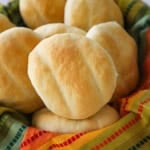
Homemade Telera Rolls
Servings: 8
Calories: 326kcal
Soft, lightly crusted homemade telera rolls with classic grooves—perfect for tortas, sandwiches, or serving warm with a little butter.
Print Recipe
Equipment
- 1 Stand mixer or knead by hand, see NOTES
- aerated baking sheet or a regular baking sheet lined with parchment paper
Ingredients
- 4 cups bread flour 500 g
- 2¼ teaspoon instant yeast 7 g
- 1 tablespoon sugar
- 1½ teaspoon fine sea salt
- 1½ cups warm water 105°F to 110°F, 360 g - plus a little extra, if needed
- 2 tablespoon pork lard softened, or vegetable oil
Instructions
- In the bowl of your stand mixer, whisk the flour with the yeast, sugar, and sea salt. Add the dough attachment, then add the warm water and pork lard (or oil). Mix until a shaggy dough forms, scraping the sides down with a spatula, as needed.4 cups bread flour, 2¼ tsp instant yeast, 1 tbsp sugar, 1½ tsp fine sea salt, 1½ cups warm water, 2 tbsp pork lard
- Turn the mixer on medium and knead the dough until smooth, elastic, and not sticking to the sides of the bowl, about 7 minutes. If the dough is not completely coming together, add a drop or two of water until the dough is combined. If too wet, add small amounts of flour until smooth and not sticky.
- Remove the dough from the mixer and use your hands to form it into a smooth ball. Spray a bowl (or proofing container) with cooking spray and place the dough in it, turning once to coat. Cover and place in a warm, non-drafty area until doubled in size, about 60 to 90 minutes.
- Turn the dough onto a lightly floured counter and divide it into 8 equal balls. Cover with a kitchen towel and let them rest for 10 minutes.
- Gently flatten each ball with the palm of your hand and elongate it to a 5-inch oval. Arrange the rolls on an aerated baking sheet or a parchment-lined baking sheet, leaving room between them. Cover the rolls loosely and let rise for 30–45 minutes, until puffy. Using the handle of a wooden spoon or a similar blunt tool, press two deep lengthwise grooves into each roll, creating three raised sections. Press firmly enough to make clear lines, but don’t cut through the dough. Press them in lengthwise; don't cut into the dough.
- Heat the oven to 375°F (190°C). Bake for 18–22 minutes, until the rolls are lightly golden and sound hollow when tapped on the bottom. Transfer to a rack and let cool before slicing. For a softer crust, cover the warm rolls with a clean kitchen towel as they cool.
Video
Notes
NOTE: Watch the video in the recipe card for visual guidance.
- Knead by hand on a lightly floured surface for about 8–10 minutes, until the dough is smooth and elastic. It should feel soft and slightly tacky; add extra flour sparingly.
- If the dough resists when you press in the grooves, cover it and let it rest for 10–15 minutes, then try again.
- For best results, weigh the flour if possible. Too much flour can make the rolls dense.
- Telera rolls are meant to be soft and lightly golden. Check them toward the shorter end of the baking time, since ovens and pans can vary.
- Storage and reheating: Store cooled rolls in an airtight bag at room temperature for up to 2 days, or freeze for up to 2 months. Thaw frozen rolls, then warm in a 300°F (150°C) oven for 5–8 minutes; for tortas, slice and toast the cut sides just before serving.
Nutrition
Calories: 326kcal | Carbohydrates: 48g | Protein: 9g | Fat: 8g | Saturated Fat: 3g | Polyunsaturated Fat: 2g | Monounsaturated Fat: 2g | Sodium: 439mg | Potassium: 95mg | Fiber: 2g | Sugar: 2g | Vitamin A: 1IU | Vitamin C: 0.01mg | Calcium: 11mg | Iron: 1mg